
When We First Become Other
By Sumiko Saulson
Winner, Fall 2017 Berkeley City College / BCC Voice Essay Contest, “Reframing the Other”
It is the very nature of human self-awareness which creates Othering. From birth, we see the world from a personal vantage point. We first take in sounds, smells and images of our personal tribe: parents, siblings, neighbors and grandparents. They are the village to which Self belongs. This is true even for those of us mainstream America views as Other. So how does one first become Othered? This occurs through contact with multicultural groups, and with mainstream media. Once we view ourselves through the lens of mass media, it becomes possible to reframe Self as Other.
In late 1970s, watching a television show called The Jeffersons. I noticed their neighbors, the Willises, an interracial couple, had one white actor and one black actress playing their mixed race children. As a biracial black and Jewish child this made feel a bit like a space alien. The constant string of “zebra” jokes about their mixed heritage added to that feeling. Strangers sometimes stopped our mom on the street to ask questions about me and my brother’s heritage, and ask to touch our hair. But this was the first time an outside authority verified the strangeness of being biracial.
When I became a fiction writer, I sought to remedy the absence of multicultural stories by filling my books with them. For me, it seemed unnatural that stories taking place in diverse metropolitan areas like Los Angeles or New York often have predominately white casts.
It wasn’t until I’d been writing novels for a few years that it occurred to me that I might try introducing race later in the narrative. It was after reading an article about how some of Suzanne Collin’s literary fandom was freaking out about Rue being black in the movie. Although the book clearly described her as dark skinned and having African American features, readers subconsciously reframed the character in their minds as white.
As an experiment, I wrote the first two chapters of my book, “Happiness and Other Diseases,” without revealing the ethnicity of the central character, Flynn Keahi. He’s half Chinese and half Hawaiian. Nowadays I am fairly political, so my heritage is a normal topic of conversation. When I was younger, it wouldn’t come up as often in the day to day living of life. That being the case, I decided to have his ethnicity come up when it seemed most natural in the narrative: that is, through the eyes of a third party, his girlfriend’s mother, upon meeting him for the first time. That way the reader had an attachment to the character before any issues regarding ethnicity came up.
In reframing the Other, one might consider the fact that every single other person on the planet views life initially, and primarily, from the vantage of self. Absent of external Othering forces, a person in a self-segregated environment will view him or herself as quite the norm. The eroticizing of those who are perceived as different or unusual due to ethnic heritage, disability, sexual preference, or gender presentation is rooted in our denial of the Othered person’s self. Self being the vantage point from which we all view the world.
In order to ethically reframe the notion of Other, those of us who have for whatever reason, come to view ourselves as “the norm” or what is usual will have to accept the fact that our perception is biased.
Readers of “The Hunger Games” and “Happiness and Other Diseases” alike threw a filter of whiteness as a default setting onto the character. As a cis-gen female, I run into people who resist terms like cis-gen, even while knowing they exist to dispute the idea that we are “default” or “normal.” This is an attitude people must overcome. We cannot have true equality among diverse populations while clinging to the notion that some of us are “normal” – “default” – or “usual.”
People cling to this attitude even where it is statistically disproven: for example, many white people think of white as the default; Western Media sells it as such, yet white people are only 18% of the global population, therefore a statistical minority. If a statistical minority can believe itself the default due to acculturation, then perhaps we should question the notion of who is actually the Other here.
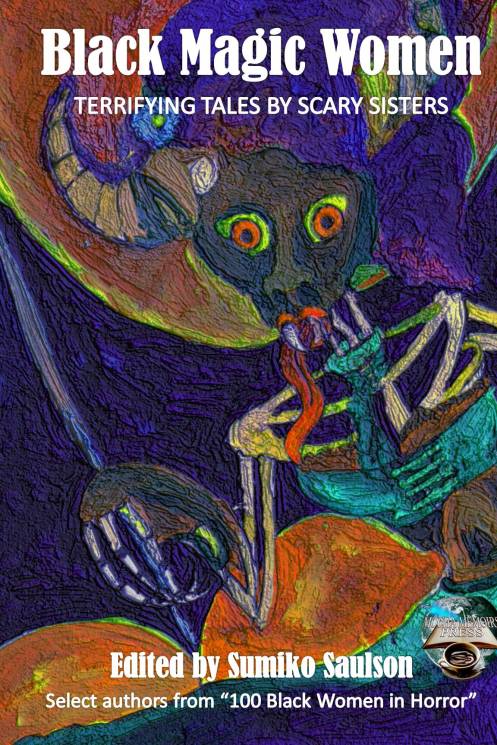

 This Part Three of the three part 2018 series on Black Women in Horror, a continuation of the Black Women in Horror project that started in 2013 as a part of
  She is the author of Women: Alpha Kappa Alpha, Black Counterpublics, and the Cultural Politics of Black Sororities about the cultural practices, cultural work, and politics of the oldest historically Black sorority and Black Women in Sequence: Reinking Comics, Graphic Novels, and Anime which explores the portrayal of women of African heritage comics and the films and television shows based on them. She wrote the horror poems Red Scorpion and Whispers & Liesfor Sycorax’s Daughters, and is working on a compilation of creative essays, images, and poetry tentatively titled Bodyflow, and a monograph, Feeling Her Fragmented Mind: Women, Race, and Dissociative Identities in Popular Culture.
 Ceres Wright is a speculative fiction author and poet who writes sci-fi, dystopian fiction, horror, weird, and dark fiction. She wrote the short horror story Of Sound Mind and Body for Sycorax’s Daughters. She wrote the sci-fi novel Cog, about a futuristic world where personalities can be downloaded at will. Doomed was a nominee for the Rhysling Award, the Science Fiction Poetry Association’s highest honor. Her work has appeared in Hazard Yet Forward; Genesis: An Anthology of Black Science Fiction; Many Genres, One Craft; Far Worlds; Diner Stories; The Dark God’s Gift; FictionVale’s Pick Your Punk (February 2015), and The 2008 Rhysling Anthology. K. Ceres Wright graduated from Seton Hill University’s Writing Popular Fiction program in 2007.
 Deana Zhollis is a science-fiction, dark fantasy, paranormal romance, and horror writer. She wrote the horror short Perfect Connection for Sycorax’s Daughters, however her primary genre is sci-fi romance. Her novels include the dark sci-fi romance The Made, which won 1st place in 2001 at the Houston Writers Convention. It became the first in The Calling Series, which also includes Jetta and Creations. Her other titles include Irid, Ruby, Flesh, & Heart, The 9th Symbol, and Tirna Magique. She won 3rd Place and published in PARSEC/Confluence 2002 Contest and Honorable Mention 5th Place in SFWoE (Science Fiction Writers of Earth) Short Story Contest 2002.
 Alledria Hurt is horror, fantasy and science fiction writer. She contributed the horror short story The Prizewinner to the horror anthology Black Magic Women. Her books include Chains of Fate, October Sky, Dark King Rising, Objects: Stories of Things, Hush, Ruins of Fate, Blades of Fate, Wearing His Ring, Harmony: A Killer Mystery, Born in Waynesboro, Pennsylvania, Alledria Hurt has traveled Europe and the United States. She received her Bachelor of Arts degree in English Literature and her Master of Arts in Liberal and Professional Studies degree from Armstrong Atlantic State University.
 Horror, paranormal, urban fantasy and paranormal romance author Delizhia Jenkins wrote the urban horror story Dark Moon’s Curse for Black Magic Women. She writes paranormal and paranormal romance titles under the name Delizhia D. Jenkins. Her titles include The Dark Royals Series, which includes Blind Salvation; The Vampire Hunter’s Academy Series, which includes The Darkness and The Reckoning; In the Light of Darkness, Viper: The Vampire Assassin, Into The Shadows, Sin: Daughter of the Grim Reaper, Nubia Rising: The Awakening, and Love At Last.
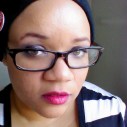 She wrote the short story Appreciation for the horror anthology Black Magic Women. Mina Polina has written short stories since high school, and is a newly published author. Her preferred genres are horror and fantasy with a mixture of realism. When not writing, Mina Polina also spends her time working on her various Graphic Design projects. She currently resides in Los Angeles, California.
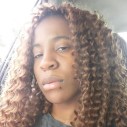 Born in South Florida, Tabitha Thompson has been writing horror since the age of sixteen. Her first short story Heading West, was picked up by Sirens Call Publications in 2013 for their online magazine issue #12 Dead And Dying. West Nile was released in 2014 also with Sirens Call Publications for their issue #16 Apocalyptic Fiction. For the past few years since then, she has released several horror short stories and flash fiction. Decency Defiled, a workplace based horror short story, was released through J Ellington Ashton Press as her first featured anthology titled Rejected For Content 6: Workplace Relations. She wrote the short medical terror tale Alternative™ for the horror anthology Black Magic Women.
 She wrote Sweet Justice for Black Magic Women. Kenesha Williams is an independent author, speaker, and Founder/Editor-in-Chief of Black Girl Magic Lit Mag. Her books include Love, Lust, and Letters, Nadine & Agwe: A Passion Denied, Do For Love, she has short stories in the anthologies Something Wicked This Way Comes: Paranormal Boxed Set, and The Scribes of Nyota: Our Voices, Our Imagination, A Compendium, and issues 1, 2, 3, and 5 of Black Girl Magic Lit Mag.
 Tyhitia Green writes horror, fantasy, and science fiction. She sometimes dabbles in other genres as well. She began writing poetry as a child and ventured into fiction years later. Her horror flash story, Margie, appeared in the July 2009 issue of Necrotic Tissue magazine, and her non-fiction has appeared in Lightspeed magazine and on Black Girl Nerds.com.
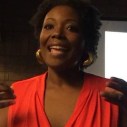 The author of the Bram Stoker nominated Searching for Sycorax: Black Women’s Hauntings of Contemporary Horror, Dr. Brooks is a scholar who specializes in black female contributions to horror. Searching for Sycorax is a monograph examining the works of women across the African diaspora. She is also one of the editors of Stoker-nominated Sycorax’s Daughters, a horror anthology featuring short stories by black women. She wrote The Black Maternal: Heterogeneity and resistance in literary representations of black mothers in 20th century African American and Afro-Caribbean women’s fiction. She is working on a book called Divinely Monstrous: Black Women Conjuring the Grotesque in Popular Culture. She is also coediting a volume on black women and horror entitled Towards a Black Women’s Horror Aesthetic: Critical Frameworks with Susana M. Morris and Linda Addison. She has published articles in African American Review, Obsidian, and FEMSPEC.


 horror took place in the Victorian era, the same period of time that the Civil War and the post war Restoration took place in the United States. The dark histories involving the African slave trade and the genocide of New World’s indigenous peoples were primary features of a guilt-ridden American conscience. Wronged native peoples and oppressed African slaves were some of the ghosts and bogeymen of American gothic. That is clearly the case in Beloved, which is about the petulant spirit of Sethe’s murdered two year old daughter, Beloved. Sethe killed her own child to protect her from slavery, and has been haunted ever since.
 If it weren’t for the fact that Sula won a Nobel Prize for American literature, we might think of it as magical realism, as it certainly utilizes many elements of the genre. Many supernatural elements are used to illustrate the town of Bottom’s discomfort with and rejection of the unconventional protagonist Sula Peace. These magical elements are illustrations of the town’s scapegoating behavior. They clearly symbolize the tendency to demonize women for liberal and sexually unrepressed behavior. However, there is a more than superficial resemblance between Sula’s connection to the paranormal occurrences and witchcraft. Sula seems like a witch, and the town seems to be on a witch hunt.
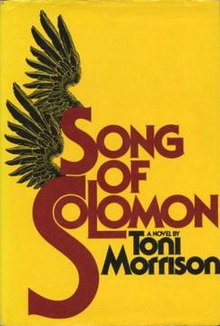 Toni Morrison’s Song of Solomon opens up with some of the most horrifying scenes I’ve ever read. One involves the hunting of a runaway slave by a pack of dogs, and the other involves an extended analogy about leaping to suicide while attempting to fly away from enslavement. Song of Solomon uses several elements of magical realism. Many of these are directly or indirectly connected with a character named Pilate, a woman who was born without a belly button. She is guardian angel/earth mother figure in the life of the protagonist, Milkman.
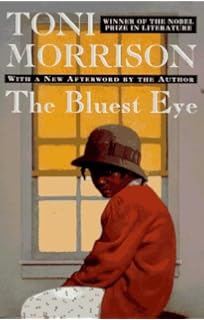 There is the further complication of determining whether or not supernatural occurrences are real in magical realism. In Toni Morrison’s controversial debut novel The Bluest Eye, Pecola Breedlove, a sexually molested young black girl, retreats into a fantasy world where she feels beautiful because she imagines she has blue eyes. The book has been banned multiple times because it deals with tough subjects like incest and child molestation. However, at the core of it is a deeper truth: our most terrifying monsters are the ones that are real.
 Tyhitia Green writes horror, fantasy, and science fiction. She sometimes dabbles in other genres as well. She began writing poetry as a child and ventured into fiction years later. Her horror flash story, Margie, appeared in the July 2009 issue of Necrotic Tissue magazine, and her non-fiction has appeared in Lightspeed magazine and on Black Girl Nerds.com.
 Tyhitia Green’s short story Margie appeared in the July 2009 issue of Necrotic Tissue. It was the 7th Issue of the quarterly horror magazine. Necrotic Tissue got its name from the medical horror genre, and offered a lot of stories in that genre but wasn’t limited to it. This tended to up the gore factor. Generally well-received, the writer-centered publication offered advice to aspiring horror writers, along with an open call that introduced many new and upcoming authors to the genre. It gained a reputation for helping to show where the future in horror lies. It went out of business in 2012 after 18 issues. See a review of Issue 7 below.
 Author of the short story Letty in the anthology Sycorax’s Daughters, Dr. Regina N. Bradley is a writer and researcher of African American Life and Culture. She is the author of “Boondock Kollage: Stories from the Hip Hop South.” a collection of twelve short stories that addresses issues of race, place, and identity in the post–Civil Rights American South. She is an acclaimed fiction writer, with her work being featured in Obsidian journal, Oxford American, and Transition Magazine. Dr. Bradley is an Assistant Professor of English and African Diaspora Studies at Kennesaw State University in Kennesaw, GA. She can be reached at
 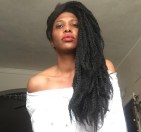 Amber Doe is an artist, poet and author. She wrote The Last of the Red Hot Lovers, a short horror story in Sycorax’s Daughters. She has been published in the Finnish art journal Hesa Inprint three times; By Sixteen for their Phobia issue and Moon in Cancer and This will hurt for their Harvest Issue. Both pieces are related to the longer piece The Last of the Red Hot Lovers published in Sycorax. She was born in Washington DC, raised in Philadelphia PA and an Indian reservation outside of Charlotte, NC. Amber earned a Bachelor of Arts degree from Sarah Lawrence College.
 A.J. Locke is an author and poet from Trinidad and Tobago. Her poems The Lonely, Salty Sea, and A Real Friend Will Let You Break by A. J. Locke appeared in the horror anthology Sycorax’s Daughters. She writes urban fantasy and paranormal. Her books include Affairs of the Dead (The Reanimation Files #1), Requiem for the Living (The Reanimation Files #2), The Ravaging In Between (The Reanimation Files #3), A Torment of Savages (The Reanimation Files #4), Black Widow Witch, and Elemental Inferno.
 Carole McDonnell is a horror, paranormal, sci-fi and inspirational writer. She is Jamaican but grew up in Brooklyn, New York. Her books include Turn Back, O Time: and Other Tales of the Faes of Malku, The Charcoal Bride, The Daughters of Men, Wind Follower, My Life as an Onion, A Fool’s Journey through Proverbs, Scapegoats and Sacred Cows of Bible Study, The King’s Journal of Lost and Secret Things, NO! Not the Deli!, Great Sufferers of the Bible, and Blogging the Psalms. She contributed short stories to the anthologies So Long Been Dreaming: Postcolonial Science Fiction and Fantasy, While the Morning Stars Sing: An Anthology of Spiritually Infused Speculative Fiction, Diversity Is Coming, Fantastic Stories of the Imagination, and Rococoa. She contributed How to Speak to the Bogeyman and Terror and the Dark to Sycorax’s Daughters.
 Dana T. Mcknight is a black, queer American speculative fiction and multimedia artist. Here disciplines include illustration, literature, sculpture, experimental sound, performance art, poetry and painting. She is the founder of Dreamland Art Gallery, an alternative art and performance space in Buffalo, NY and a Co-Creator for RIQSE (Radical Inclusive Queer Sex Education). She contributed the short story Taking the Good to Sycorax’s Daughters.
 African American fantasy, paranormal romance and horror author L. Penelope’s debut work was the 2015 novel Song of Blood & Stone, the first of the Earthsinger Chronicles. Since then she’s written Whispers of Shadow & Flame (Earthsinger Chronicles #2), Cry of Metal & Bone (Earthsinger Chronicles #3), Angelborn (Angelborn Cycle #1), and Angelfall (Angelborn Cycle #2). Her short story AngelBorn was included in the anthology Sycorax’s Daughters, and she was in the Touch the Dark Anthology.
 Andrea Vocab Sanderson is a singer, songwriter, spoken word poet, host, emcee, hip hop artist, and community activist. She contributed the short horror story Thirsty for Love to Sycorax’s Daughters. She has recorded several albums of spoken word and hip-hop poetry, including Wind Song Poem, Sessions in Flight, Speak of Woes, Her Hercules, Cradle of Silence, Son of David, Thoughts of Pain, Grind ‘Til I Bubble, Truest Reflection, and Spit Fire.
 Nicole D. Sconiers is a Los Angeles author and screenwriter. She holds an MFA in creative writing from Antioch University Los Angeles. Her work has appeared in The Absent Willow Review, Clutch, Inglewoodlandia and other publications, and she penned several exclusives for Dr. Phil. She contributed the short horror story Kim to Sycorax’s Daughters. She is the author of the short story collection Escape from Beckyville Tales of Race, Hair and Rag.
 Spoken word poet Tanesha Nicole Tyler wrote the horror poem Polydactyly for Sycorax’s Daughters. Her talk My Art is Active: Exploring Social Activism through the Spoken Word uses spoken word and is available through Westminster College SLC on Youtube. Two of her poems were published in Ink&Nebula Poetry Magazine. Her poems include This Body and Afterparty. TaneshaNicole attended competitions at both the regional and national level including Utah Arts Festival, CUPSI, IWPS and the Women of the World Poetry Slam where she placed 9th out of 96 poets. TaneshaNicole’s poem Afterparty was featured as the poem of the day on Button Poetry’s YouTube channel.
