Cancer, “Positivity” and Misogynoir

•March 3, 2019 • 7 Comments

CW: Cancer, End Stage Cancer, Realities of Multiple Myeloma, Depression, Misogynoir, Racism.

I wrote this blog but never published it, back when my mother was still fighting for her life. She passed away January 14, 2019 after a nine and a half year long battle with cancer. I was frustrated with all of the misogynoir my mother and I had to deal with, as in America, a strong black woman stereotype attaches to black women and keeps perpetuating itself even when we are dying, or those close to us are dying. My mom had to be a strong black woman until her dying breath. I had to be a strong black woman as she lay dying.

What follows below the break is what I wrote and how I felt in late September 2018, edited to update it to reflect that she has passed on. Please don’t read it if you feel you might personalize my feelings of frustration over my mom’s death.
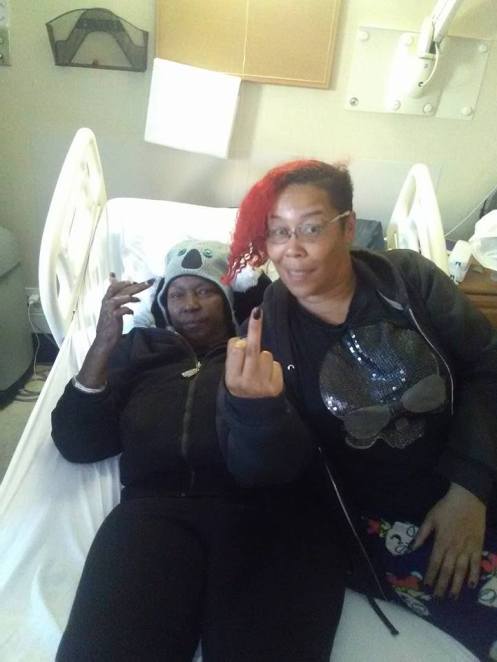
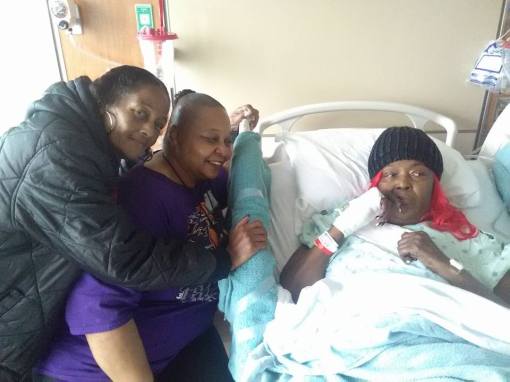
Carolyn and Sumiko Saulson flip off the camera at Windsor Care in Vallejo

Mom and I at Windsor Care in Vallejo

So, in May, at BayCon 2018, my mother gave me the bad news: her cancer was no longer responding well to chemo. Her doctor was going to try an older chemo med she’d been on previously, Revlimid. Sadly, it didn’t work either.

In June, she went into the hospital with respiratory issues. Some of you may know that she had a close brush with death around my birthday in March of 2017. That was due to a cardiac issue, as she is seventy years old now and has comorbid conditions along with her cancer. The heart disease and a-fibrillation is related to high blood pressure. So last year she almost died of heart disease. They were able to stabilize her. She always was a fighter.

Since she is a fighter – and she has miraculously pulled through any number of times – when I first became concerned about her latest battle with cancer back in May 2018, I got a lot of “your mother is strong” kind of comments. A lot of people are unaware of how culturally tone deaf it is to repeatedly refer to a black woman as strong when she is facing a major crisis. Yet this notion of me, and my mother, as “strong” persisted. It persists to until the day she died, and many people had no idea how serious my mom’s health problems were because they didn’t want to know or understand.

Fundraisers were going around for mom’s end of life expenses and her burial and people still thought she was “getting better”… she made some recovery from the seizure, stroke and heart attack but she was never going to recover from cancer because they were refusing to give her chemo. They said the chemo wasn’t working anymore.

Mom was not getting better. She was running out of treatment options. Her cancer was in its final stages. Whenever the family got excited or happy about some sort of improvement it was because she just bought a little time with us – not because she was going to pull through. All we could do was buy her time, but every time we did we had to face the reality that her quality of life had declined considerably over the past grip of months.

When I tried to talk about that, people either issued still more platitudes about how I need to “let her go” or, unfathomably, acted like my mom’s cancer wasn’t that serious and gossiped that I was being a “drama queen” or exaggerating mom’s terminal condition. Others were so in denial that she was dying that they said I was being negative and babbled about homeopathic medicine, medicinal marijuana, prayer, and cayenne pepper.

This all boiled down to ways in which my mother’s death was taxing and inconvenient for other people and they just needed me to shut up about it because was depressing them. And please don’t read ANOTHER WORD if you are going to come out of reading this with any sort of need for me to help YOU deal with MY mom’s death or YOUR feelings, because this is me talking about me. I need to.
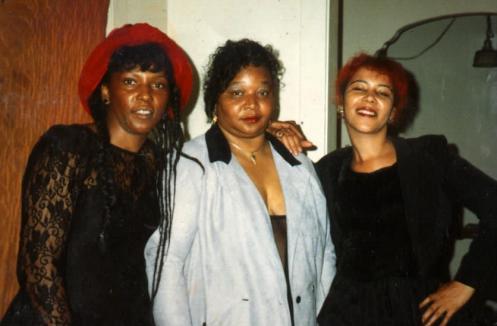
Carolyn Saulson, Yvonne Matthews, Sumiko Saulson

Mom, aunt Yvonne and me in 1993


It has gotten to the point where I no longer reach out for any moral or emotional support. I just post prettied up photos of mom with Snapchat filters and journal about what movie was am watching with her or song was am singing to her, so I could keep up some sort of benign dialog with people in order to have some sort of social contact with people outside of my mom. I had to figure out how I could communicate with others without feeling like my pain, my family’s pain, and my emotional needs were tedious and draining for them. At first, a few people thought the pictures were morbid but after a while, some people got what I was doing.

I had a partner dump me because my need for emotional support during my mother’s death was apparently “manipulative.” Gossipy idiots who decided that my mother’s failure to die in a timely manner meant I am being “dramatic.”  Another partner got drunk the night mom had a heart attack and ran down the street acting crazy and wound up in jail. It seemed like everyone was more upset about Mom dying than I was.

Except my brother, and nieces, who were in the trenches along with me.

Minimizing death isn’t “positivity” it’s just your own personal fragility and entitlement kicking in, telling you that people who have real life crises are “problematic”… if you are someone who makes your personal relationship drama more important than someone dying , yes, this is about you. Constantly calling black women “strong” to get out of offering us any real moral support isn’t just toxic, it’s racist. Ignoring black suffering in order to shield the dominant culture’s fragility is the cornerstone of misogynoir, something a bunch of people who think they are liberal sometimes have an excess of.

My mom was my mom, not someone else’s inspiration porn – not a “strong black” woman who could inspire people by stoically clinging to life. I should have nor should I now be required to be likewise stoic, unemotional, positive, and more concerned with the feelings of others than my own. Even as my mother lay dying, I was to assume the caretaker, nanny, “mammy” role assigned to all black women in relationship to others.

Is this the way white women are treated when they are dying or grieving?

Call for Submissions Wickedly Abled

•February 13, 2019 • 4 Comments

Wickedly Abled CoverTheme: Dark fantasy, dark sci-fi and horror by disabled artists featuring disabled protagonists.
Looking for 1,500 to 5,500 words in length short horror and dark fantasy by disabled authors. Paying $10 flat and an eBook copy, plus offering unlimited at-cost print books to authors in the anthology.  Previously unpublished original work preferred, but reprints will be considered if the work is no longer in print or the work is older than ten years in age.

Please let us know if it is a re-print. No simultaneous submissions. We will want exclusive e-publication rights for one year (first publication rights if it’s unpublished).

Please submit it as a .doc or .rtf or .txt document, double spaced, 12 pt, Times New Roman or similar, to sumikoska@yahoo.com

Deadline: March 31, 2019

Cover art by Lillian Rose Asterios

Special NaNoWriMo Project with Mom

•November 1, 2018 • Leave a Comment

living a lie

So I registered mom’s novel for NaNoWriMo since I am finishing it for her and am the cowriter now. She’d written about 10k of it, so I am picking it up and it’s picking up steam pretty quickly.

Living A Lie is an urban fantasy started by my mother, Carolyn Saulson. It currently stands at 10,000 words. I am going to use NaNoWriMo to complete my mother’s project, as she is in the hospital currently with the final stages of Multiple Myeloma and is a nine year cancer survivor.

Carolyn Saulson biography

Mom Portrait

Carolyn Saulson, mother of Sumiko and Scott Saulson, grandmother to Scott’s daughters Franchesca and Maria and his step-son Josh, is a nine year multiple myeloma survivor. She has been a published poet since the 1970s, and has already released a comic book with portions of the first and second chapters of Living a Lie, illustrated by her daughter Sumiko Saulson. It is available online. Carolyn is a founding member of Iconoclast Productions, a multimedia arts non-profit dedicated to the creation and promotion of multimedia art by African American, African Diaspora, and disabled artists. She cofounded the African American Multimedia Conference and the San Francisco Black Film Festival. She is a proud member of WryCrips Disabled Women’s Theater, and Ladies of Literature. She has a band. Stagefright, with her family, and she produced a public access television show of the same name for more than 20 years.

Synopsis of Living a Lie

Randolph Cavanaugh isn’t who he seems. Tall, slim, pale, blond haired and blue eyed, he seems to the world an upwardly mobile Anglo-Saxon gentleman in his early to mid thirties. Well to do, educated… and engaged to Marjorie Anderson, a prominent Bay Area socialite whose Republican father owns a hotel chain.

Everything is going his way. But it could all fall apart now.

You see, Randolph isn’t even his name, and he’s been living a lie for over a decade now.

Who is he, really? The well off lawyer he convinced his fiancée’s parents he was, or the local actor who rolled off the Berkeley Repertoire scene ten years ago and decided to use his theatrical skill and abilities to hide everything about him – his heritage, his parentage, his education, his political beliefs, his abilities… even his name!

The closest he’d ever been to Boalt Hall of Law at UC Berkeley was that summer he was performing as Portia/Baltazar in a local performance of The Merchant of Venice at Zellerbach Hall. He wasn’t anything he said he was.

He wasn’t even really white.

But a “talent” he’d inherited from his mother made it entirely possible for him to deceive the most skeptical of persons. It was a form of telepathy… not magic at all, but a kind of mutation that allowed him to not only read minds, but deceive them, putting on everything from minor glamorous to major Jedi mind tricks. That’s how he’d managed to impress the young heiress and her parents who lived high on the hills looking down upon Berkeley.

But that was all about to fall apart… or was it?

He was getting ready to reunite with his mother, Amelia Ambrose. Also blessed with this particular talent, she’d used it in honest ways, to lift herself up out of poverty and homelessness, and pursue a reunion with her long-lost son, James, who’d she been forced to give up for adoption when she was a teenage girl. That was his birthname, James – but he hadn’t been Jimmy since he was two years old. He hadn’t heard from his mom since he was thirteen.

Unlike Randolph, she was a real attorney now, with a law practice he might become a part of if he played his cards right. But how could he do that without tipping his hands to Sarah’s parents? They would flip out if they found out that his mom was half black and he was a Democrat getting ready to go to work for a well-know civil rights defending legal practice alongside his idealistic mother.

Maybe he would have to continue to live a double life after all, just hold onto this subterfuge for a little bit longer.

Happy Halloween!

•October 31, 2018 • 1 Comment

DeathAngel Halloween

Death, Loss, Spit and Pathos

•October 25, 2018 • 12 Comments

Today is October 25, and despite the odds against it, my mother is still here. Her kidneys are still functioning. Her respiration is improving. She spends most of the day watching television. She makes eye contact. She occasionally tries to vocalize. She is a nine year multiple myeloma survivor as of August 10, 2018. We have gone from More Birthdays and celebrating her living on another year to celebrating in tiny increments.

So I sit here and plan on another Halloween with my mother.

I remember my mom was present at the book release for The Void Between Emotions, which turned into a wake and remembrance for Greg Hug, who died a month before the release party.

This is a picture of Greg Hug from Valentine’s 2017 at Wicked Grounds, along with the painting I did for “Spit and Pathos” after I altered it with Photoshop. The original sits on my kitchen table. I tried to capture the haunted look Greg had in his eyes near the end of his life. A lot of the poetry in the book, most of it, is directly or indirectly about Greg and processing the loss. The stories I wrote were written just before and during the wake of (following) Greg’s death May 26, 2017.

Many of them were for the HorrorAddicts.net “Next Great Horror Writer” contest. Others are stories I wrote for other contests and anthologies that were released, like “Balm of Brackish Water,” which was released immediately after I read it for the Afrosurrealist Contest outside of the ProArts Gallery.

There are also award-winning essays from 2016-2017, including one about Toni Morrison’s relationship to the horror genre, and one I won a Reframing the Other contest for at BCC about when one first realizes they are “other” – reframing other from the view of the othered person and focusing on how becoming aware of otherness changes ones self image.

The book release is at Octopus Salon at 5pm on Friday November 9 and I hope some of you can make it. I am, of course, nervous about my mom’s health. I am worried about how she will be doing on that day and if she will even be here. We live day to day here, me and the rest of my family. Still, I got her a crow mask. I am dressing up like The Crow from the movie, and she can dress as the spirit animal on Eric Draven’s shoulder.

Since my mom’s health declined, I have become very isolated. People don’t know what to say, so they avoid you. They pick fights for no reason, and babble stupidly about how they don’t know how to handle death -and that’s why they have abandoned you when you are facing the wane of your mother’s glorious and vibrant life. Afraid of their own mortality, they demand you remain positive and are eternally insensitive. And you stop complaining. You stop asking for help that won’t come. You retreat, and spend days sitting by your mom’s bedside, coming up with ways to make the inevitability of death less difficult to face.

So you put snap chat filters over your silent mother’s face. You plan to join Halloween Festivities at the hospital. You Thank God for small things, like Mom making lazy eye contact these days, or larger ones, like rescuing mom from the Kevorkians over at Summit (even though you know that there are some who will argue with you that your mom’s quality of life isn’t worth having. You ignore those…)

Mom mostly watches television these days.

And she sleeps.

Horror Bites: Campfire Tales from HorrorAddicts.net Press

•October 22, 2018 • Leave a Comment

Pick up this great read from the Next Great Horror Writers Contest authors for just 99 Cents!

Emerian Rich's avatarHorrorAddicts.net

Horror Bites:
Campfire Tales
New Reading
Only .99 cents!

Dear Reader,

You’ve been invited to a very special night of Campfire Tales, hosted by HorrorAddicts.net. Meet us at Old Bear Creek, just past Dead Man’s Curve. Dress warm. We’ll be waiting.

Four scary tales told by Next Great Horror Writer finalists and woven together by a trek through the woods you’ll never forget.

“Cabin Twelve” by Daphne Strasert
When a camp counselor goes on patrol, she finds an extra cabin in the woods that no one knows about…or do they?

“The Face” by Naching T. Kassa
An ailing mother and her daughter are terrorized by a disembodied face.

“When the Wind Leaves a Whisper” by Jess Landry
Girl Scouts in the 40s experience a frightening occurrence in the woods.

“Goose Meadows” by Harry Husbands
Two friends out drinking at night discover the real horrors of Goose Meadows.

View original post

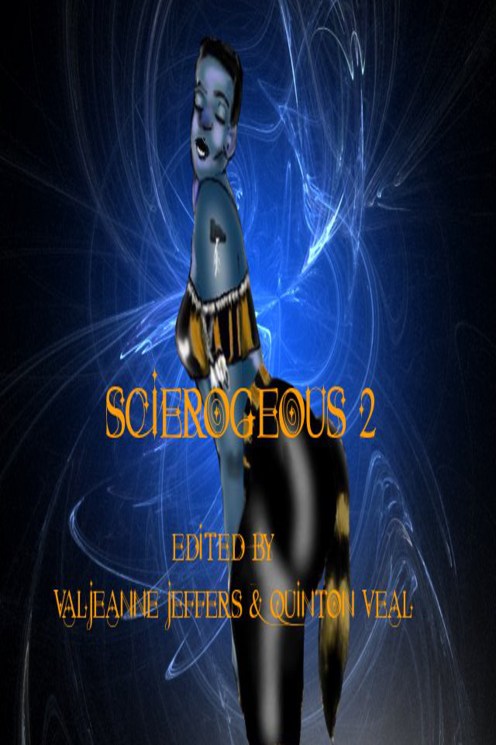
Scierogenous II: Spotlight on Sumiko Saulson

•September 3, 2018 • 1 Comment

So excited to be a part of this!

Valjeanne Jeffers's avatarCollision of Worlds

Scierogenous2Sumiko SaulsonThe Mysterious State of We-Ness
by Sumiko Saulson
Angelo’s Birth (excerpt)

The medical uses were numerous. The machines monitored your heart rate, your blood pressure, your blood sugar, and put you on life-saving diet and exercise regimes. They adjusted your tastes in food so you no longer craved the salt that raises your blood pressure or the sugar that made your grandmother diabetic. Electronic caregiving We-bots were popular among the elderly and the disabled. They were as sociable as a nurse and as affectionate as a cat. In fact, cat was a popular form for the MediWeBot. Imagine a talking feline who answered the door for you if you weren’t feeling up to walking down the hall? After a while, people started attaching the MediWeBot to their feline or canine companions.

It was not long, of course, before the sexually functional versions of these human-meat-and-silicone-chip bots were created. The erotic…

View original post 496 more words

About my Mom’s illness

•August 30, 2018 • 2 Comments
(long) (CW/TW illness, cancer, disability)
Mom Portrait
Thank you to everyone who has offered support over the past two to months, as my mother has been seriously ill since July 10. Her condition continues to be very serious, but she is making slow progress with speech and physical therapy and is now able to speak for herself.
 
She said “home please” and whether she lives or dies, she wants to do it at home. She isn’t able to do things for herself right now. She can hold people’s hands. She can say a few words. She can nod “yes” or shake her head “no.”
Mom Glenna Yvonne
 
She is starting to touch her face, and hopefully will be able to assist with things like washing her face soon.
 
She is able to listen to commands and do things like open her mouth to assist with mouth care tooth brushing etc.
 
She is being fed through a feeding tube that goes directly into her stomach, which requires her to have a clean environment to reduce the risk of chronic infection. She can’t sit up by herself, so she has to have her bed at an angle to reduce the chance of pneumonia. She has chronic pain associated with her bone cancer, multiple myeloma, which makes her physical therapy difficult as she has to have her pain managed.
 
Her bone cancer made her hip bones turn into swiss cheese, so she fractured a hip. Bone fractures related to her cancer are very painful. Every day we are forced to make a choice between keeping her in pallative care, to make it so she has the best chance of survival, or entering her into hospice care, so she can be comfortable not in as much pain. But hospice care means throwing in the towel and stopping heroic life saving measures.
carolyn sumiko anne chris
 
This is extremely stressful for everyone in the family, and reducing tension between family members and keeping stress to a minimum is important for us right now.
 
I will repost this to my blog and you can expect to hear some more candid messages from me about this situation. I appreciate you keeping the prayers up and remaining hopeful. This is the time to hope for the best but prepare for the worst. That’s where our family is at right now.

Please keep my family in your prayers and be gentle with us during this difficult time.

Interview with Kathleen Mahnke, author of the Planar Helix series

•August 13, 2018 • Leave a Comment

Description of the Planar Helix series

Planar Helix grew out of an urban fantasy setting. The universe expanded from the idea of “90’s DC goth scene” to layers of intersecting reality. Where do supernatural creatures come from? What is magic? How does it world in this world?

These questions led myself and my creative partner Naga Mii to ask another important question. Did we create supernatural creatures through our fantasies and nightmares? Were we created to be preyed upon by more powerful creatures? I picture our world as a seed of creation, intersecting and running from other realities that are all on the brink of destruction.

Universal questions play against personal ones. Maybe large forces are getting ready to collide, but what about a single person who is coming to power and exploring this world? Even in the midst of fantastic events, life unfolds.

Kathleen Mahnke Author Biography:

I have been writing since I was young. Most of my writing was reports for school papers or essays for a rebellious writers group I started in my teen years. I’ve started and stopped many creative writing projects. Nothing came out as fluid and meaningful as it was in my thoughts. Planar Helix is the first novel I have (almost) brought to completion.

It is awkward to try to describe myself on a personal level. I grew up climbing trees and going fishing, riding horses and target practicing. I always had a book in my saddle bags and my mind was wandering through adventures when my body was curled up under a tree.

As I made friends I found myself drawn to people who loved to read, or loved creative pastimes. Nerd culture invited me in and adopted me. Role playing became a new way to not only enjoy a creative idea, but to interact within it. The freedom of creating rather than passively reading stories appeals to me. This created inspiration to write my own adaptation of these shared adventures. I suppose you could say that becoming social brought me full circle back to writing alone in a comfy corner.

Social Media Links

https://www.patreon.com/planarhelix

https://www.facebook.com/kathleenevelyncreative

The Interview:

Q. How long have you been working on the first book in the Planar Helix series and when do you think you’ll be done?

A. It’s a bit of a grey area when I started. Planar Helix was born of a collaboration between myself and my lover, Naga Mii. We moved from talking about a world, to him running a role playing game based in the world, to me falling in love with the unfolding story and my main character, Maria Luna. I started officially writing about a year ago. Naga Mii got busy with work and I kept being excited about my project. It traveled away from the original story and turned into something else. At some point along the line he stepped back and became my sounding board rather than my co writer. At first it was sad not to have creative collaboration, but then it became liberating to make all the calls and create a related but unique world with its own wonders and torments.

I am about three scenes from having the first draft of the first book written. I was about a month or two from being done, then broke my hand. Typing is now tedious, so I’ll double that. Maybe I’ll be done with my first draft in four months, and have it edited a few months after that. Let’s say before new year.

Q. What inspired you to start the books and where does the name come from?

A. I mentioned some of the inspiration. I’m a big tabletop geek. It has always fascinated me to play a character within another world. Of course, I am spoiled. Fantasy/supernatural/sci-fi fiction are readily available to the point that it is hard to mention all the amazing authors that have influenced my writing. J.R.R. Tolkien, N.K. Jemison, and Jim Butcher are the highlights when it comes to Maria’s universe.

Q. How much do Maria and Beauregard’s sexuality play into the flow of your stories and the plot lines?

A. I almost excluded details in their trysts. I had a fear of being labeled as a romance author. I also worried about fantasy genre readers discounting my work if it was considered “smut.” Then I realized how much of a social construct that bullshit is. A male author is “gritty” if he includes explicit scenes. A female author with the same level of detail gets called a “lonely housewife.” Fuck that.

Maria is a passionate character. Denying her sexuality for fear of being misunderstood only capitulates to a society that judges women for the same behavior it rewards in men. Her love, her passion, her experiences are all a part of her story.

Beauregard being her lover makes him a part of this story. Initially, Naga Mii had intended for Beau to be more of a foil for Maria’s activities. He was introduced as a lawful character that would be the voice of reason at times, or an opponent when Maria went too far. Then there was a scene we played out in which Maria saw into his soul. Beauregard’s eternal effort to be a better person in a shitty world made Maria love him. So, I brought that romance into the book. Her decisions affect his life, and vice versa.The fact that they are vastly different people helps add a bit of depth to their dynamic. I like that Maria and Beau have a lot to teach each other.

Q. Do you think your space-aged vampires are more aligned with science-fiction, fantasy, horror or paranormal romance? Where and when do the genres blur?

A. The genres blur to the point that I’m not sure what genre my writing is. I don’t consider them space age vampires as much as alternate dimension vampires. That may be splitting hairs, but I feel my model of existence is more interconnected than separate planets. I picture the Planar Helix to be something nobody can entirely comprehend, but something that can be manipulated and understood well enough to travel between planes. Are they planets, or layers, like an onion, or are they chunks of reality orbiting and intersecting one another? Part of the plot is exploring those questions.

Q. As a queer author, how important is it to you to write and represent queer characters and cultures in your stories?

A. On some levels it is just a natural side effect. Maria has roughly my sexuality. A lot of my characters have sexuality brought up as the story progresses. I do my best to represent their intimate lives without highlighting it. I dislike when authors write as though queerness needs to somehow be showcased. It’s just a part of our lives, and therefore our stories.

In other areas, it is important to me to represent sexual identity evenly. For instance, I wrote a short story that had a transgender individual as a villain. I chose to go back and include a positive representation of a transgender person so that I would not have a one-sided or purely negative representation of my T’s in the LGBTQ family.

Q. How does multiculturalism play into your series?

A. The foundation of my universe was built with my lover, who is a first generation immigrant from Burma. A lot of Maria’s family dynamic is a mixture of his stories, my experiences, and memories of my Tia Lucinda. As a white passing child of a Chilean immigrant, Maria faces a lot of “otherness.”

Beyond the main character, there are a lot of underlying themes that include multiculturalism. The setting is 90’s Washington D.C. Since the area had a large black population, my story does as well.

Naga Mii is my first sounding board if I have a question about portraying multicultural characters honestly. He helped me have the courage to portray Maria’s shortcomings. I used some of her social interactions to show the awkwardness of perhaps having good intentions, but being ignorant in black spaces. As she grows in many other ways, she also grows in cultural understanding. As a white author, I feel responsible for including these underlying themes and not flinching away from the effort of writing a diverse world filled with diverse people.

White authors tend to 1: leave out people of color, 2: fall into writing POC’s as stereotypes, or 3: write POC’s as if they were white, then casually mention the character is of another ethnicity. So somewhere between here and there I fell back on my research nerd skills. I’ve asked friends of color who are authors or fantasy readers what they like to see, or hate to see when it comes to portrayal of people of color in fiction. I’ve read books featuring multicultural casts. I also reached out to people of color who have to do with the lifestyle of individual characters. For instance, I contacted an all-black biker club to ask questions about portraying Ace’s organization. Ultimately, my characters and world are written with love and respect. With all the chaos, magic, violence, sex, and politics, I hope that it shows through to my readers.

Q. Maria seems very empowered. Do you consider her a feminist character?

A. In the deepest sense, yes. A lot of her story is about finding her strength. While she is a deeply flawed character, and her relationships show that, she builds her own beauty and creates her own life.

Q. Do you find any challenges related to writing as a woman in male dominated genres?

A. I touched on some of it. There is more judgement. A character who grows, adapts, loves, fails, and picks themselves up to try again gets looked at differently if it is a female as opposed to a male character.

Q. How was it outing yourself as an author at your first public event as a creator, Chico-Con?

A. On one hand it was terrifying. I found myself alone and facing an intimidating task. For much of the event I was handing out fliers. It was irksome to explain that I didn’t have books to sell yet. On the other, it built my confidence to be in public promoting my writing.

It is of note that I was the only female writer at the event. The guys at the con were welcoming. However, I find it odd that in nerd spaces I am either welcomed and protected as a woman, or cross-examined and shunned. It is strange to rarely be treated as just another face in the crowd.

Black Magic Women on Stoker Recommended Reads!

•August 9, 2018 • 3 Comments

The anthology I edited,  anthology, Black Magic Women, is on the HWA Bram Stoker Recommendation List! If you are a Stoker juror and want a free eBook of it please email me at sumikoska@yahoo.com. For a hard copy contact the publisher, Mocha Memoirs at mochamemoirspress@gmail.com.

Black Magic Women: Terrifying Tales by Scary Sisters

Black Magic Women ebookcover.jpg

Imagine horror where black characters aren’t all tropes and the first to die; imagine a world written by black sisters where black women and femmes are in the starring roles. From flesh-eating plants to flesh-eating bees; zombies to vampires to vampire-eating vampire hunters; ghosts, revenants, witches and werewolves, this book has it all. Cursed drums, cursed dolls, cursed palms, ancient spirits and goddesses create a nuanced world of Afrocentric and multicultural horror. Seventeen terrifying tales by seventeen of the scary sisters profiled in the reference guide “100 Black Women in Horror.”

Includes the stories Appreciation by Mina Polina, Death Lines by Nuzo Onoh, Sweet Justice by Kenesha Williams, Bryannah and the Magic Negro by Crystal Connor, The Lost Ones by Valjeanne Jeffers, Tango of a TellTale Heart by Sumiko Saulson, Blood Magnolia by Nicole Givens Kurtz, Labor Pains by Kenya Moss-Dyme, Return to Me by Lori Titus, Here, Kitty! by LH Moore, Left Hand Torment by R. J. Joseph, Dark Moon’s Curse by Delizhia Jenkins, Killer Queen by Cinsearae S, Sisters by Kai Leakes, Black and Deadly by Dicey Grenor, Trisha and Peter by Kamika Aziza, Alternative™ by Tabitha Thompson, and The Prizewinner by Alledria Hurt.

Published on Mocha Memoirs Press