Guest Post “We are the Music Makers” by Eric Muss-Barnes
•August 18, 2013 • 2 Comments

“We are the Music Makers”

by Eric Muss-Barnes

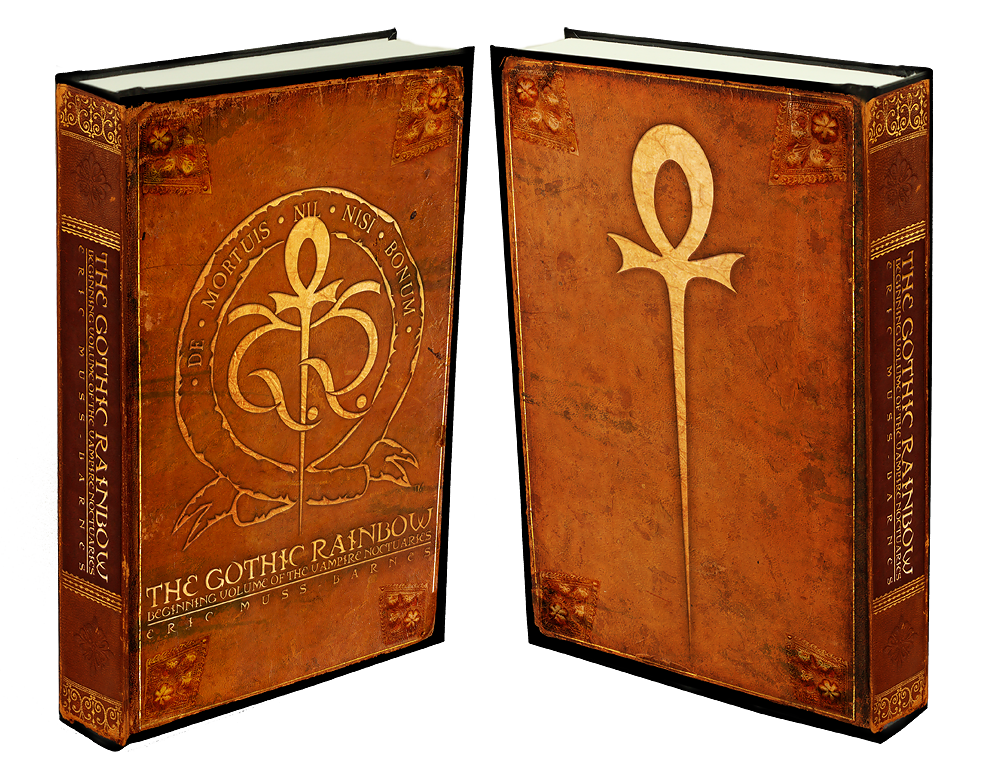
gothic rainbow book-coverBack in 1997, when I published The Gothic Rainbow, the first volume in my duology, The Vampire Noctuaries, it was the only novel I had ever seen with a musical playlist in the back of the book. I’m not saying I originated this idea nor do I proclaim to be the first author to create a playlist. I’m saying I was the first, to my knowledge. Feel free to correct me if you can prove anyone did such a thing before 1997.

Today, I wouldn’t call musical playlists “common” for novels, but they are far more prevalent in 2013 than they were 20 years prior.

When I first got into music, like most teenagers, I was into Top 40 Pop Music. Between radio, and movies, and MTV, that type of music was the most commonplace. It was easy access. Simple to find. Artists being played in the American Bandstand and American Top 40 genre have evolved over the years, but those tunes have been the predominant staple of American teenagers since the 1950’s. During my high school days, I was into Madonna and Prince and Michael Jackson and Van Halen and Cyndi Lauper. That was my style of music.

Then in 1987, my whole musical world changed.

I started skateboarding with a friend from high school named Attila (no, that wasn’t a nickname) and he was into all sorts of punk and industrial music. We’d go skateboarding and he’d bring along a boom box and play The Sisters of Mercy and Front 242 and Front Line Assembly and Siouxsie & The Banshees and I was totally blown away by this music. Especially industrial acts like Nitzer Ebb – I’d never heard music like that before. It was amazing! It was danceable like pop music, but so hardcore and aggressive like metal, but it was all electronic and didn’t have guitar solos and stuff. I was floored by this. Discovering a new band is a great feeling, but to discover entire genres of music you had never heard before transcends into a life-changing experience. Plus, it was so great for skateboarding because the music was so aggressive and technical, exactly like skating. A little My Life With The Thrill Kill Kult provided the perfect soundtrack for a skate session. It’s great. It’s great. I’m the white rabbit!

Skateboarding to that music is how I got hooked. This style of music was truly “underground” because it was harder to track down. You needed to make more of an effort to find these bands. I started watching 120 Minutes on MTV and listening to college radio. (Incidentally, to this day, Cleveland still has the absolute greatest variety of college radio stations I know. Los Angeles doesn’t have anything like it. I can still stream 88.7 and 89.3 and 91.1 over the Internet and hear all the great Cleveland stations from John Carrol, Cleveland State and Case Western.) I became immersed in that musical scene. As time went on, I started clubbing, and going to shows, and making music videos for local bands. I even started a music video program on cable access called Shellsongs and showcased bands from Nettwerk and WaxTrax! and Projekt and any other labels that would send me videos of alternative acts.

By the time I started writing The Vampire Noctuaries, I was steeped in that scene and had become exhaustively knowledgeable about the people, the atmosphere, the culture, the music, everything. That was my crowd. That was my social life. That “counterculture from the underground” (to quote KMFDM) was where I met all my friends, and where I was introduced to all the girls I dated, and where I went to parties, and where I spent my weekend nights. That club scene became my universe.

Being an author, immersed in a world of pale clubkids covered by black lipstick and fishnet and shadows, writing a vampire novel was just a natural progression from the atmosphere within which I was living.

One of the major differences between being a fan of Top 40 music and being an underground clubkid was how important music became to us. This is something the Top 40 kids never understood, but we knew intimately. When your favorite band is Bon Jovi, you get to see one show every three years from nosebleed seats in a massive arena. Your musical heroes remain distant. Untouchable. Removed. When your favorite band is The Dead Milkmen or Nine Inch Nails, you got to see them every 6 months in a club that seats 800 people and go stagediving and hang out with them at the afterparty. Energy from the band and the crowd becomes symbiotic. You become a part of the music scene. Shows are intimate. Connected. Our counterculture microcosm was a completely different experience from the fans of commercial radio.

As a result of these experiences, The Vampire Noctuaries became filled with gothic and industrial music. The Gothic Rainbow contains references to over 180 songs while the sequel, Annwn’s Maelstrom Festival has a list of over 90 songs.

How much does music play a part in The Vampire Noctuaries?

The first line of the first book reads:
Allyson called it “The Killing Game”.

A reference to the song by Skinny Puppy.

To this day, I remember how excited I was, the first time I read a book with a song reference in it. It was in the book “Yarrow” by Charles DeLint author gothic rainbowand the reference was to “Don’t You Want Me” by Human League. (Actually, there was a reference to “Clampdown” by The Clash before that, but I was only 15 years old and it would be another year or two before I discovered music as cool as The Clash.)

Perhaps I found it so exciting simply because no other books I had ever read made any pop culture references. Most books just existed within their own little universe with few references to the real world around us. Sure, I had read urban fantasy before. But somehow, having a character walk past McDonald’s just wasn’t the same as listening to music. The emotional connection we feel to music makes it a far more visceral thing to mention. When a book finally broke that barrier and suddenly a bit of pop culture and music was part of the story, I was completely enthralled. The novel felt so much more “real”, because now the author was referencing things I was familiar with, instead of just creating imaginary euphemisms for reality.

That became my goal with the songs in The Vampire Noctuaries.

I wanted readers to really feel those scenes. I wanted the music to truly act as a soundtrack and an emotional buoy to help readers float through the sentiments of the landscape. Every song is very deliberate and chosen for the lyrics, the emotional tone, or often times for both.

Once the book was released, the sheer volume of music helped to get the book noticed in places that would ordinarily ignore it. For example, when I sent a copy to the alternative music magazine Outburn for a review, they initially refused to cover the book, since they were a music magazine, not a literary magazine. After reading the book, the editor realized how relevant the book was to the music scene and not only was I offered a two-page interview, but they started distributing it in their catalog. Thus the mere presence of so much music in the story started to make the novel stand out, in places it ordinarily would never have appeared.

The most exciting part about including all the music was the opportunity to meet various musicians like Siouxsie Sioux of Siouxsie & The Banshees and Toni Halliday of Curve and give them copies of my novel. I never heard back from them. I don’t know if they read the book or not. That’s not the point. The point is, I gave it them.

I’m very grateful to all the wonderful musical acts who inspired and helped to shape the world of The Vampire Noctuaries and even if you never read my books, I highly recommend that you purchase these songs and albums and add them to your collection. I can only hope that someday, the admiration might come full-circle, and one of my novels might be quoted in a song lyric of a fantastic musician. That would really be something. We’ll see what the future holds.

What has been your experience with music references in books? Do you remember a song reference that got you excited, because you didn’t expect the author would know that band? Were you ever impressed by how befitting a song was in a scene? What do you think is the best use of music you’ve read in a book?

Guest Blog by Selah Janel ‘On Writing Short Horror’

•August 15, 2013 • 3 Comments

On Writing Short Horror

ImageTo me, horror is all about the ‘what if.’ Whether the story is grounded firmly in the real world, has a weird tale vibe, or is paranormal, there still has to be that element where a reader isn’t quite sure whether things are going to be okay or not. There has to be the willingness to believe that for as long as the pages are turning, whatever I dream up is possible. I find that especially true in short horror fiction. I love reading it and I love writing it, but it does have a special type of challenge to it. With a novella or novel (or even a novelette), there’s the opportunity to throw in a lot of detail, yank a reader back and forth through a comfort zone, and really build up the world and immerse them in it. With a short, I find I have to be more result-oriented, which can sometimes be an iffy thing. The plots of Twilight Zone work for a reason, but people have come to expect a bait and switch, especially within horror or other speculative genres. There’s no real formula to short horror fiction, but it does help to touch certain elements, at least for me. It always depends on the particular story, but there are certain things I try to do to help make things flow smoothly and cause me minimal breakdowns during the editing phase.

Even in a short story format, environment is important. Knowing where you’re at can also give you an idea as to what’s an obstacle and what’s an aid later on. Is the reader plunged into a tight, claustrophobic place where they’re close to a threat, so it’s possible that they’ll be in danger at any second? Are there things around them that can help them get away from a threat (or make things worse in the long run)? Is this a place that should feel comfortable (and thus giving way to something unsettling later on) or is this a foreign, outright unsettling place for the characters? All of that matters, and if you’ve got a short word count, you have to find ways to build this up quickly, or add description and emotion during the build of the plot or action sequences. I wrote a fairly literary weird tale called All the Little Things, and it involves the inanimate objects in the guy’s apartment ganging up on him. These things aren’t anthropomorphic and only have the assets that they’re programmed or built with, so building the world of that apartment was critical to make the story build.

Characterization is also important. You need to know what a person’s faults and strengths are to relate or distance yourself from them. The more a reader can empathize with person or situation, the more you can embed in their mind that your plot twist or threat could actually happen to them. It doesn’t matter if it’s far-fetched…if you can play everything straight enough and make things relatable, the reader should still be able to fall right off the cliff with you.  It’s always uncomfortable to relate to a character in horror. You either realize that you’ve been set up to feel like a victim, or worse, you realize you actually have something in common with someone pretty vile. I’ve used both approaches, but one of my favorite stories that I’ve done is a short zombie tale called Candles. It involves a makeshift family waiting out the zombie apocalypse one Christmas Eve, and you slowly learn more about the mother’s tensions and plight as she struggles to figure out what to give those she loves for Christmas when they have barely anything left and the undead are right outside their door. Environment is important here, too, but the mother is all too human with her need for love and her regrets. It’s easy to put myself in her shoes and to see me making the decisions she does if I was backed into a corner. If I feel like I’m making myself that way, then hopefully my readers will feel the same.

If the horror elements go into extreme territory, it’s still a balance of when and how and how much to show. A lot of the time the momentum of the plot solves this (at least for me), but pacing is still important, even with gross-out horror. Description and reaction are especially important here, because the reader needs to be plunged into feelings so uncomfortable that they almost have a physical reaction—otherwise it’s just violent words on a page. Using characterization to help keep the empathy up helps to offset this, though admittedly these are the scenes that I use sparingly. I go for the gore if I really want to show how vile a character is, especially if I set it against their own casual, everyday behavior. This tends to be a staple of my vampire fiction, to show that my version of the creature may be modern and may be relatable emotionally, but they’re still bad news. There’s nothing like reading about a guy casually reminiscing about a date, then realizing he’s covered in intestine and watching said date be crunched in a trash compactor to show that this ain’t your typical vampire romance.

Momentum is something to keep in mind, as well. You need to build somewhat, but you also can’t drag and lose your readers too soon. This is where I feel I’m still finding my happy medium. I like detail and building a full world, but I get that these days people want to get right to it. I feel like I’m always fighting myself on this element, and sometimes word count solves this for me and I have to suck it up and hack out sections (ever proof that you can’t get too attached to anything you write). Likewise, when the plot gets going, it’s like I’m on a roller coaster, struggling to hang onto the bar as I’m careened right along with my characters.

Finally, the ending. I’ve been influenced a lot by the old Twilight Zone episodes, and I’m a diehard Ray Bradbury fan girl. There’s something about showing just enough, then sending your reader toppling down an implied flight of stairs with the last vignette or sentence. I feel like I’m still learning the rhythm for this, but I like to try to scatter hints of what’s to come throughout the story—the catch is that it has to be subtle enough that you probably won’t pick up on it the first read through. It’s like life; hindsight is always twenty-twenty, right? If you’re invested in a character or situation, you’re not going to recognize all the signs. You want to find out what happens, at least I do. I love it when I can’t figure out an ending, when I’m fighting that urge to look ahead to know how the hell it all fits together. That’s a great moment, and it’s when I know I’m fully invested as a reader.

I’m still learning, but I’m proud of my horror fiction and enjoying the journey. A lot of the shorts I’ve mentioned appear in my collaborative effort, Lost in the Shadows, with S.H. Roddey. While we cover a lot of different genres in the book, there’s a healthy amount of dark fantasy and horror, since those are genres we both love. She covers more of the extreme territory, but I get a few fun moments in there, as well. You just never know what you’re going to find when you turn two creative chicks loose among the shadows.

Catching Up with Selah Online:

Blog – http://www.selahjanel.wordpress.com

Facebook Author Page – http://www.facebook.com/authorSJ

Goodreads – http://www.goodreads.com/author/show/5622096.Selah_Janel

Amazon Author Page – http://www.amazon.com/Selah-Janel/e/B0074DKC9K/ref=sr_tc_2_0?qid=1346815995&sr=1-2-ent

Twitter – http://www.twitter.com/SelahJanel


Guest Blog: The Creepiest Job I Ever Had

•August 13, 2013 • Leave a Comment

My Guest Blog at HorrorAddicts:

Guest Blog: The Creepiest Job I Ever Had.

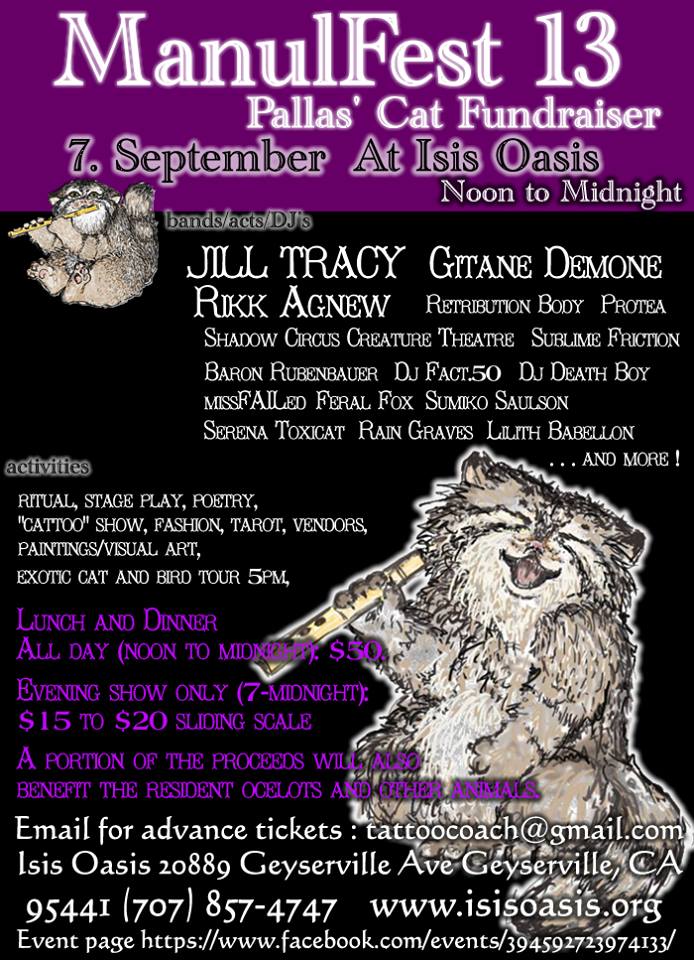
I will be reading at ManulFest

•August 12, 2013 • Leave a Comment

ManulFest (September 7)

manulfest banner

ManulFest-2013a_zps230bcaa0I will be reading a selection of poetry and a short horror story called ‘Attempted Happiness’ about felines and revenge called from “Things That Go Bump In My Head” at ManulFest 2013.

Date: Saturday, September 7, 2013

Time: 12 Noon to 12 Midnight

Venue: Isis Oasis, 20889 Geyserville Ave  Geyserville, CA 95441, (707) 857-4747

ManulFest is an all day multi-media event in Geyserville, CA dedicated to the Pallas’ cat, a fluffy feline phenomenon native to Mongolia, Russia, and surrounding areas, featuring  live music, poetry, djs, and plays. Artists from both coasts of the US come together this year to celebrate this lesser known, threatened species, with music, poetry, puppetry, ritual, fashion, “cattoo,” theater, paintings, tarot, food and much more. The full-day, family-friendly event takes place in an Ancient Egyptian style retreat center complete with a functioning temple and a sanctuary that is home to ocelots, servals, peacocks, and other exotic cats and birds. A portion of the proceeds will benefit them. We are dismayed to say there will be no Manuls on the premises, however, you can take a tour of the animal enclosures at 5pm and meet the wild spotted and feathered Isis Oasis residents!

Musical Performances by:

Jill Tracy • Gitane Demone performing with Rikk Agnew • Retribution Body  • Sublime Friction • Protea • Baron Rubenbauer (formerly of The

Jill Tracy

Jill Tracy

Nuns) on acoustic guitar • missFAILed

Poetry and Book Readings by:

Rain Graves • Serena Toxicat • Sumiko Saulson • Lilith Babellon

Theatrical Performances by:

Feral Fox Burlesque • Shadow Circus Creature Theatre

DJ Music by:

DJ Fact.50 • DJ Death Boy

Tarot • Vending • Plays •Fashion • Ritual •  Cattoo Show • Paintings • Visual Art

Admission:

$15 after 7PM live music only

$40 – includes 2 meals and all day and night performances

A portion of the proceeds will benefit Isis Oasis, Savemanul.org and/or Cathouse-fcc.org.

Contact:

Serena Toxicat: Phone (415) 6-OCELOT or (415) 662-3568. Email: info@manulfest.org

http://www.manulfest.org

Interview with Eric Muss-Barnes, author of “The Vampire Noctuaries”

•August 9, 2013 • Leave a Comment

The Author

ImageNovelist and author Eric Muss-Barnes was born and raised in Ohio. His grandest literary work to date is an epic 294,000 word vampire duology entitled The Vampire Noctuaries, beginning with The Gothic Rainbow and concluding with Annwn’s Maelstrom Festival. He has released a “vocational autobiography” detailing the humorous ups-and-downs leading him from his hometown to Hollywood, in a book entitled How You Can Get a Job at Walt Disney Studios Without a College Degree. In addition to his work at Walt Disney Studios, he has written, directed and produced an award-nominated, critically-acclaimed short-film entitled The Unseelie Court, a movie screened in numerous film festivals across the country and is available on DVD. His writing has been published in numerous magazines around the world and within multiple anthologies, such as Tales From The Dark Tower and The Skateboarder’s Journal – Lives on Board, while his professional photography has been exhibited and sold in art galleries from Cleveland to Los Angeles. His second book, entitled Schooling Your Boss To Not Suck, regales amusing tales of unfortunate managers at various jobs he’s held over the years while Forever Loving You is the tongue-in-cheek title of his book of poetry and axioms. Eric Muss-Barnes lives in Los Angeles, California.

The Books

ImageThe Gothic Rainbow is a novel story set in a dark, faeriepunk version of the 20th Century underground nightclub scene. With a bit of surreal embellishment to enrich the tale, this novel was inspired by the parties, the places, the people and the atmosphere encompassing my exposure to several years of the gothic/industrial counterculture.

Written in first-person, the tale is focused upon dreary chasms of the human condition and tells the journey of a young male vampire and his relationship with a teenage mortal girl, Helle. Thinking he is only a spirit that communicates with her in dreams and rituals, Helle slowly comes to discover that he is very real and will change everything in her life forever. The sequel is Annwn’s Maelstrom Festival.

The Interview

Q. Although you began writing “The Vampire Noctuaries” in the early nineties, many of the experiences of the characters bring to mind the goth and death rock scenes of the mid eighties. How much influence did that scene, and the nineties goth scene, have on the formulation of your characters?

A. The gothic/industrial/underground clubscene was a massive influence on the books. In fact, it was so influential, the title of the first book, The Gothic Rainbow is an eponymous reference to a goth/industrial nightclub in the story. Even the climax of the sequel, Annwn’s Maelstrom Festival takes place at a festival concert inspired by the first Lollapalooza in 1991. In my personal life, I got into that music in 1987, but I didn’t really start clubbing and going to shows until about 1989, so for me, the 80’s and 90’s eras blended together in a single time. I don’t really differentiate the decades. Thankfully, I was living in Cleveland at that time and, as anyone familiar with the history of that music can tell you, a majority of the most influential American bands in the scene were born in those rustbelt towns between Chicago and New York. Many quirks of characters and events in the story were based upon actual experiences I had during those years. So, yes, The Vampire Noctuaries duology is very much an allegorical history of that time period, with fictionalized vampires thrown into the mix.

Q. Would you consider Helle DuBois, the point of view character for the second book in your series, “Annwn’s Maelstrom Festival” to be a strong female protagonist?

A. Fundamentally, that depends on one’s definitions of strength and weakness. What kind of female is stronger? The girl who fights off her attacker and is never abused because she kicks so much ass? Or the girl who survives abuse and endures the aftermath? Would a girl be weak if she completely gave her heart and soul to love, and all the vulnerability that such a resignation entails? Or would real weakness be to shut yourself off from people and never feel love for anyone? I see Helle as all of the above. Despite her great power, she frequently uses it in ways that are violent and cruel and psychotic, and I think that’s inarguably a weakness. She’s also completely consumed by an obsessive and almost symbiotic love for Elric. To me, giving that much of yourself to another, and being subservient to that passion, is a sign of great strength and fortitude. Others would disagree and say it’s a weakness to weave your own identity so deeply into another. Thus, ultimately, her “strength” or “weakness” is relative to your own point of view. As far as I’m concerned, her strengths and weaknesses manifest in different facets of her personality, thus, I see aspects of Helle as both a “weak little girl” and a “strong and confident goddess”, all wrapped up in one. I feel that dynamic, and those contradictions, make her endearing. She’s not always a strong girl to admire. She’s not always a weak girl to pity. She’s both. She’s basically the amalgam of every goth girl I ever dated… if they had been megalomaniacal vampires.

Q. The book cover text from your first novel “The Gothic Rainbow” states that it is “a story carved from the part of your soul that knows more agony than all.” – do you think that your story relies heavily on psychological aspects and the internal life of it’s character to tell their stories?

A. Definitely. I would often create promotional fliers written in second-person, in an appeal to connect with the fanbase I knew would appreciate these books. This is for the kids who are the outcasts and the freaks. This is for the goth kid with no friends. But this story is also for the popular cheerleader, who has never told anyone about the horrible thing that happened to her at the frat party. It’s not about who you are on the outside. It’s about what has happened to you inside. I constantly emphasise to people that The Vampire Noctuaries does not have any of the typical cliches of vampire stories. These characters were invented in 1991. That’s before Buffy the Vampire Slayer, before Twilight, before True Blood and all these other trendy vampire books and movies. The Vampire Noctuaries follows none of those trends, because it existed before any of those trends were written. There are no vampire hunters, or love triangles, or werewolves, or quests to cure vampirisim, or wars between vampire clans, or a “chosen one” set to change the world. This is a story about the real pains and heartaches of life, set against a backdrop of betrayal and bereavement and vampires who revel in their power instead of lamenting it. Those are some damn fun characters to take to a Nine Inch Nails concert.

Q. One reviewer of “The Gothic Rainbow” on Goodreads said that appreciating the book required a prior understanding of the goth scene – do you think that’s true?

A. I certainly hope not. Years ago, I read a fantasy novel by a woman who wrote very confusing and complicated battle sequences. When I finished the book and read her biography, it said she was a career Marine. That explained a lot! She knew a little too much about military strategy and therefore, she couldn’t describe it in layman terms. Trudging through her terminology and descriptions was arduous. The rest of the book was fine. The rest of the book was accessible. The great irony was, the facet of the story that utilized her most abundant expertise, was the most poorly written part of the tale. Ever since that experience, I’ve always wanted to remain cognizant of such mistakes in my own writing. I never want to get so immersed in showing off my knowledge of a topic that it alienates readers who are unfamiliar with it. So, no, I don’t think readers need to be intimately familiar with the goth scene to appreciate this series, because when you get right down to it, although there are tons of references to the goth scene in the novels, this is a story about love and loss and heartbreak. I think everyone can relate to those emotions, even if they don’t own any Click Click albums.

Q. Do you consider “The Vampire Noctuaries” a paranormal romance, and what do you think of that particular genre label, and of genre labels in general?

A. Can The Vampire Noctuaries be a paranormal romance when there are no overbearing fathers forbidding lovers to meet, no girls torn between picking two guys, and no lovemaking in horse stables? The back cover of the original Gothic Rainbow categorized it as Dark Fantasy/Literature because I felt my work had every right to be granted the same respect typically reserved for the category of literature. Just today, saw an interview with Harlan Ellison, who is one of my writing idols, and he spoke about walking out of a television interview in 1980, because they introduced him as a science fiction author. He argued that he wanted to be respected as a writer and not labelled and compartmentalized. I hate granular genre labels too. I view The Vampire Noctuaries as fiction. That’s all. Since people insist upon being a bit more explicit, I can conceded to call it a “fantasy” book. In fact, I remain willing to continue calling it “dark fantasy” because, it does get pretty deep into the anguishing sides of life. But I still view it as literary too. Once you start calling a book “dark fantasy/ urban fantasy/ paranormal romance/ young adult/ new adult/ self-help /vegan cookbook” why bother to read it anymore? I think when books become “overly categorized” it can work against them, because people start making too many assumptions about what the story entails.

Q. Not all supernatural fiction is scary… you have categorized “The Vampire Noctuaries” as dark fantasy. What do think dark fantasy has in common with horror, if anything, and where do you think they diverge?

A. As I said, I hate getting too granular with labels and categories. One of the reasons I find the labels annoying is because they never serve their purpose! Labels are created to define and categorize stories, but you ask every author, every publisher, every reader, what their definitions are, and you’ll get a different answer! Some of the fools, you can see them online in forums and Twitterchats, debate with each other over definitions of a category. No one knows! So you go to all this trouble to compartmentalize a book and in the end, people still have no clue what the hell to expect when they read it! So, I can give you my opinion of what those categories mean, but that doesn’t mean anyone else will agree, nor will it mean any of us is correct. It’s all arbitrary. It’s all ambiguous. However, in answer to your question, I view “horror” as being fairly bloody and gory. That’s not my style. I’m not into that. That’s not to say there’s no violence in my story. There’s a ton of violence. I just don’t hold the camera on the carnage, so to speak. I don’t linger on it. I cut away quickly. I’m fond of saying, “I don’t write about darkness. I write about shadows.” That’s “dark fantasy” to me. “Horror” is when the thing in the woods graphically rips your throat out. “Dark Fantasy” is when the thing in the woods is just staring at you, and you feel those eyes on the back of your neck. I’m the type of person who hates horror films, but I love episodes of The Twilight Zone. Eerie and spooky turns me on. Gory and bloody doesn’t interest me.

Q. At 190k words, your first novel is a hefty tome… twice as long as some novels. What made you decide to issue your story as two books instead of three.

A. The Gothic Rainbow was supposed to be a single book. I outlined my entire story in 1993 and I started writing it in a linear fashion, beginning to end. When I hit about 300 pages, I looked at how much of my outline remained and I went, “Oh, crap. This thing is going to be 900 pages long!” I didn’t want my first novel to be a 900 page behemoth and take 5 years of my life to complete. Therefore, I picked a point about 3/4 of the way through the story where I could divide it into a 600 page book and a 300 page sequel. That’s how The Gothic Rainbow turned into The Vampire Noctuaries. The Gothic Rainbow: Beginning Volume of the Vampire Noctuaries came out in 1997 and Annwn’s Maelstrom Festival: Concluding Volume of the Vampire Noctuaries came out in 2013. Since the story was never intended to be divided into multiple books, the structure didn’t really support a trilogy or a tetrology; it became a duology simply because two books was the easiest way to divide the tale, without doing a major restructuring to the entire outline.

Q. Do you have anything else you’re working on that you want our readers to know about?

A. The writers I have always admired are the ones who write many different styles and genres of fiction. My ambition has always been to do the same. Ray Bradbury is a great example. He’s often regarded as a science fiction author, but he always saw himself as a writer of fantasy. If you read his body of work (the man published 27 novels and over 600 short stories, so you won’t read them all) you will see he wrote much more than science fiction. So, yes, I have a novel I’m working on, that I am hoping to have finished by December 2013. I’m keeping the details secret for now, but it has nothing to do with vampires or spooky things hiding under the bed. I’ve always maintained that the telling facet of storytelling is the most important part. So, hopefully, any fans who appreciate my storytelling in The Vampire Noctuaries will also enjoy the way my next story is told.

Where to Find Eric Online

www.EricMuss-Barnes.com

Author Interview: G.L. Giles

•August 8, 2013 • Leave a Comment

Author Interview: G.L. Giles.

I’ll be tabling at Convolution: The Gates of Horn & Ivory: The Realms of Dream

•August 7, 2013 • Leave a Comment

Convolution (November 1-3)

Image

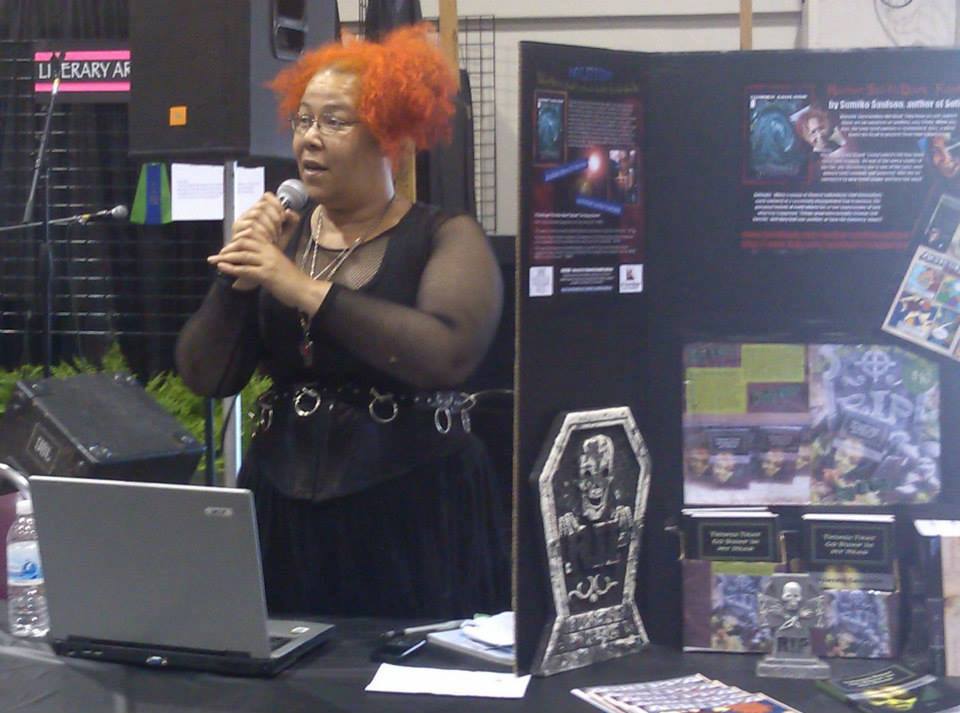
Me tabling at San Mateo Fair Author’s Day.

I am really excited to announce that I will be tabling at Convolution: The Gates of Horn & Ivory: The Realms of Dream, which is taking place November 1 – 3 at the Hyatt Regency San Francisco Airport, in Burlingame, 1333 Bayshore Highway Burlingame, California, USA, 94010.

I will be in the (brand spanking new) Publisher’s Alley, a special place for independent authors and small print publishers which is a part of a new Author & Artist Spotlight program at Convolution.

I am especially excited because Wendy and Richard Pini of ElfQuest fame will be speaking there, and I am a huge fan of ElfQuest, so don’t be shocked if I end up busting out some ElfQuest cosplay at some point over the three days.

It was always my intention to debut the sequel to “Solitude,” “Disillusionment,” at Con-Volution if I got a table there, and I have, so now I am back on track with that deadline. Speaking of “Disillusionment,” I won at Camp NaNoWriMo for getting up to 50k words on that; you will see the new icon on my page proudly announcing that. Also, you should see a countdown to Con-Volution.

Con-Volution is not the only event I’ll be appearing at over the next two months: here is information on two other events where I will be reading or tabling:

ManulFest (September 7)

ImageI will be reading from “Solitude” and signing at ManulFest, which is happening September 7, 2013 at Isis Oasis, 20889 Geyserville Ave., Geyserville, CA. 95441.

Gitane Demone with Rikk Agnew, Jill Tracy, Protea, Sublime Friction, Shadow Circus Creature Theatre, Retribution Body, DJ Fact 50 & Deathboy, Rain Graves, Serena Toxicat, Baron Reubenbauer, plays, tarot readings, and vendors are just among some of the musical acts, writers, and other entertainment and festivities at ManulFest 2013.

http://www.isisoasis.org/,

http://www.manulfest.com

More information about this event will be made available in a longer post at a later time. For now, if you want to learn more, visit the weblinks above, or the event page on Facebook:

https://www.facebook.com/events/199380666890806/

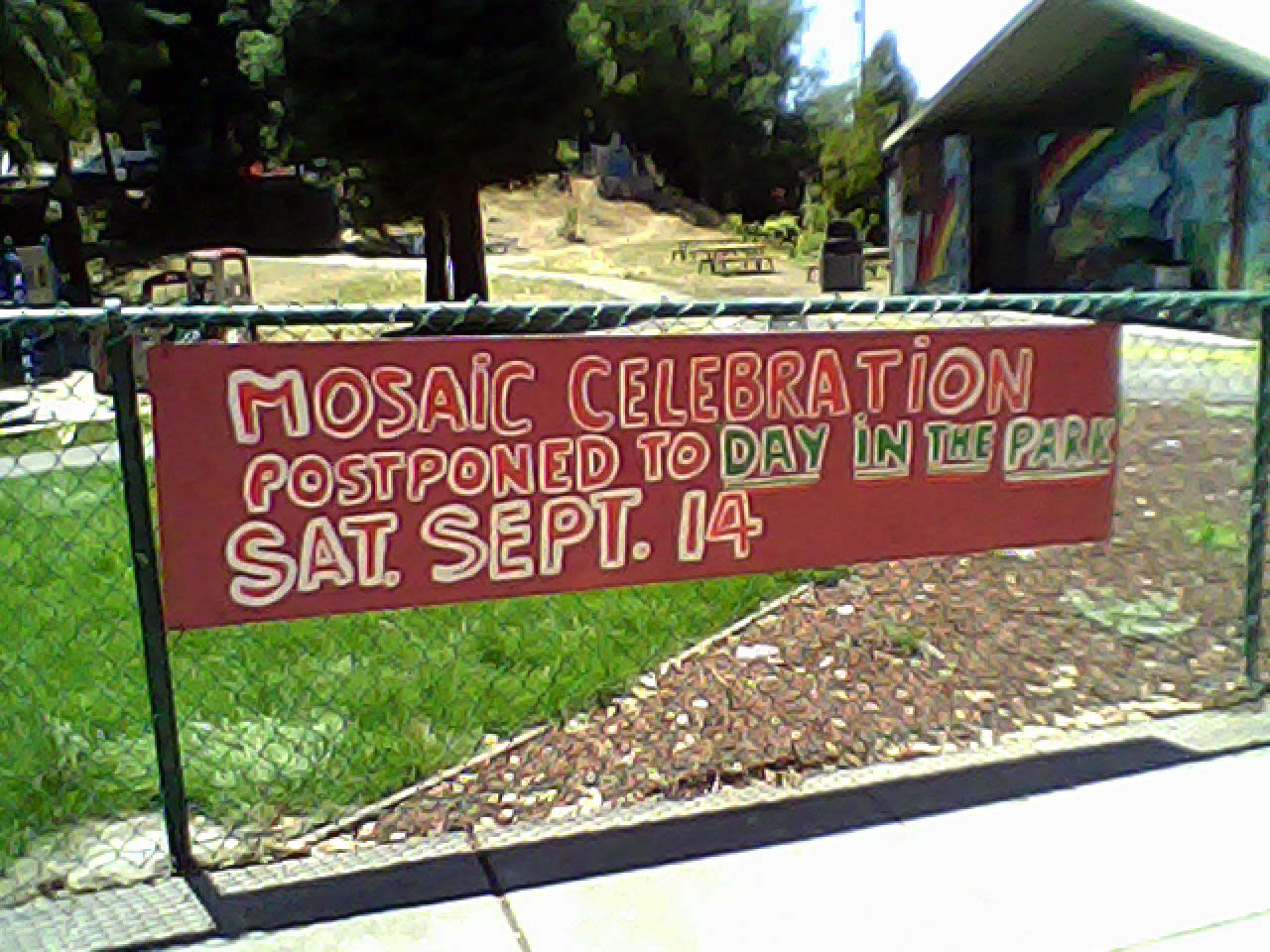
Day in the Park (September 14)

ImageThe 8th Annual “Day in the Park” with a live music stage, children’s activities, food, street vendors, and lots more! This takes place in Maxwell Park (the park itself, located between Fleming and Allendale, just past Monticello) in Oakland. I will be tabling there with my books, artwork, and sketching pictures for the kids (and adult) for a reasonable price. I hope to see you there.

More information available at the Facebook Event Page:

https://www.facebook.com/events/493710857371518/

Get “Solitude” on sale for just over a dollar!

•July 29, 2013 • Leave a Comment

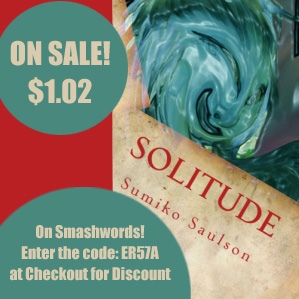
In celebration of my reaching 50k words and (finally) WINNING at (Camp) NaNoWriMo, I am going to put “Solitude” on sale. This is the first time I’ve ever put “Solitude” on sale, but since my NaNoWriMo project “Disillusionment” is Part 2 in the Solitude Saga, well, it makes perfect sense.

You can get “Solitude” in multiple eBook formats at Smashwords for $1.02 between now and August 1, 2013 with this coupon code: ER57A

https://www.smashwords.com/books/view/326403

solitude coupon

Get it for $1.02 with the coupon code today!

DESCRIPTION:

“To what extent does the presence of others affect our thoughts and actions? What do we believe when we are truly alone? Solitude is the riveting tale of diverse individuals isolated in a San Francisco seemingly void of all other human life. In the absence of others, each journeys into personal web of beliefs and perceptions as they try to determine what happened to them, and the world around them. ”

REVIEWS:

    
Horror for the intellectual, July 24, 2013
By
David (Milwaukee Wi) – 

Imagine being in your car one day and suddenly all the people vanish. The cars, trucks and buildings are still there. The animals are still there also but they’re not how they use to be. The world is a different place, there are forces at work that are changing everything and they may never be the same.

This is the story behind Sumiko Saulson’s Solitude. Solitude is about seven very different people and how they react to being alone after civilization disappears. One of them goes mad and talks to people who aren’t there. One goes to the zoo and frees all the animals and two others treat the whole situation like they are trapped in a video game.

When I first heard of Solitude I really liked the idea. The concept of being totally alone is a fear of mine and I was curious as to how each character would react, but there is more to the story then that. Solitude also gets into mythology and the supernatural as you find out why things are the way they are.

There is a lot to like about Solitude. One of those things is how the city of San Francisco itself is a character. Even though I’ve never been there , I felt I had been when I was done reading it. Sumiko really did her homework in the writing of this book. Each time there was an isolation as its called in the book, it corresponds to an earthquake that really happened. The book also gets into religion and touches on the subject of how something sinister can effect us on a personal level and how our world can be changed when something wants what we have.

One of my favorite scenes in the book was when a spirit takes over one of the character’s bodies and cries as he realizes that another character has died. At this point you are thinking that the spirit is evil and even the person whose body the spirit takes over wonders if the spirit is faking, but you soon find out that the spirit is not what it seems. I also liked the character of Angela who seems to be at the mercy of several external influences. I looked at her as a tragic character, she comes across as evil in the book but she doesn’t try to be, she just reacts to things in her environment the wrong way.

If I was to compare Solitude to anything, it would probably be to Stephen King’s The Stand or Beneath The Dome. You can also compare Sumiko’s writing to Anne Rice. The subject matter may not be the same but Anne Rice got into her character’s heads and Sumiko Saulson does the same thing. By the end of the book I felt I knew each character personally and it was hard to see them suffer.

I would classify this book as psychological horror. Because Sumiko doesn’t seem satisfied giving you a book that will entertain you and give you a couple of quick scares. No that’s to easy, Sumiko wants to make you think and then give you nightmares. Twice while reading this book I stopped and thought about the ideas that Sumiko was trying to get across, such as being at the mercy of forces greater than yourself and the idea of a world within a world.

The tone of the book is a little depressing and I would have liked a couple more action scenes but this is a great read.


A lot of fun!, October 4, 2012
By Turner Morgan “turnermorgan” (San Francisco, CA United States) –

Definitely a book for those readers who know San Francisco well, Saulson does a great job of weaving in threads from SF’s past history, as well as modern history. The plot starts out with a bang of scattershot impressions of all the major characters as Something Big happens to them- and as you go on, you get to know who these people are and care more and more for them.

I’d agree with the comparisons to King’s more epic works: this one’s structured similarly, and paced in much the same way as King’s work. If you’re in the mood for something King-ish, this book can stand up proudly to that comparison.

    
(Im)patiently awaiting the sequel!, September 29, 2012
By M. E. Valenzuela “Desdemmonna” (Spokanistan, WA) –

Don’t read this book before going to bed, you’ll never get to sleep! The suspense and attention to character development is impeccable. You get to know and build a personal relationship with them, the story weaves and arch that binds them all together in one unexpected conclusion. READ THIS! You will love this novel.

    
Very good, epic novel, evocative of Stephen King’s the Stand, April 4, 2012
By neutrino78x (‘Silicon Valley’, California, USA)

This is a fascinating and epic novel, evocative of Stephen King, especially his more grandiose works such as The Stand and The Dark Tower. It involves a group of people who wake up to find that everyone in San Francisco seems to have disappeared except for themselves, and soon discover that there are great forces at work. The drama unfolds as they discover the nature of their predicament and attempt to resolve it.


By Michael Lee Totten
I love the mystery of the beginning of this novel and how it builds up in sinister intensity in its sheer horror!

I won! I finished my 50k words at Camp NaNoWriMo!

•July 29, 2013 • Leave a Comment

Image

I still have to wait until August 5th to get the winner goodies, but still… excited!

The novel (Disillusionment) still isn’t done, but the first draft is around the 50% mark now. My novels average about 100k words, each previous one falling in the 80k to 125k range, and this one doesn’t look to be any different, although I won’t know for sure until it’s done. 

For now, I am going to enjoy my celebratory nap. 🙂

Solitude

•July 24, 2013 • Leave a Comment

dpwha's avatarHorrorAddicts.net

13564711Imagine being in your car one day and suddenly all the people vanish. The cars, trucks and buildings are still there.  The animals are still there also but they’re not how they use to be. The world is a different place, there are forces at work that are changing everything and they may never be the same.

This is the story behind Sumiko Saulson’s Solitude. Solitude is about seven very different people and how they react to being alone after civilization disappears. One of them goes mad and talks to people who aren’t there. One goes to the zoo and frees all the animals and two others treat the whole situation like they are trapped in a video game.

When I first heard of Solitude I really liked the idea. The concept of being totally alone is a fear of mine and I was curious as to how each character…

View original post 471 more words