The other day someone posted a question in one of the writer’s groups I’m a member of. It asked the question, “what do you do when you have writer’s block?” – and I gave the question some thought before coming back with a well-reasoned but honest answer: I open the journals I keep and start to write bullet points of character attributes, which are what I use for character sketches.
The thing is, though… that’s not all there is to it.
When you have writer’s block, you may want to do what I do… purchase adorable socks.
Every once in a while I get an inspiration for a really great story, and when that happens, I start to write a book. The truth is, I have a pretty good notion of where I’m headed by the time it just begins to follow out of me. Most of the time I write easily – it’s just a matter of keeping all that verbiage focused. Even when I’m not writing a book, I’m writing something. I was on social media before there was social media. If you’re like me, you don’t have writer’s block in the form of no words issuing forth from beneath your fingers.
You have writer’s block in the form of nothing to say. Seriously, I get hung up emotionally and I’m still speaking, or writing, but I’m saying a whole lot of nothing. I have to stop myself from issuing empty edicts all day long, and re-focus my attention onto something like physical exercise, chores, gardening, or playing video games, just to keep me from boring myself and everyone else on the planet.
I’ll let you in on a little secret: I’m not that confident.
I’m not that confident, but, I am aware that if I place myself in the position to receive too much criticism too soon, I can find myself in a shut down mode. I feel a little ill… anxious, maybe nauseated, and then I’m not writing anything, because I’ve decided that everything I have to say is very, very stupid.
For me, that is the cause of a writer’s block… a feeling of self-consciousness that strikes a chord of deep unnerved oh hell I just used a cliche strike a chord is so cliche there’s nothing new under the sun everything I write is derivative, and no one gives a crap. I need to shut up. Yea. That feeling. It comes just before the shut down. Although I have a philosophy that most of your critical types are dealing with the same loud-mouthed inner-critic as myself. I have some evidence to suggest it, since people I know and love have admitted to me that they kind of hope I suck so they will feel better and become inspired to write.
I say, go with that.
Find someone you totally think sucks, then meditate on their horrendous writing day and night. Tell yourself, “I can write better than this fool” until you overcome your feelings of self-consciousness. Then, you won’t been too worried to write anymore.
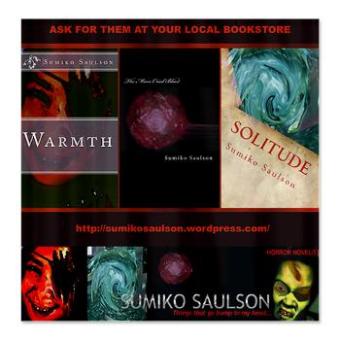
Just in case you haven’t found anyone you feel the literary superior of, I’d like to take out this time to suggest you go out and purchase one of my books, “Solitude”, “Warmth”, or “The Moon Cried Blood”, on the off hand chance that I will be someone you can gloat over.
Do I have a self-depreciating sense of humor? Why yes, I do.
I am from liberal, sunny California, where a lot of people – especially people of my age, are against labeling things. More specifically, against labeling certain character traits of people. Labels are “bad” and labels are “wrong”. If you are writing fiction, however – you are going to have to force yourself to accept the fact that dealing with personality traits that human beings may have in broad, general categories is a useful tool in character development.
Writers are often label makers
Even when you try to complete avoid labels, you are creating them. The recent stories about viewers reacting negatively to discovering that certain characters in the Hunger Games were, in fact, black, is a good example. When you don’t specifically identify, your reader fills in the blanks, and sometimes these blanks are filled in with “defaults”. When the gender is not named, many will presume the character to be male. When the race is not mentioned, many will presume the character is white. American readers tend to presume any character not specifically identified as being from another country is American, for instance. Yet as a writer, you may wish to create your characters with sufficiently faceted and nuanced traits so as to hold the sustained interest of your reader.
Attempts to add subtlety create opportunities to be interpreted differently
Your reader is another character being inserted into your story, one who is somewhat of a mystery to you.
than the way you intended for the reader to receive you. It is my opinion that the writer should be open to allowing the reader to use his/her own imagination in interpreting the work. Once, I read an interview with singer/songwriter Seal where he explained that he stopped telling people what his song lyrics meant after he came to the inclusion that what they imagined them to mean was often a lot more interesting than what he intended. Writing is an interactive medium because even when the reader doesn’t make any character choices, she or he is reading things into the story in between the lines and creating parts of your character’s persona for you based upon their own person experience and interpretation of the world. Your reader is another character being inserted into your story, one who is somewhat of a mystery to you. Understanding who your readership is, is known as “knowing your audience”. The thing is, if you are a small press or independent press author, your audience may be quite small.
My publicist (aka “mom”) asked me a couple of months ago who my audience was. I answered off the cuff, “women.” Then my mom – who has worked in and studied public relations – went over my sales numbers and immediately told
Knowing your audience: this artwork for “The Moon Cried Blood” successfully avoids screaming Young Adult fiction.
me that this demographic information was irrelevant for a marketing plan. Why? Because I hadn’t sold a large enough sampling to determine accurate demographic information, and because the local nature of my marketing approach would be a factor: people were buying books because I was local, and they were assuming they would appeal to people in my own demographic: i.e., guys were buying them for their wives, because they assumed that as a woman, I would be writing for women. That assumption isn’t too far off the mark: when we write, sometimes we write to an imagined audience. For my second book, The Moon Cried Blood (TMCB), the imagined audience actually was female, and it is a book with strong feminine themes. For the first book, the imagined audience was local: “Solitude” is a very San Francisco book filled with references that will resonate strongly with anyone who has spent a significant amount of time in San Francisco during the past 10 or 15 years. But an author isn’t necessarily writing for his/her own demographic. Some vague knowledge of who you are writing for is helpful. For instance, I had to change the cover for TCMB because the first one gave a mistaken impression that it was Young Adult. It’s not.
This hopefully segues nicely into the second part of Character: the internal life
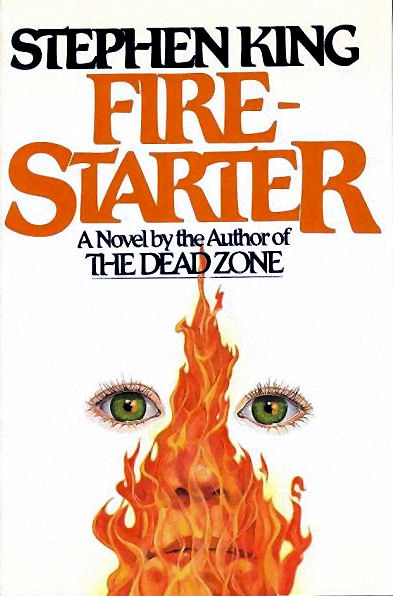
This First Edition cover for Stephen King’s “Firestarter” avoids emphasizing the youth of Charlie, it’s central protagonist
there of. What your character looks like, and the demographic information such as age, race, gender and place of residence for that character don’t completely inform the life of that character. A male character might be introverted, extroverted… vain, or humble. He might enjoy showing off and dressing in bright colors, and for all of these things that your character feels and believes, there may be a back story – a history, a “why”. All writers write differently: my personal style of writing is focused a bit on discovering who this character really is, and then plotting that character’s trajectory in the story arch based upon what would be “in character” for a person of that character type, in that situation. This works for me, because my stories are from-the-inside-out creations where often, ordinary people deal with quite out of the ordinary, or supernatural situations. That’s the case in “Solitude” and in “The Moon Cried Blood” – “Solitude” involves an ensemble cast reacting to the strange disappearance of most of San Francisco, and “The Moon Cried Blood” involves an adolescent girl facing a family “curse” – or is it a “blessing”? – that happens to girls in her family when they become women. Leticia “Tisha” Gordon is a very young protagonist who exists in a terrifying adult horror fiction world – in much the same way as Charlene “Charlie” McGee does in Stephen King’s “Firestarter”.
The character has one set of labels – the reader, another. Young Adult is a label describing these “?” characters known as your audience. We know that Charlie McGee’s story isn’t written for the same audience as is the story of Margaret
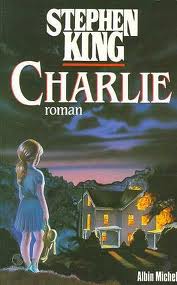
A foreign sales cover for The Firestarter which – if Stephen King were not famous – might end up in a mistaken Young Adult shelf placement
Simon in Judy Blume’s “Are You There, God? It’s me, Margaret.” 11 year old protagonist Margaret Simon is around the same age as Charlie McGee and 13 year old Tisha Gordon. Margaret and Tisha are both on the verge of menarche – that is, their first menstrual periods. But Margaret is in a book for other little girls who want to read about periods, while Tisha is going to get some kind of freaky Bene Gesserit style sci-fi powers when she gets her period, and then she’s going to be chased around by scary possessed winos in 1970s Hollywood with massive, fresh eye wounds. I’d like to stop here, briefly, and acknowledge that the haunting line about “yellow matter custard dripping from a dead dog’s eye” contained in the Beatles’ song “I am the Walrus” inspired certain scenes from TCMB. But no, reanimated dead dogs with yellow matter custard dripping from the eyes are not really appropriate subject matter for 11 to 13 year old girls, is my point. Yet, horror writers can imagine the internal life of a girl that age and visualize how a Charlie McGee or a Tisha Gordon would react to the scary people out to kill them.
In the Internal Life of a character, there is who she (or he) is and how that makes him (or her) react to certain situations. Tisha Gordon is not like Paul
Knowing Your Audience – Original cover art for “The Moon Cried Blood” didn’t look scary enough. It also looked too Young Adult Fiction/Fantasy
Maudib – she also is in a family line that has back-and-forth travel through the memory, essentially race memory (this isn’t exactly a spoiler because you know it by the end of the first chapter), but she in character and in life experience she is a very different sort. She is an ordinary, troubled inner-city teen with a traumatic history. When I was eighteen, I was very moved J.D. Salinger’s description of Holden Caulfield feeling like he was falling into the sidewalk in Catcher in the Rye. What he described in Holden is what is known as “depersonalization.” Although “Catcher in the Rye” was not written as YA, it became popular YA – so popular that it was banned, as a result of containing content deemed inappropriate for the teens who wanted to read it. Not all teens will like the story – but for me, it marked the very first time I realized I wasn’t the only person in the world who experienced “depersonalization” and I was overcome with that sense of relief one has when coming to know one is not alone. It was theorized that Salinger, a war veteran, suffered from Post Traumatic Stress Disorder, and imbued Holden with the traits of a person who had PTSD.
It is always going to be far more effective to describe the traits of a person with a condition than it is to slap that label on the person. Could you imagine if Salinger just said “Holden Caulfield had PTSD”? How much would that suck? Instead, he wrote convincing descriptions of the character’s internal and external life that lead the reader to that conclusion. Leticia Gordon is a character who exhibits traits from the internal life of a person with that kind of trauma, but she also exists in a world where supernatural occurrences are real. For her story – there are periods of time where it becomes purposely difficult to separate her internal life from her external life. This sort of “what is real and what is not real” confusion would not occur with a totally levelheaded, not at all neurotic, not at all psychotic protagonist – yet in telling a story, it is her behavior and emotional reaction that should draw the reader to a conclusion.
In conclusion… we may wish to completely avoid labels, but for clarity’s sake it is not always possible. Every label you come up with internal to describe a character to yourself is not one that winds up in your written work: sometimes, you know that your character has a trait, you may even have a journal somewhere (I do) of character descriptions that says “Leticia has PTSD” but that’s not what ends up in your book – what ends up in your book are a series of actions, reactions and thoughts the character experiences that lets your reader put together a picture of that character from the trail of breadcrumbs you give them.
The other day someone asked me on my Facebook page if I was self published. It was not a bad thing, I mean, she was trying to see if I wanted to hook up with the new horror/sci-fi division of her friends’ successful erotica book publishing business. However, it still made me feel weird, you know, and defensive.
I was reacting as if self-publishing is a dirty word… a nasty, dirty, hyphenated and/or compound word. Self-publishing is not a dirty word, but it feels filthy at times, like online dating, or some other things I can’t mention by name because I’ve said this blog is PG rated. However, “human nature” might also be a dirty world, and human nature is what makes “self-publishing” seem like a dirty word.
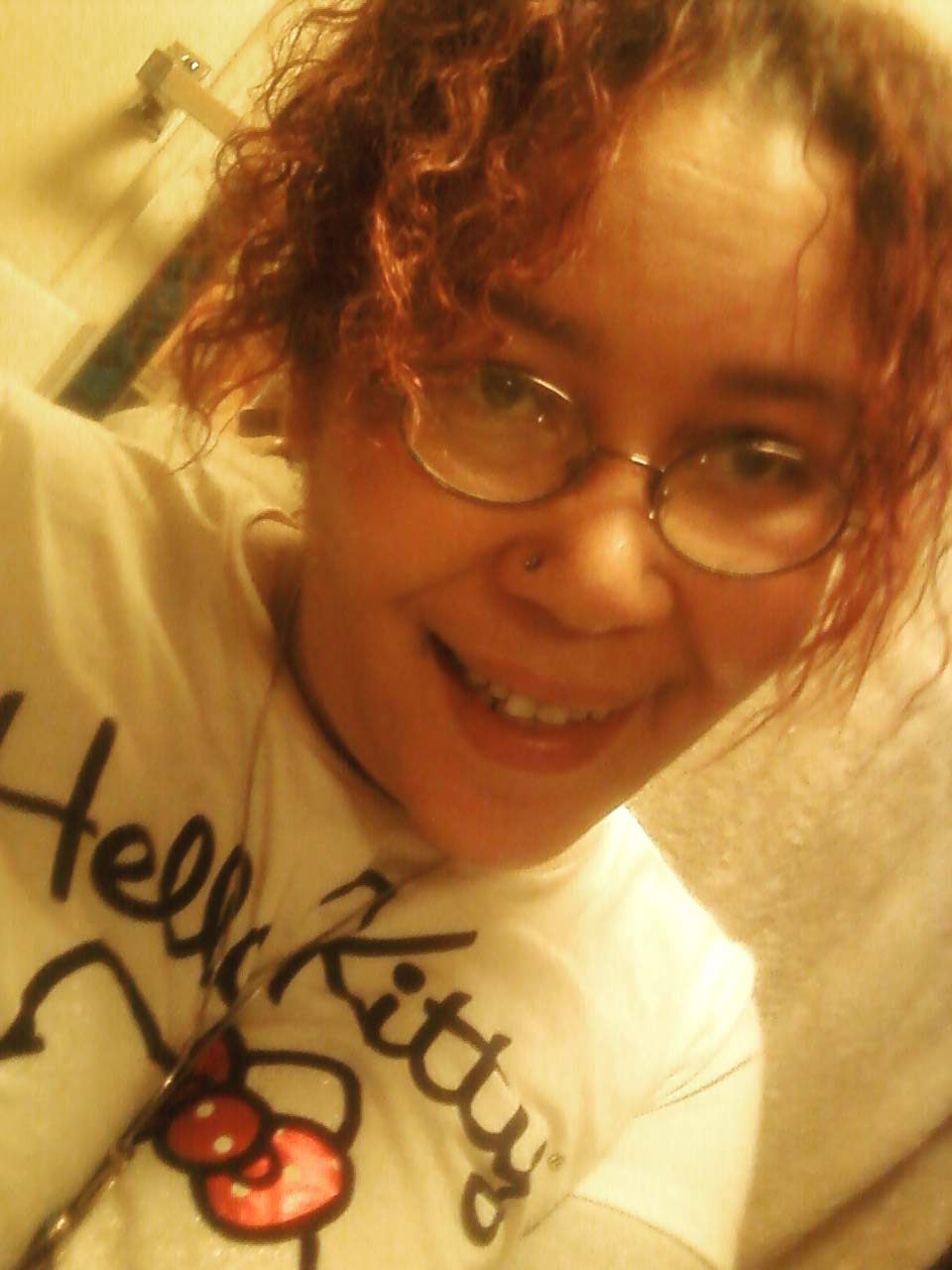
Human nature dictates that if you do something, you’ll soon be assaulted by the “that-ain’t-crap” crowd. The aforementioned crowd never goes away, even if you are successful: it’s just that when you attain success, they will be known as “critics”. Yes, they are critics. If you are going to do something – anything in life, like say, decide to wear a Hello Kitty shirt when you’re over 30 – which is not completely standard and acceptable and bland and vanilla – you are going to run the risk of developing a case of The Critics.
Some would say, “Sumiko, you are too old for that shirt.”
If you listen to The Critics long enough, you will become one. You will be your worse critic. You will be self-critiquing. I can’t really tell you why self-criticism is more socially acceptable than Doing Stuff, but it is. You will have to face your Inner Critic. Your Inner Critic is not always wrong. Neither are the other critics, always wrong.
But dealing with criticism at the wrong point: when you are not ready for it because you are building something, can stop you in your tracks. Dealing with criticism when you are not ready for it is like waking up in sweats on the morning of your High School reunion and then just slipping on your house slippers and going down there to see those people you haven’t seen in 10, or 20 years, and wondering why you feel uncomfortable. Seriously. It is predictable: you are more likely to feel uncomfortable if you invite criticism when you are totally unprepared. Do not invite criticism UNTIL you are a little bit prepared.
The truth is, I don’t know IF self publishing is for YOU. I can tell you why I self
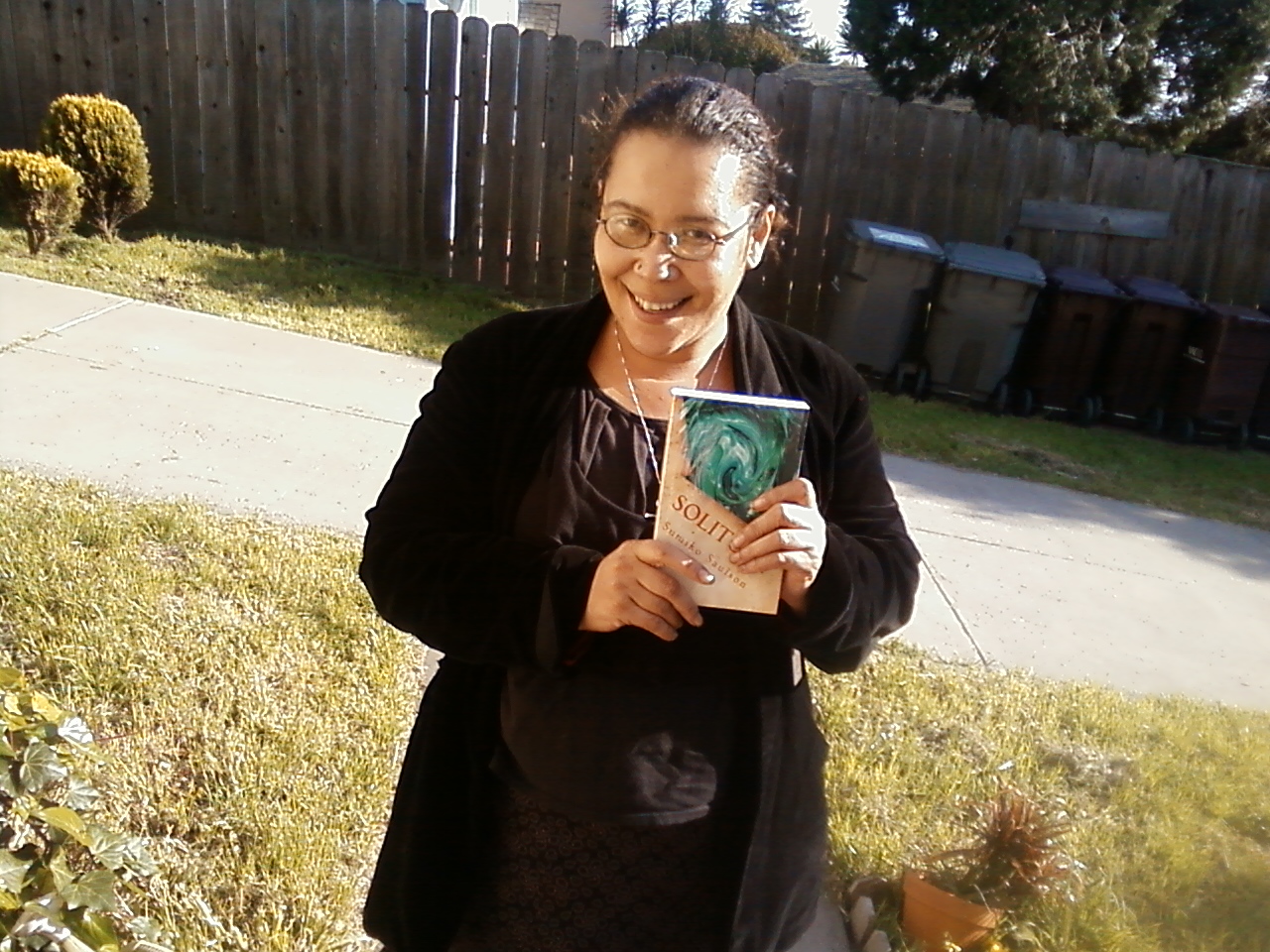
One of my high school friends told me I didn’t have a “real” publisher. Here I am holding my real book.
publish. I’m a compulsive writer. One of my favorite writers, Stephen King, actually joked in a forward to one of his books that he had a condition known as “Diarrhea of the Word Processor.” Yes – he actually said that, in the forward of whatever compilation of short stories of his I purchased when I first moved to San Francisco back in 1987. I am thinking it was the 1985 release of “Skeleton Crew”. I have a similar condition, but I do not have the condition he describes in the same introduction of having attained such popularity that people would buy his laundry list.
Still… I write all the time.Novels are different than blogging and posting on Facebook. For me, mine are complete fictional emotional landscapes featuring various types of persons and personalities reacting in natural ways to unnatural situations. That is both the “how” and the “why” of me writing.
Still, this equation doesn’t answer the “why” involved in me self-publishing.
Why did I self-publish?
Once my first book, “Solitude” was completed, I wanted to get feedback from people who are close to me. As it turned out, getting the book printed by Lulu was actually cheaper than sending all of the 350 pages to Office Depot. It would have cost $35 to get it printed at Office Depot.
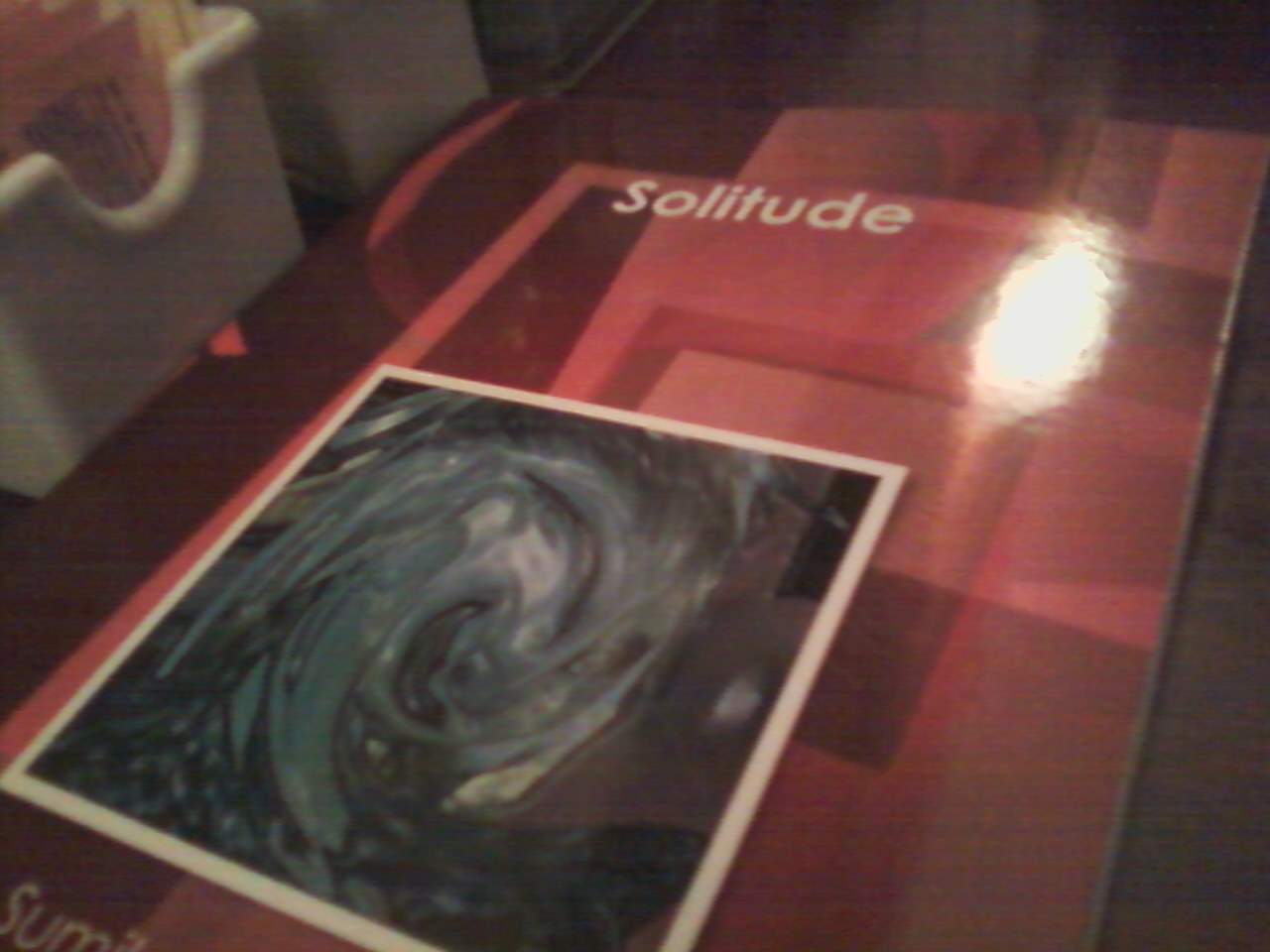
The original (Lulu) edition of Solitude. Cheaper than Office Depot. Incidentally, Lulu *is* the publisher.
So I self-published because it was convenient to do so. Later, when I started to sell the books, I began learning more and more about how to price them, who wanted them, how to deal with the bookstores, etc. If this sounds like an accidental snowball effect to you, you are exactly correct: although, with my sales numbers barely into the triple digits it is a very tiny snowball.
No one makes it onto a best seller’s list by selling 150 books.
I don’t have any grand notions of what I am doing here – still, it feels AMAZING. I don’t have a lot of readers, and I can’t make a living at this I can more-than-break even. But basically… I am having fun. I am doing this because I like it.
I like it a lot.
I self publish for the same reason I wear the Hello Kitty shirt – because I like it more than I care about other people not liking it. And believe me, I’m not exactly a thick skinned person. I think self-publishing may be for you if you care more about telling your story than you to about being rich, being famous, or being taken seriously by people who haven’t even read your book. Traditional publishing? That’s good, too. I wouldn’t turn it down. I may try for it.
Some people say that the paperback is going out of style… but I disagree. Most of my sales are paperbacks. You can save $10 by ordering the eBook (even more if you are ordering online, because of the shipping and handling), but in the local market… where people buy the most, you can pick up one of my books for $17 or $18 at a local bookstore, and if you track me down, you can easily get it signed. By “easily” I mean, if you take me out to coffee, or, if your mom knows me or something, because let’s face it, I’m not famous.
Not being famous, I’m thinking, none of you are going to want to purchase my overpriced crap on CafePress. But then it occurred to me, that maybe I’m wrong. What if some of you are rich and stuff? You may feel that you really can’t live without a $224.99 Queen Sized “Things That Go Bump in My Head” Duvet, and if so, who am I to deprive you? Indeed, who am I to keep you from sleeping nightly under a totally awesome $225 blankie with all my books on it? I can’t make that decision for you, so I simply MUST offer you that blanket. Oh, did I mention the $60 Shower Curtain?
Medieval Snuggie Robe
In addition to the shower curtain, which you want, need, and have to have, there are also several adorable stuffed animals wearing tiny “Things That Go Bump in My Head” t-shirts that you probably can’t live without. I mean, the plain white teddy bear ONLY costs as much as one of my novels, at around $17, and, while you’re spending, there is that cute little cow with the artwork tattooed across it’s tiny chest… I know you need it. You want it. Because it’s so cute. Almost as desirable as the pajama set…. yeeeessss….
I am Cute – You Want Me – Cow
You totally WANT to spend $28 for the adorable cow (which is $10 more than a book) or $20 for the Adorable Teddy Bear – because Horror gives you nightmares, and you will not have as many nightmares when you read these scary books if you have the stuffed animals. You know what else you need? You need a Snuggie. Either the Snuggie, or the Pajamas, for only about $50.
In the middle of the night, when the books begin to frighten you, you can sleep soundly in an overpr…er…uhm…. $44 “Blanket Cover” (that is generic code for “Snuggie”) – this Bad Assed Snuggie also looks kind of like a creepy Gregorian Monk robe, so if you are really, really into “Warmth” you can toss it in a vat of brown Rit dye at some point and dress up as Sera in her late Medieval period. Although, frankly… I have to admit that the pajamas are cooler.I’m guessing you guys can’t really afford all this stuff, and would rather have the books anyway…. but that’s just a guess. After all, for all I know, you really need the mug…. or want the fabulous Medieval Snuggie Robe… Everyone wants a Medieval Snuggie Robe.
In case you’re wondering why I haven’t been blogging lately – it is because I’ve started writing again. I am working on two sequels to “The Moon Cried Blood” and on a book of short stories. On average – it takes me about three months to write a book, and another two to five months to edit it/work with an edit. I won’t be releasing anything new until next year. In addition to the amount of time it takes to write and edit, it makes little sense to release more than one work every year or so, because it becomes impossible to promote them if they are released that rapidly (I should say: hindsight 20/20 since I released three books in a 9 month period).
“The Moon Cried Blood” looks like it’s turning into a trilogy, which makes a lot of sense, given it’s race memory/time (not exactly travel) themes. If you’ve read it, well, you know what I mean.
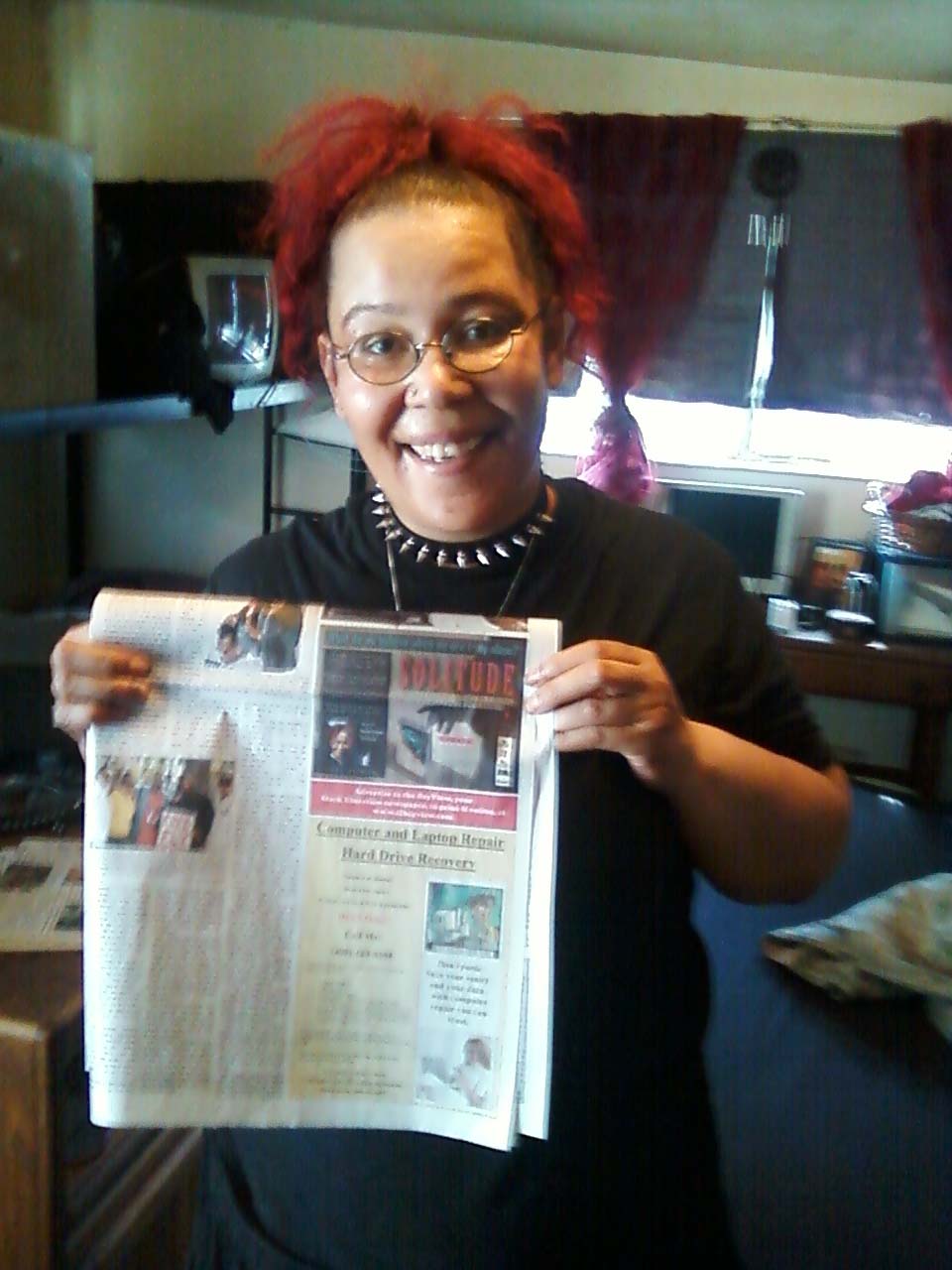
Speaking of promotion, I’m happy to report that I have my first newspaper advertisement for my first (and most thoroughly edited) work, “Solitude”.
Who doesn’t love zombies, ghouls, and the half-eaten humans left in their wake? Here at “Things that Go Bump in My Head” we like to feed your hunger for human flesh… eating supernatural creatures, that is. That is why we are pleased to introduce the first official contest for “Things that Go Bump In Your Head”: the “Feast: Flesh or Foul” Contest! to celebrate the Year 2012, the Upcoming Zombie Apocalypse, and the perfectly timed release of “Warmth”
WHAT TO ENTER:
We are looking for photographs in one of three categories:
THE AFFLICTED (Ghouls)
THE DEAD (Zombies)
THE FOOD (Humans)
See an overview of each type of entry below. You should enter a photo of yourself in one of these three roles as described at the end of the article.
HOW TO ENTER:
Post a photo of yourself dressed up as The Afflicted (Ghoul), The Dead (Zombie), or The Food (Human) on Sumiko Saulon’s Facebook Author Page here: https://www.facebook.com/authorsumikosaulson – you will need to have a Facebook account to do this, so if you don’t have one, create one. I’m pretty sure you will need to “like” the author page to upload the photo (guess what? You don’t have to like the page. I just found out). When you upload it, write “CONTEST ENTRY:” with the kind of creature you are afterwards. For example: “CONTEST ENTRY: Ghoul”. It can be a drawing, a photo, anything as long as it is original artwork.
HOW TO WIN:
Get as many people as possible to “like” your photo on the Author page, because the one with the most likes wins. In the event of a tie, we will have a Run Off between the winning entries.
THE PRIZE:
You Win: You get a copy of “Warmth” signed by the author, and you have the opportunity (optional) to be included in an upcoming promotion for the book, where you are in costume holding the book. That means you’d have to take another photo with the book when it arrives. No, you don’t have to (although we’d love it if you did)
THE AFFLICTED (Ghouls):
The Afflicted: Sera, Unpretentious Ghoul
The Afflicted are Ghouls: Their ghoulish affliction causes them to age very slowly, and run a constant fever so that they are at most times sweating profusely. They require human flesh and blood to survive. Ghoulism is caused by zombie bite, so many ghouls have unsightly healed-over zombie bite scars. They fall into two basic categories:
– The Unpretentious Ghoul
The Unpretentious Ghoul accepts the fact that he/she is a ghoul, you may consider that he or she is a traditionalist. Most of your unpretentious ghouls still bear the scars of the zombie attack that cause the original transformation. They know that as ghouls, they do not require fresh human flesh or blood, and can survive on the flesh of the dead. The unpretentious ghoul may eat rotting corpses, human flesh jerky, and other substances that the pretentious ghoul would find gross and disgusting. Unpretentious ghoul heroine Sera had her teeth sharpened like shark teeth by the Mayan’s to make flesh eating easier. She is a ghoul hunter who hates the Dead. Ghouls are not immortal, but age very slowly. Sera is pissed off because in her case, this has lead to a 600 year long pregnancy.
– The Pretentious Ghoul
Some of the Afflicted are more pretentious than others. Pretentious ghouls, like Lizbet, like to pretend they are vampires, because vampires are just a lot more glamorous seeming than sweaty, rotten-flesh consuming, sickly long-lived mortal ghouls. Of course putting on such pretentious means investing a lot of money in plastic surgery to cover up nasty zombie bite wounds, and dental work to install fangs sharp enough to inflict a bloodletting bite. That kind of vanity keeps Sera’s old friend and former lover Fadrique, Plastic Surgeon to the Stars (and more secretly, to the Afflicted) constantly in the money. In order to disassociate themselves from their ghoulish origin, the pretentious also drink the blood (and at times, eat the flesh) of the living, considering eating dead people as “low”. The Afflicted are never able to make new Afflicted through bite wounds: after all, they aren’t vampires. Only Stage 2 Afflicted, or Zombies, can make new Afflicted.
THE DEAD (Zombies):
The Dead are always hungry.
The Dead are Zombies. The final stage in the life cycle of a Ghoul is as a member of the Resurrected Dead. When a ghoul dies – whether it is after a long period of extended life as The Afflicted, or immediately, following a fatal zombie bite that the parasitical combo causing Ghoulism is unable to heal, he or she resurrects as a hungry corpse whose only goal in unlife is to perpetuate the species: the symbio-parastical species, that is, of strange gut flora living in the host systems of the Afflicted Stage A (Ghoul) and Stage B (Zombie). Zombie slayer Sera hates the Dead – they are always hungry and have no self-control. If the planet becomes infested with them, the whole Ghoul-Human part of the ecosystem would go to hell, leading to the end of all mankind. And all ghoulkind – they’d starve. No ghoul in its right mind wants that.
The Food (Human):
Solyent Green is People: The Food is Human
The Food is Human: Ghouls and Zombies have a lot in common with people: the thing is, they are people. It all starts with a bite: the first step in the Human-Ghoul-Zombie cycle is the part where the Zombie bites the human and infects it: so the human because the Afflicted (part A or B). Some humans become food because they are bitten while still alive: either unwillingly, though a hostile attack, or because they are masochistic vampire groupies who haven’t discovered (yet) that the Afflicted Ghoul is incapable of granting eternal, or even extended, life. Some human beings are eaten after death, in various states of decomposition or even after cooking and other methods of preparation.
THE DEADLINE: This contest will be accepting entries until June 1st, 2011. Remember: the sooner you enter, the longer you have to ask people to “like” your picture. Yes, you can use an old photo of you dressed as a zombie, a ghoul, or a ghoul we presume is pretending to be a vampire because in Warmth, vampires don’t bleeping exist, an old photo of you with an apparent zombie bite, or whatever works for you.
This interview is being included in the 2013 Women in Horror Interview Series. Every February, Women in Horror Recognition Month (WiHM) assists underrepresented female genre artists in gaining opportunities, exposure, and education through altruistic events, printed material, articles, interviews, and online support. You can find out more about WiHM here:
This is the first in a series of interviews with women in horror fiction.
I hope you will enjoy this interview is with psychological horror/suspense writer Andie Lee Eames, who writes under the penname A. L. Peck. Today we will talk about writing, perceptions of women and women of color in the horror genre, and why female writers would still feel a need to use a gender neutral penname 150 years after the Bronte sisters did.
The Book:
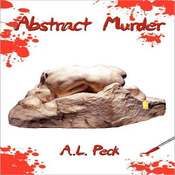
Abstract Murder
Abstract Murder is a disturbing psychological suspense tale told from the viewpoints of various characters. The characters speak directly to the reader taking them into the dark recesses of dangerous minds while calling into question the validity of good and evil.
If you liked “Pulp Fiction Silence of the Lambs” then you’ll love Abstract Murder, which is told in flash forwards, backs, and present time.
It is a high concept thriller not for the faint of heart and one hell of an emotional rollercoaster ride. There are three different killers and you’ll get to see what made them that way.
The Author:
Born in Washington D.C., Andie Lee Eames is a free-lance journalist and author. She wrote the well-received novel “Abstract Horror” under the pen name A.L. Peck.
Abstract Murder is her first novel, and she is currently working on a prequel. Links to other writings by the author that are available online can be found at the bottom of this page.
The mother of two teens, Andie Lee Eames is an American of Irish, Mexican and Caribbean heritage, and divides her time between the US and Belfast, Northern Ireland.
The Interview
Sumiko Saulson:
How did you get started writing?
Andie Lee Eames
I began writing seriously with my cousin Sarah in Ireland on Bebo where we’ve created an epic sci-fi fantasy Carpe Ominous=Take it All! That’s where I got the idea of building up a fan base and writing on line.
Sumiko Saulson
When did you start writing, and what were you doing before?
Andie Lee Eames
I was once a fire fighter/ medic, but once I got married and had kids I started
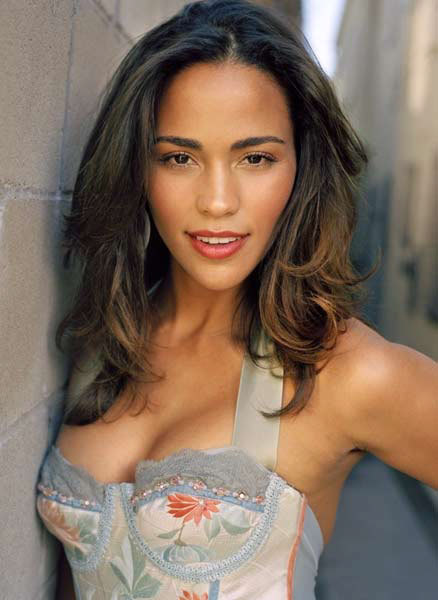
In Andie’s Dream Cast for the book, Paula Patton plays FBI Special Supervisory Agent Lenie Larson
writing. I released Abstract Murder published by Authorhouse September 2008 It took me two years of research to learn the correct terminology and I got assigned an F.B.I agent to help so it was cool and frightening to be at Quantico
Sumiko Saulson
Women in horror are rare; women of color in horror are exceedingly rare. I wanted to do the interviews as a way to bring exposure to women in the genre but also, to encourage others who are just getting started. What advice would you give to other ladies getting started in the genre, what do you think?
Andie Lee Eames
I know when I looked up horror writers/directors etc. and they stay within their race and that’s fine but to me there’s only one race and it’s human but with religious and cultural differences
Sumiko Saulson
It is true that there is only one race, scientifically. Prejudice is not a construct of scientific fact but human perception – the hateful comments about the dark skinned girl in Hunger Games being played by an African American actress all over Twitter are a good example. The fact that there is no scientific reason for a culture bias or, in that case; one called colorism (which is bigotry against a skin tone) doesn’t mean that it doesn’t exist.
Andie Lee Eames
Exactly, I wish more people viewed the world that way. So what the little girl was black does that really make a difference?
I want to break down these racial barriers
Sumiko Saulson
What was it like releasing your first novel back in 2008, and how did you like working with Authorhouse?
Andie Lee Eames
AnnaSophia Robb plays Meghan McHugh in the dream cast for “Abstract Murder”.
It went really well and I recommend authors who go the self-publishing route to try them out. I’ve a cult like following around the world and recently found out that the book as reached Japan and been translated for them
Sumiko Saulson
It must be exciting to have readers as far away as Japan.
Andie Lee Eames
It is, I’d no idea but it’s really cool. Most of my fan base is UK, Ireland, Germany, Australia and New Zealand and now Japan; it’s strange how it works out
Sumiko Saulson
Women in the horror genre are still rare; women of color exceedingly rare. I wanted to ask you: what made you decide to write in the genre of psychological horror?
Andie Lee Eames
I wasn’t aware of how rare we are until you mentioned it. I like to understand the reason that people do horrible things to one another and the best way for me to do this without sounding preachy was the horror genre
Sumiko Saulson
And as a follow up… do you think there is any reason that mostly men have been writing horror? Such as do you think women have any cultural identities that make us believe it’s not ladylike to write scary things?
Andie Lee Eames
I honestly don’t know why it’s a predominately male dominated genre but I
In Andie’s dream cast, Zoe Saldana plays Detective Mena Vincent.
plan to change that. Women have so many ideal thrust upon us as to what constitutes being a lady. I think it limits some of us in what we think we should be instead of who we really are. I do not like that double standard
Sumiko Saulson
So if I understand you correctly, you believe that in an ideal future, we would begin to be motivated internally by what we care about – such as figuring out why people do horrible things in your case – and not externally by what we think society believes we should care about?
Andie Lee Eames
Yes, in a way but we’re visual creatures by nature. I think that more women will change from the horror vixen to more powerful positions. The reason I published under A. L. Peck is because I didn’t want the reader knowing I was female. I wanted the book to stand or fall based on its contents not because I’m female. There’s a bias about women in horror most are models or actors who are paving the way for the female writers of psychological horror.
Sumiko Saulson
Understood. That’s why J.K. Rowling published “Harry Potter “ under a gender-neutral name. It’s also why Emily Bronte published Wuthering Heights under a masculine pen name Ellis Bell. But isn’t it interesting that 150 years later women still have to do as Ms. Bronte did in order to be taken seriously? Do you
In A.L. Peck’s dream cast, Brian Thomas is played by James McAvoy.
think this will at some point change?
Andie Lee Eames
I hope that it will change at some point but it’s going to take for more women to succeed before that. I actually had someone tell me that if they’d known I’d written Abstract Murder they wouldn’t have met me and I thought that was pretty messed up because you don’t say that to a man who has written horror…people choose to see what they can process and right now it’s easier to be gender neutral.
Sumiko Saulson
That is an excellent example of gender bias in horror – and the stereotypical thinking that suggests that a woman isn’t as capable as a man of creating a terrifying character without being disturbed – no one seems to think Dean Koontz is disturbed, or Stephen King.
Andie Lee Eames
Exactly and it’s not a fair assumption for people to make but they do it anyway. I want to be able to change that because when people realize that Abstract Murder was written by a woman some give you that doe in the headlight look. Some people not all
Sumiko Saulson
Different writers have different processes. Notably regarding you and your process: I see that on your popular Facebook page, you role-play your character Mr. Nobody. That is a unique approach. Do you think this kind of thing is part of your creative process, as well as an effective marketing tool?
Andie Lee Eames
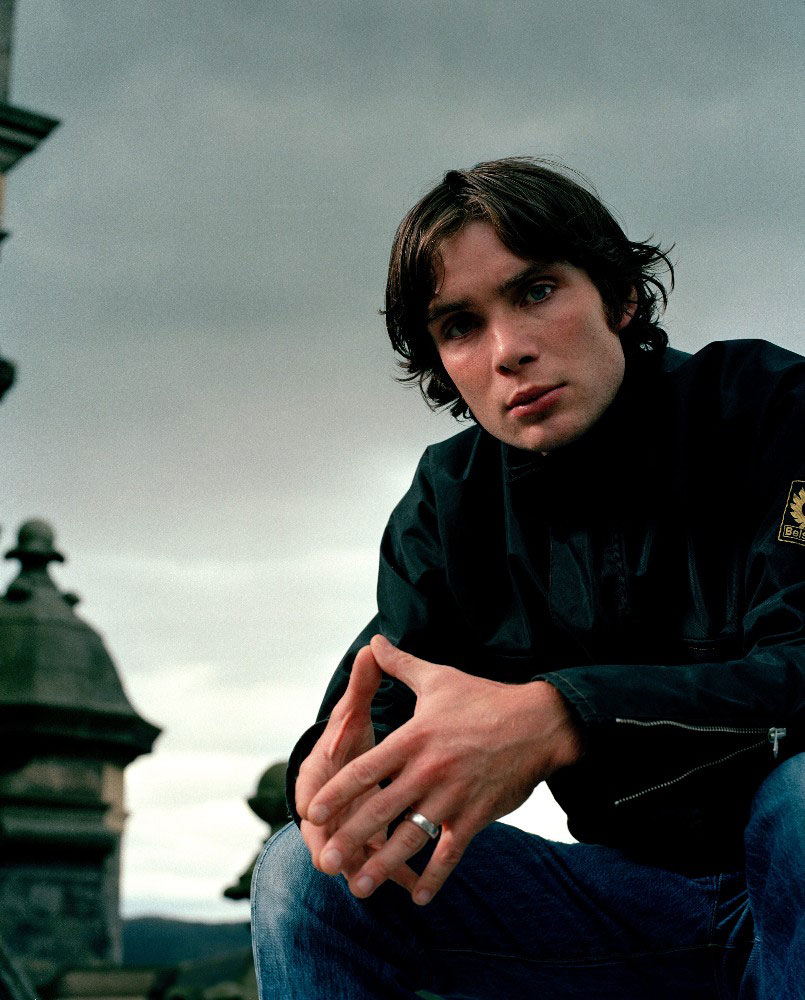
Cillian Murpy – Andie’s ideal actor to cast as “The Artist/Mr. Nobody” if Abstract Murder were made into a movie.
I’ve tried role-playing on other sites with characters from different stories that I’ve written and it worked out really well so I figured to try it out here on FB. In this market you have to be competitive and try new things, so I thought by putting an actual face and speaking in the voice of the characters was worth a shot
Sumiko Saulson
And the face is of the actor you envision playing the role?
Andie Lee Eames
Of Mr. Nobody?
Sumiko Saulson
Yes. Because that’s who you currently use on Facebook. But I also notice you had photos of the actress you had in mind for the young female detective, so in both cases.
Andie Lee Eames
In the book he doesn’t really have a face so when I decided to do the behind the book series. The first face I saw when writing was Christian Bale then when I
Christian Bale – in the Dream Cast as FBI Special Supervisory Agent Michael Hallard
decided to do this I had to find the actors that I saw in my mind when I was writing the book
In developing Mr. Nobody referred to as The Artist in the book I wanted a face that could easily do or get what he wants and be forgotten as easily by those who have seen him
I wanted an actor who could pull this off and Cillian Murphy was the first actor that came to mind to be Mr. Nobody
Sumiko Saulson
I see. And I notice that in your writing, you trying to emphasize the frightening notion that this serial killer could be anyone – the reader’s next-door neighbor – and that really underscores the menacing nature of this character. Is the way he looks part of this unnoticeable persona as suggested by the book?
Andie Lee Eames
Yes, I am because when you break it down and this is going to sound jaded but it’s anything but. I don’t think that we can ever truly know someone and that instills horror and awareness. In the book he’s a much less likeable characters who isn’t really one of the primary characters but one of three killers in the book. I decided to develop him and the other characters more without spoiling the book for those who haven’t read it yet while keeping those who have further entertained. Thanks I don’t have many reviews on Amazon but I hope that the information on Amazon is enticing and insightful
Sumiko Saulson
It’s been great speaking with you. Before we wrap this interview up, can you let my readers know where they can find you on the Internet, where they can pick up a copy of your book, and things like that?
Andie Lee Eames
Thank you. Abstract Murder can be found on line around the world on Amazon and Barnes&Noble
Some writers, I’m told, are really doing well with eBooks. I am not one of those writers: I am, instead, a writer who is selling paper backs in local books and out of the trunk of my car. I’m no expert on the subject, but I am definitely more of an expert at than I am at selling eBooks. eBooks may be popular, but I sell most of my books locally. It’s a lot of work, but it’s rewarding.
For example: today, I had a local area resident ask me if the local bookstore still carried my books. I said, yes they did, that they were supposed to be in the Fantasy section, but another reader told me he found the book “The Moon Cried Blood” in Young Adult – but they should have been reshelved since. So, I went down there to drop off a copy of my latest book (“Warmth)”, and checked to see where the books were actually shelved.
Getting in bookstores? Hard work. Finding your books shelved next to Tolkien? Priceless.
It turns out they were in the Fantasy/Science-Fiction section: which happened to be located in the shame bookshelf as the Young Adult section, and also happened to be very small. It was so small it took up two shelves. It was also small enough that my last name, Saulson, was alphabetically nearest the author Tolkien. I was in for another pleasant surprise: two of the five books I’d left at the store had sold.
I picked up my check (for around $23) and dropped off two copies of my latest book. The books, you see, are on consignment. But even if you get books into bookstores on consignment, you can’t just walk in and expect them to take your book. As an unknown writer, the bookstores most likely to take your book are small, local, and have limited shelving space. You’re going to have to sell them on carrying your book. In my experience, the average number of trips to a bookstore before getting a yes-or-no answer was three. And yes – I did say yes or no. Sometimes you’re going to show up two or three times before you hear the words “no” – every bookstore is not going to be so kind as to tell you “no” the first time out. Well – here is a list of things I did – and should have done.
Build A Market: Sell One-on-One First (From your Trunk)
Self-Publishers: Get Feedback (Proofreaders and/or an Editor)
Start with the Bookstore(s) Closest To Where You Live
Build A Market
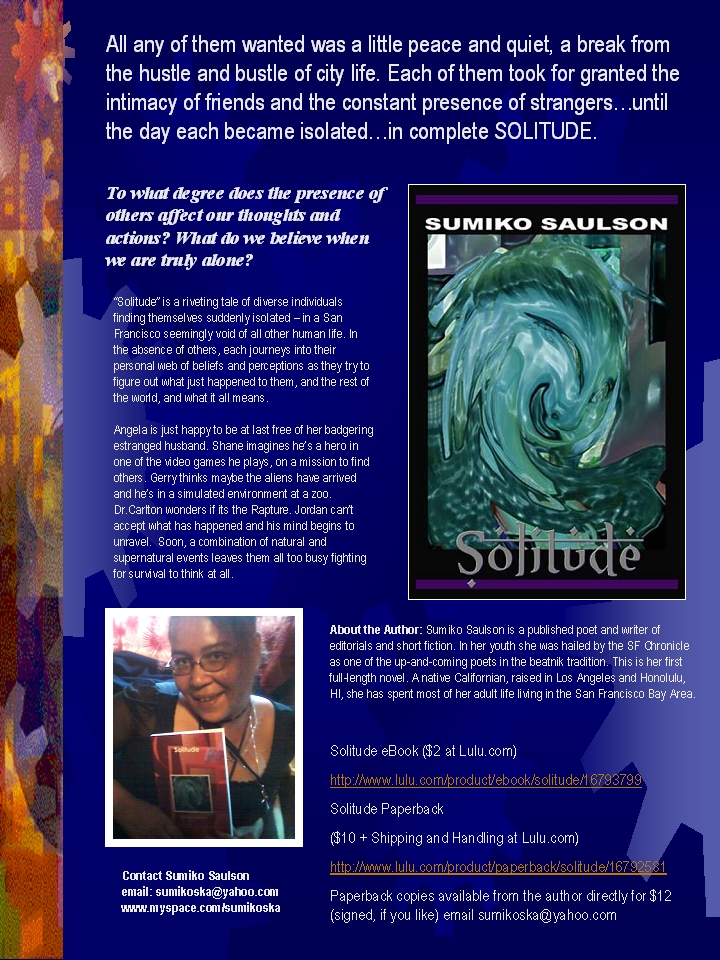
The first flyer I made for Solitude – with PowerPoint of all things.
One of the first things that a bookstore is going to ask you is how your book is selling. The number of sales expected by a local bookstore isn’t all that high: what they are really asking is, “is your book selling?” and “are you promoting your book”. If your book ends up their bookstore, it’s not going to immediately fly off the shelves. An unstated question is the following: are you promoting your book to a local audience that will come into the bookstore? They do not want to know how much you are selling online. In fact, selling primarily online could be a conflict with promoting it in local stores. Promoting it locally means making fliers and dropping them off in local coffee stores: trying to get local neighborhood or school papers to review or write about it, basically doing everything for the book you’d do if you had a local band. That includes selling books (rather than CDs) out of a backpack or the trunk of your car until you manage to get your book into a store.
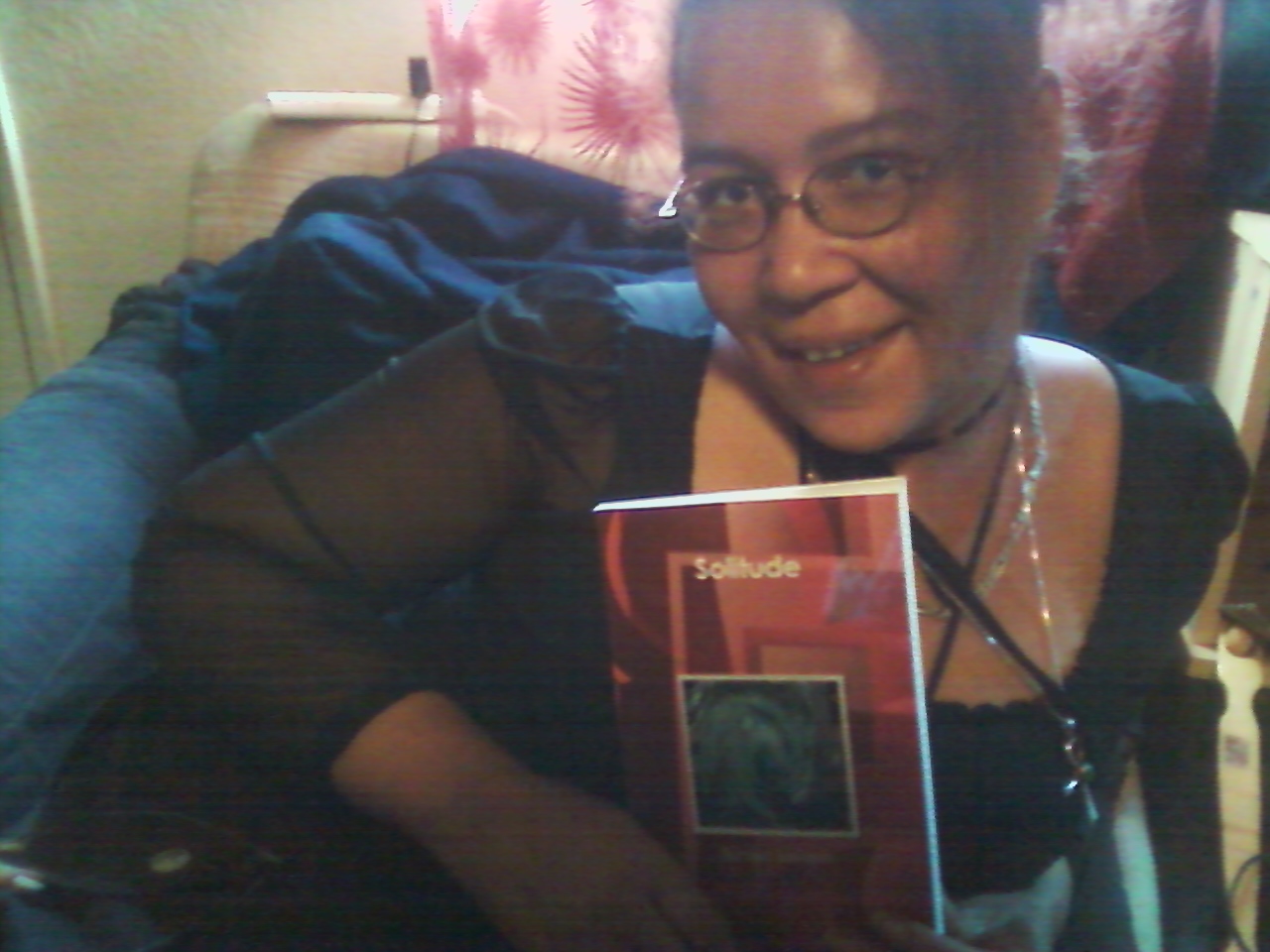
Me with the first proof copy of Solitude, posing. It would take me a while to realize that I looked suspiciously like something I’m not… a romance author.
If you have an online presence, pump it up there – but be careful. If you’re too pushy or if you spam, you’re just going to alienate your friends, family and neighbors. You don’t want to do that. The first few sales you make are going to be friends, or family. If they read your book and decide they like it – your friends, family, and neighbors will be the first ones selling your book. Some of your friends are going to be reluctant to read your book: they will wait to see what other people think. You really want to appreciate the people who enjoy what you’ve written enough to share it. You also want to appreciate the people who BUY it. It took me a while to understand that part, because some people will buy it just to be supportive. Show them some love.
But me? I love having readers. I love it when someone talks to me about one of my books and they know the story and the characters: it’s like magic. But they don’t get the books through magic. They get it through hard work.
Get An Editor/Proofreader(s) and Feedback
Me proudly waving around my first proof copy of “The Moon Cried Blood” – before I got feedback that the cover art made it look Y.A. when it’s not.
Most bookstores that will take self-published and very small press books won’t accept them unless they feel you have done your due professional diligence in making them look professional. I will be honest… my books have changed a lot. The first copies of many of my books have typos. One of them even has a typo on the back cover, and there’s a reason for that: it’s a lot easier to get someone to read/proofread/edit a book that is already in existence if you do not have a publisher other than yourself and if no one has ever heard of you. The natural urge is going to be to run out and give books to people who will review your books first: but hold your horses. It’s a better idea to get copies of the book into the hands of people who will help you straighten out these kinds of errors. Think: people like your former English teacher (mine has an unedited copy of Solitude which HAS been edited and she’s apparently making notes and proofreading it anyway) or anyone in your family who happens to spell well as a proofreader.
For an editor, find someone who is not related to you and with whom there is enough distance to have the more professional relationship you will need to work on things that could feel more personal than the grammar and spelling errors a proofreader will look for. Some bookstores won’t insist that you have
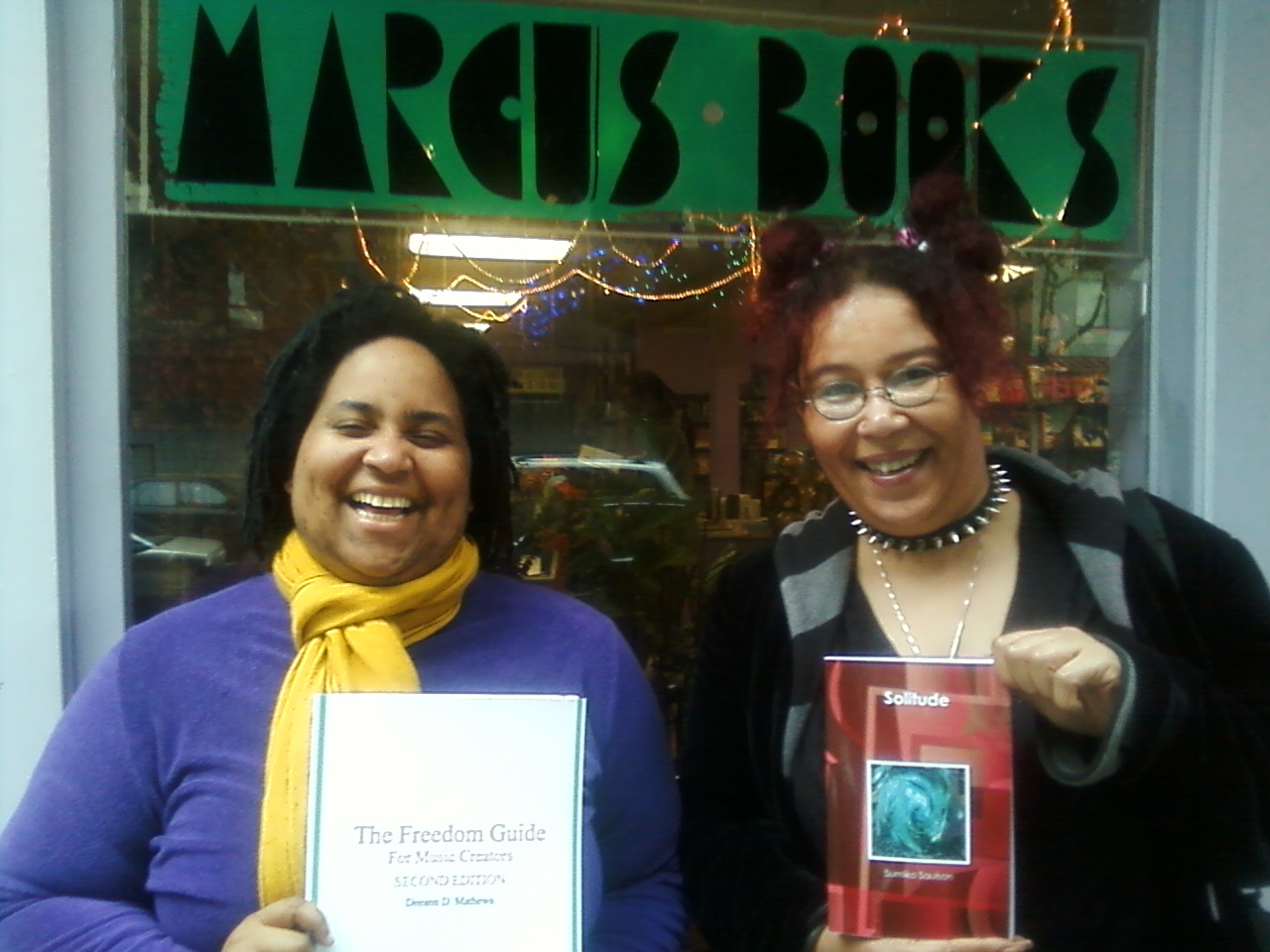
Author Deeann Mathews and myself in front of Marcus Bookstore in San Francisco.
someone proofread/edit your book, but many will: typo-laden books are the big, new headache of the self-publishing age. If the bookstore gives you a list of criteria you need to fulfill to get in, that’s not the same as a “no”… that’s just one in many visits you will have to make to learn and meet the criteria they have set forth in order to “sell” the idea of carrying your book. And when and if they say yes, you will be one happy author.
Go To Your Local Bookstore
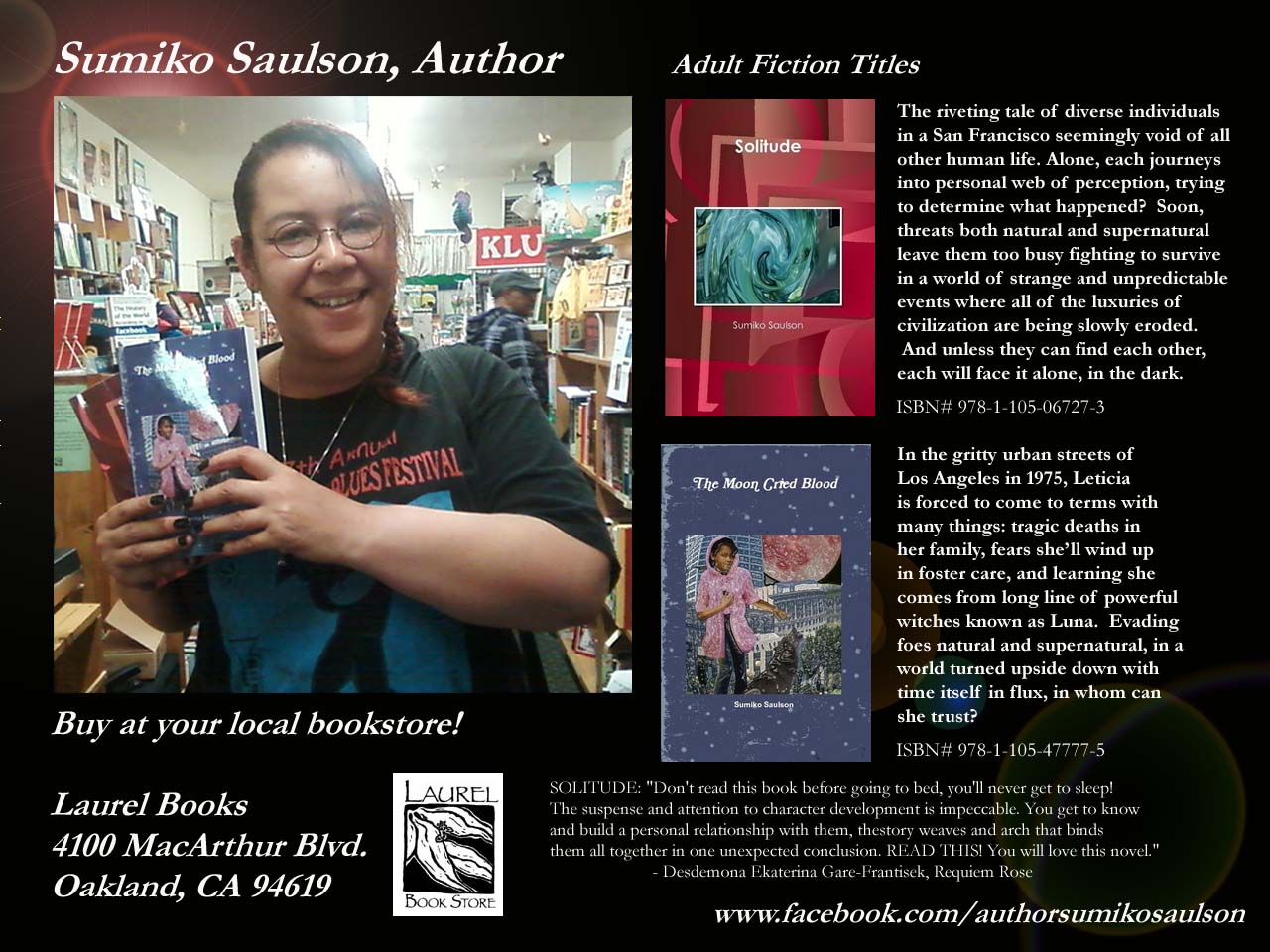
Me in my local bookstore, Laurel Bookstore in the Laurel District in Oakland.
No matter what kind of book you write, there is a niche into which you inevitably will belong: and that is “local author”. It took me a while to figure that one out; after going to other, non-local bookstores that I thought were niche bookstores for my genre. Having lived and learned, I’d advise you to do the absolute opposite thing of what I did: go local first, niche second. The niche bookstores seemed more interested in my book after it was already in another store: also, niche bookstores have a lot of authors approaching them from that nice (for example, Sci-Fi or Fantasy, as a Genre Niche, or Women’s Stores as a demographic niche.)
Local, neighborhood bookstores have a more exclusive relationship to local
This is the neighborhood promotion postcard I started with locally.
authors. If you find out what the absolute nearest-to-you in your neighborhood or the closest possible neighborhood bookstore there is, you will be even more local than authors just from the same city. And you know what? It is very easy to promote your presence in a very-local neighborhood bookstore, because you are already in constant contact with people where you live. I just carry postcards in my pocket and drop them off in local cafes and eateries and hair salons while I am out doing my thing. My local bookstore is Laurel Bookstore in the Laurel District here in Oakland – actually the next neighborhood over (I live in the Fairfax District, which doesn’t have its own bookstore.) The books aren’t just there – they’re selling well. It is the only store that carries all three of my titles – and that makes sense. The only place on planet Earth that I am a “known” writer is in my neighborhood. Everywhere else, I have to sell on strength of my book’s description, and it’s easier to sell the one book (“Solitude”). In my neighborhood, I have a dozen or so people who have read one book and want to read the others. I also have people who see the postcards and go “hey, that’s so-and-so up the street” and their interest is peaked. Being in your local bookstore can bring you a lot of joy.
“I don’t want to pass because I can’t stand insincerities and shams. I am just as much Negro as any of the others identified with the race.” – Fredi Washington (Fay M. Jackson, The Pittsburgh Courier (1911-1950), Pittsburgh, Pa.: Apr 14, 1934.)
“I have never tried to pass for white and never had any desire, I am proud of my race.” In ‘Imitation of Life’, I was showing how a girl might feel under the circumstances but I am not showing how I felt.” – Fredi Washington (The Chicago Defender (National edition) (1921-1967). Chicago, Ill.: Jan 19, 1935)
Fredi Washington was a black/biracial actress who played the “tragic mulatto” role of Peola in the 1934 film “Imitation of Life”. Tragic mulatto is a fictional role stereotype in 19th and 20th Century American Literature.
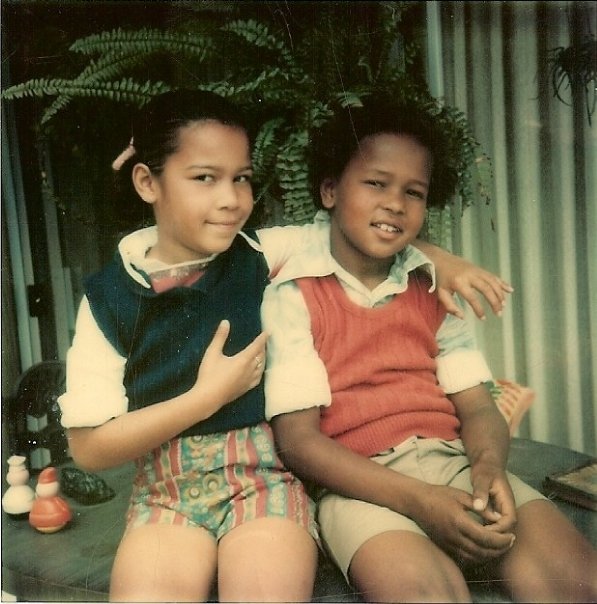
Author Sumiko Saulson with her brother Scott (1974)
Mixed Feelings
Mixed Feelings is a three part series on my personal and political feelings about being a person of multi-ethnic parentage in the United States of America. I don’t claim to speak for and represent every Black/and/Whatever kid in the United States, I’m just saying I’ve had a lot of time to think about what it means to be mixed like me.
There are two of us and we are one year and two weeks apart. When we were little kids growing up in Los Angeles – back in those early days before our parents divorced – when we still lived in Southern California and were both always tan – everyone thought we were twins, because they saw us together with one, or both of our parents, and Scott (who is these days 6 foot 3 inches tall, towering above me at 5’6) was always tall. We aren’t twins, but as I have said, there are only the two of us – we have no siblings – and we are very close in age. We were very close until puberty set in and we wandered off into our respective gender related social groupings (his as it turns out – much more social than mine). From Los Angeles, CA to Kaneohe, HI to Hilo, HI to Honolulu, HI, and finally to San Francisco, CA – we spent our formative years navigating through the West Coast version of Color Conscious America together.
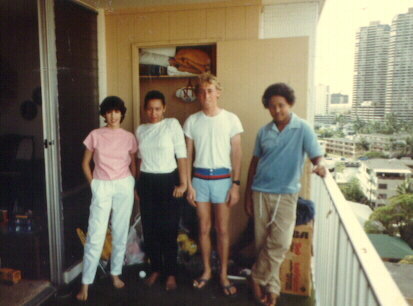
Gina, Sumiko, Michael & Scott Saulson (Hawaii, 1983)
Truthfully, I had no idea back then how truly lucky, fortunate, and blessed the both of us were. Although both ethnic bias and “race” mixing prejudice in California and in Hawaii, after comparing notes with both my age contemporaries in other areas and younger folks who are mixed – it’s much worse in many other parts of the United States. There are a lot of things a woman does not want to discuss: such as her weight, and her age, but for the purposes of this article it’s important: my brother and I were born in the late 60s, and I’ve seen a lot of change here in California, especially. When we were little kids in the 70s, people used to stop us on the street and ask to touch our hair, or hover over us acting weird, like they’d just come across some purple aliens. That began to change in the 1990s: by the mid 90s, it was pretty common to see black/mixed kids.
The 1970s were different times. I remember waiting for them to show people-like-me on television. When Lenny Kravitz’ mother Roxie Roker played Helen Willis on The Jeffersons, she and Frank Cover (as Tom Willis) broke barriers by portraying half of television’s first black/white interracial couple. Even then, I remember my brother and I asking our parents why their children did not appear to be mixed, but seemed to be one white and one black child. When Lenny Kravitz came out with “Let Love Rule” back in 1989, I nearly keeled over with excitement. We had come a long way then….
And so now, we’ve come full circle.
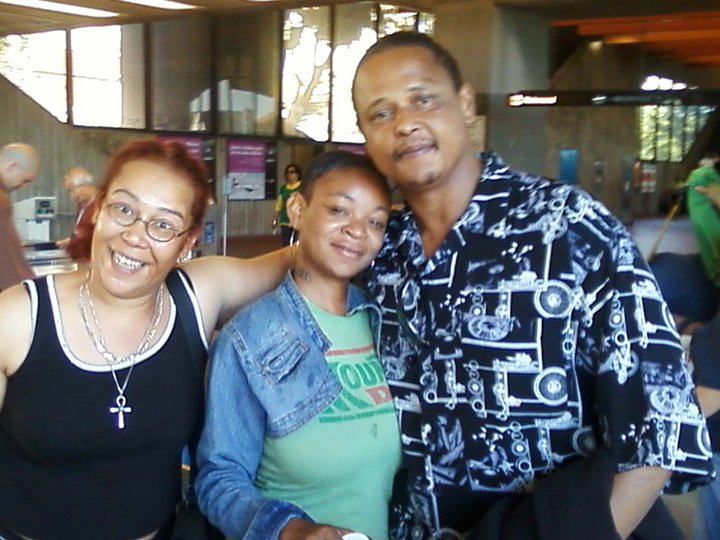
Sumiko, with her brother Scott, and his girlfriend (center) 2010
Like most mixed black/other people of my age in the United States, I do identify primarily as black. Up until fairly recently, that was never anything people would take issue with; but over the past decade, increasingly, I find some people objecting – and I have noted these people are always white. That is not to say that black people don’t host prejudices against mixed people ever, it’s to say that black people usually have more or less the same kinds of prejudices as against light skinned non-mixed people, or, even when the prejudices differ, they would not argue that I wasn’t black. The black magazines even came out to claim Vin Diesel, and he’s a pretty Anglo-looking part black fellow. Black people will claim other black people good, bad, or indifferent. But if you happen to get written on a police report as white such as in the Zimmerman/Martin case generally, white people are going to distance themselves from you.
People trying to claim you as one of them is not something I have a problem with. A lot of Jewish American females used to tell me that I acted like one – and I’ve been called a Jewish American Princess more than once. That’s alright. I am a Jewish American Princess, and a Black Queen, and I figure that has to be good. It’s the people telling you that you are NOT the other thing that bothers me. I am the other thing. I’m just as black as the President, whether you like it or not. Deal with it.
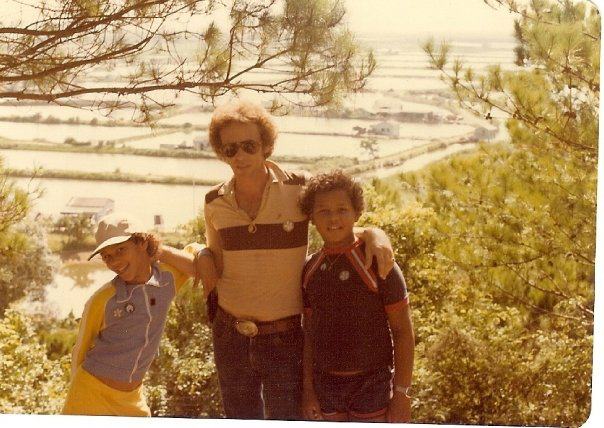
Preteen Sumiko and Scott flanking their father Robert (1979)
My parents are also both people who were young adults in the 1960s and 1970s – they have a very good understanding of voting blocks and political power for groups, have lived to see redistricting and other efforts to diminish the political power of ethnic group voting blocks, and the wisdom to teach me to think for myself well enough so that when I first received something in the mail from a group of mixed people who wanted to declare themselves a different race, my “aw hell naw” flag flew. Although multiethnic people have a commonality of experience, convincing people not to identify with their ethnic group is a way to dilute political power. In fact, that would be the start of a system of colorism such as what is experienced in Brazil, where people of mixed African/European/Amerindian heritage are being categorized in a system where privilege is associated with the lightest color of mixed person. Not that we are entirely free of colorism in the USA – it definitely exists here, but why begin endorsing the institutionalized acceptance of such a system?
I don’t.
Some people seem to experience real difficulty with letting other people racially self-identity, and there is a political reason behind it in the U.S.A.: voting blocks are powerful here. Either consciously or unconsciously, people are aware of the power that has been wielded by organized demographic groups including women, and senior citizens. They are aware of the power of civil rights groups to achieve as a group the liberation of like peoples. One’s perceived racial and ethnic identities are a different animal entirely than one’s self-identity, with the first being assigned to you in the mind of someone else regarding you, the second assigned to yourself by yourself.
The U.S. Census Bureau uses self-reporting.
Sumiko and Scott with Scott’s newborn daughter (2000)
Something interesting happened near the end of the 90s: non-white groups seemed to be ready to outnumber white groups, especially here in the State of California, which has a very large Latino population. Something even more interesting happened in the 00s: the Census and a number of government forms suddenly started to list Latino separately, as something other than race. Latinos were forced to list something else as race. If this happened in a more enlightened country than the United States, somewhere south of here in the Americas, where people of Native American/Caucasian/possibly African heritage knew their roots, if this happened where the Indio peoples knew they were Indio, you wouldn’t have tons of people putting down Hispanic/White or Hispanic/Other because they would know who they were. But by the magic of political identity restructuring, suddenly we now have California and some other less liberal states not having to worry about white people becoming a minority – because most of the politically unaware Indio people have been re-zoned as White here and in other parts of the USA. That brown color some Mexican people have comes from Amerindian blood, and Mexican people like many South American peoples, are a multiethnic culture. Every invader of the two American continents didn’t wipe out the native peoples with the vigor of the founders of the USA and Canada.
This kind of think (as I mentioned in the other article) is now backfiring in some other states such as Florida, where in the case of the George Zimmerman shooting of Treyvon Martin, police listed Zimmerman as white, the media repeatedly reported him as white, and many white people and some not-so-white people began to refer to Zimmerman as non-white and this as a brown-on-black crime. I even saw one lady apologize on behalf of the Latino community for, Zimmerman is half Peruvian. Peru is a multethnic country with a majority Amerindian or mixed Amerindian population.
Yet he is listed as white on the police report, so he has been reported that way on the news.
How do you think he was listed on the Census?
My brother Scott and I have traveled through the same Color Conscious West Coast together for over 40 years. We have endured the annoying questions about whether or not we are half siblings (no – we are not), whether or not his light-skinned daughters are my daughters (no – they are not. Scott and I have the exact same genetic history just like any other pair of siblings and like any other siblings, I am no more likely to produce lighter skinned children than he is).
Author Sumiko (center) with parents Robert and Carolyn (2009)
We have traveled through all this together, but only he has been stopped for Driving While Black in unpleasant Pleasanton. We have traveled through this together, but our experiences are not the same. However, it is only an accident of a genetic lottery that made my parent’s genetic contributions manifest in a pastier skin in my case.
Because of his darker color of brown, my brother has experienced things I have not. Because of my complexion which falls more to the orange side of the sale, my color which, should I purchase makeup, would be far from the palest of the foundation colors for African Americans but would be either the darkest or second darkest of the foundation colors for white people, depending on whether or not I have a suntan that day – my color, which when I have no tan and no tan line on my body is a make up shade called “suntan” – and a flesh color pantyhose for me will be called “suntan” – that color of orange I am causes me to have to deal with Stupid Questions People Ask Mixed Black People.
Louise Beavers and Fredi Washington
There was the woman – whose son I was dating – who asked me back in the late 90s if O.J. Simpson’s biracial kids were going to be “traumatized” by being raised by their white grandparents. I said, “I rather think their father being arrested for allegedly killing their mother would be more traumatic than being biracial and raised by white grandparents.” Or… the woman who stopped me on the street (yes, a literal stranger – and this in Liberal San Francisco, in 2005) and started asking me what I thought about Tragic Mulatto Syndrome and An Imitation of Life. My browner skinned brother was able to escape many of these questions because unless his (very wavy) hair was long he did not appear to be what obnoxious inquiring white strangers and semi-strangers consider “mulatto”, so he rather got the anti-black prejudice without the weird mulatto thing. I should call it the weird “Tragic Mulatto” thing. And here… is the crux of it.
These questions are all the same as the question some anti-race mixing teen asked me when I was about 20: has my life been “ruined” by being mixed. Is being a mulatto “tragic”?
I want to point out a single, simple fact: we are indeed, all the same race. We are of one race, which is human. The fact that we can procreate together demonstrates that: people like me couldn’t even exist if we were not the same species, and race means species. But that doesn’t change the fact that we are dealing with a geopolitical system of perception based upon personal reaction to differences, in essence, there is xenophobia based upon perceived race. As long as there is, we can not simply pretend that these distinctions have been erased. I keep talking about it because it still matters but: the truth of the matter is, the only “tragic” thing there could be is a societal reaction. Other than that, it is both as significant and insignificant as having an eye color like blue or green when the majority has brown eyes, or having the minority hair color of red. Statistically, biracial kids in the US are more likely to be suicidal, but there is a strong possibility that is related to the same reason gay and lesbian teens are more likely suicidal: bullying and being hassled over identity.
The quote at the beginning of this article is by Fredi Washington. Here are some links to the movie Imitation of Life on IMDB, Fredi on Wiki, and Tragic Mulatto on Wiki, that I referred to when writing the blog, and the quotes above are from the Wiki article on Fredi.
Do you know what I told the woman who asked me if I was a “tragic mulatto” like in “Imitation of Life”? I said “You know I never tried to pass or deny who my mother was like the girl in that movie. I love my mother.” I think that’s a good enough answer but I have to wonder: where was the question coming from?

















 Sumiko Saulson