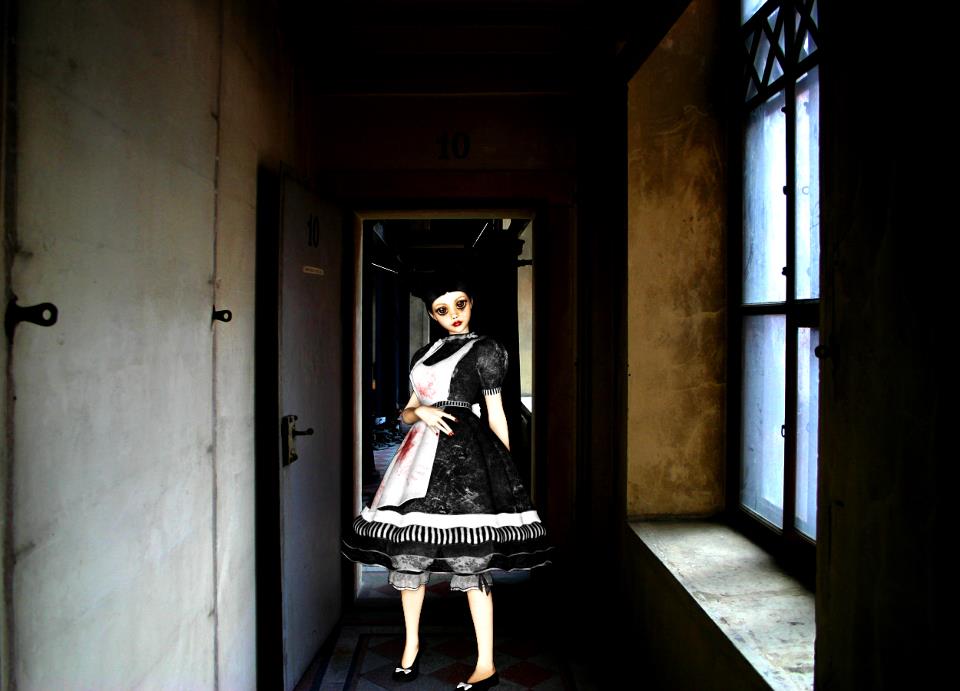
Meaty Subjects, Hungry Minds

•June 22, 2012 • 1 Comment

Dear Readers, I am a little bit behind in my blog posts because I started school on Tuesday. Fortunately, I have a creative writing class, which is about turning autobiographical experiences into creative writing. I wrote a piece for school that I am particularly happy with, so I’m sharing it today. I am in the habit of illustrating all of my blogs, so I’m illustrating this one with some of my drawings.

MEATY SUBJECTS, HUNGRY MINDS

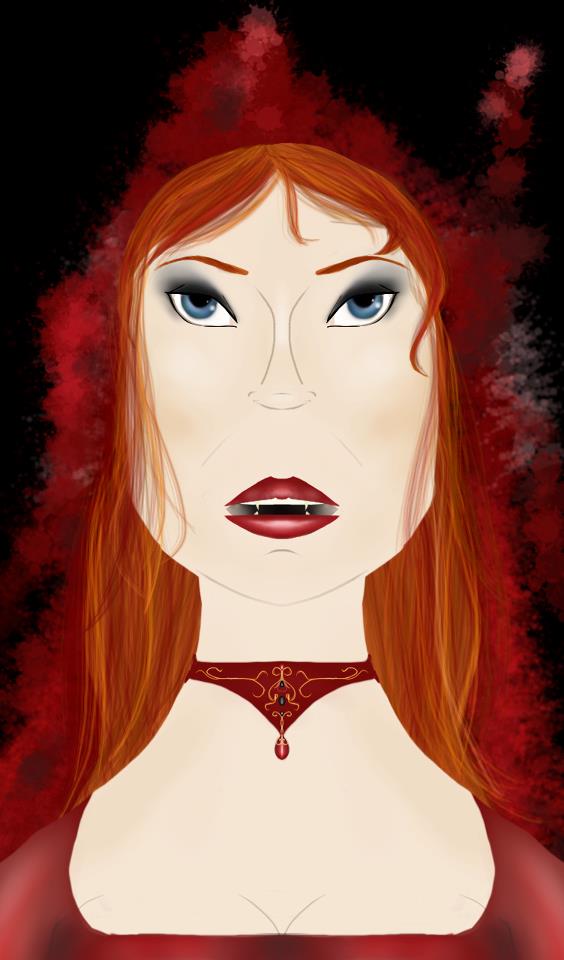
Girl in Background

Artwork: “Girl in Background” by Sumiko Saulson

I always ate very quickly; so that within five minutes I’d consumed every scrap on my plate, or at any rate every bit I had any intention of eating. Years later, when I was an adult who went to business luncheons, and other professional functions that were meal-eating inclusive, I had to learn how to eat in the manner of a civilized human being, and not with the expedited flight (All flight | No fight) response I had for all my years of grade school, junior high school, and high school. Well, at least for the two and a half years of high school I had before testing out in my Junior Year through a GED program. It was the flight response of a bullied child.

Being bullied falsely introverted my attention. I test as a mildly extroverted ambivert, but I seemed shy during these lunches, as I was traumatized. I walked with my face down, looking at my dirty shoelaces, in and out of the cafeteria – and then out and over to the library, where I had a standing date with Susan Cooper, C.S. Lewis, H.P. Lovecraft, Frank Herbert, or Edgar Allen Poe. Actually, these little affairs started with E.B. White’s Charlotte’s Web back in Third Grade. It was from E.B. White that I learned “It is not often that someone comes along who is a true friend and a good writer.” These make-believe friends were for years the only school friends that I had besides my one-year younger brother. It was in the seventh grade, when my brother and I were no longer able to sit in the cafeteria together that I began taking these new friends to lunch.

Dr. Seuss Bathing Beauty

Artwork: “Dr. Seuss Bathing Beauty” by Sumiko Saulson

Before the Seventh Grade, everyone thought that my brother Scott and I were twins, because we were so close in age – exactly one year and two weeks apart – and because he was taller. They probably also thought it because growing up as the only children and close in age siblings we were as close as any set of fraternal male/female twins would have been. When I started the Seventh Grade, my brother Scott was still in the Sixth Grade. Sixth Grade was Elementary School, whereas I’d started Junior High School. For the first time, we were separated.

Depressed Girl

Artwork: “Depressed Girl” by Sumiko Saulson (acrylics)

My big, strong, jock, little brother couldn’t protect me from people who threw lunch trays into the faces of girls thirteen with pimples and glasses, so I was alone. I was alone and in danger until I learned not to make eye contact. None of the other children want to sit near me at lunch for any good purpose. If a girl were to approach, it was generally because she wanted to start a fight. The best way to avoid these girls was to avoid looking at them, and the easiest and best way to do that was to have something better to do. I had something better to do. I could read. I wasn’t alone anymore after that – afterwards, I was always having lunch with Peter Straub, or Stephen King.

Interview with Margarita Felices, author of “Judgement of Souls”

•June 18, 2012 • 4 Comments

Interview with Margarita Felices,

author of “Judgement of Souls”

WiHM2013Seal

This interview is being included in the 2013 Women in Horror Interview Series. Every February, Women in Horror Recognition Month (WiHM) assists underrepresented female genre artists in gaining opportunities, exposure, and education through altruistic events, printed material, articles, interviews, and online support.  You can find out more about WiHM here:

http://www.womeninhorrormonth.com/

About the Author:

Cardiff

Beautiful Cardiff, by the sea

Margarita Felices is the author of “Judgement of Souls”, a supernatural novel about a different kind of vampire.  She’s also penned several other supernatural stories such as “The Psychic”.  She lives in Cardiff, Wales (UK) with her partner and three little mad dogs and works for a well-known TV broadcasting company.  She started out writing short stories for magazines, to pay her way through college.  She considers herself Gothic, and loves the fashion, the architecture and the music.

The Interview:

The Psychic

“The Psychic” – a short story by the author of JOS

Q:  I really enjoyed your story “The Psychic”. It has all of the earmarks of traditional supernatural horror, or supernatural suspense, and reminds me of some of the short stories that were the basis for the Outer Limits and Twilight Zone series episodes. You’ve stated in other interviews that you consider your genre as “supernatural”. 

I was wondering what you think about the relationship between the “supernatural” and the “horror” genres? How are they different, and how are they similar? Do you find the stories you write ever crossing these genres?

A: Thank you, that’s kind of you to say – they were great programmes.
We had a similar series some years back in the UK and a reviewer compared it to one that would be written for that Hammer House of Horror series, that’s quite a compliment. The Psychic is a story that I’ve been waiting to re-write for a while.

When referring to either supernatural or horror, I’d prefer if they were never mixed. I mean most horrors are about people killing each other whereas Supernatural are more about different beings/entities. In horror, although you still have to tell a tale, it has to stay believable because the more normal it seems, the more horrific it will be. You must believe that the man across the road has a basement full of dead bodies etc… and good luck trying to sleep after a horror story. Whereas in supernatural, your imagination can wander through the most bizarre of situations and it still makes sense, but you can dismiss it from your mind and not get nightmares because it’s not real. Once you start mixing the two it loses all credibility.
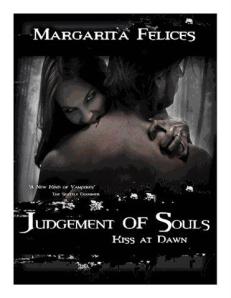
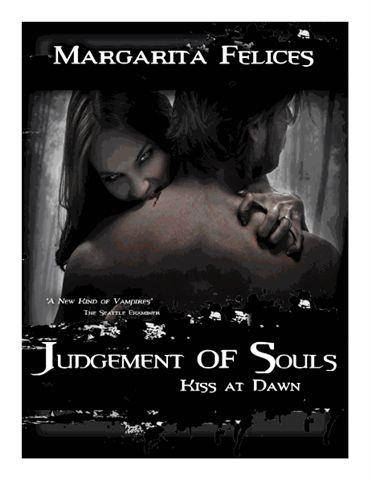
Judgement of Souls, Kiss at Dawn

Judgement of Souls – Kiss at Dawn, from the JOS trilogy

Q: Here at “Things That Go Bump in My Head” one of the important subjects is the dearth of Women in Horror. I had two questions for you related to that subject. I was wondering if you think that stories by women which contain horror elements, are more likely to be categorized as another primary genre than stories by men? For example, Toni Morrison’s book “Beloved” is a ghost story, but it’s generally categorized as Historical Fiction.

A: No not at all. What I’ve learnt so far is that it all comes down to marketing. When I first wrote JOS and submitted it, I was adamant that it was a Gothic horror, and to me it still is. But I was advised to market it as a Paranormal Romance too, and it helped sales. I suppose deep down it is a love story – it didn’t start that way, but it ended that way so I have to go with it. I don’t believe that nowadays there is discrimination between male and female authors. People just don’t care who wrote the book, they are after a good story.

Q. Also, you mentioned in another interview that your early short stories were published in Women’s Magazines. I found that interesting. Do you think that would be a good route for women in horror to pursue, and conversely, do you think that your genre placement in supernatural as opposed to horror made you a better match for those magazines?

A. That’s right, but my writing went further back than that. I always loved to write, even at school. When I wrote those stories I was in college and needed the money! I wrote all sorts of stories; The Psychic was only one of them. It was a great way of getting my stories read, but it’s very difficult to approach magazines these days without an agent, I’ve sent off lots of stories and had each one sent back. Not because they weren’t any good, but because they just don’t accept them without an agent. One of the things that I didn’t like too much was that they severely re-write them. The Psychic was re-written to fit two pages in a magazine; they took everything out of it. I didn’t like their version, but it paid well and I was an inexperienced author, so I just let it go.

Q:Your novel, “Judgement of Souls” features a strong female protagonist in
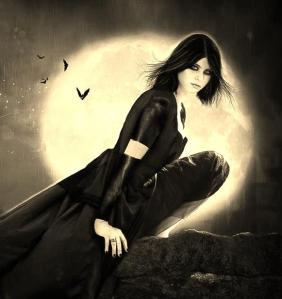
Rachel de Grosnez

Rachel de Grosnez – strong yet vulnerable heroine of Judgement of Souls

Rachel, and it opens with references to the Judeo-Christian Lilith legends, which are popular among certain segments of modern feminist or woman-centered society. Would you consider it as a book that has feminist, or pro-woman themes? Do you think it is a story that resonates strongly with women?

A: I certainly hope so. I was so fed up of having the female characters as a weakling all the time. I wanted a good strong female character that I could associate with; she takes control of any situation and doesn’t let anyone stop her. But she has so many flaws and weaknesses too, she’s vulnerable at times and I believe that women will associate with her – except the blood lusting that is. I loved the Lilith stories. I read as much as I could about the legends. I was brought up Catholic so it was never mentioned to me as a child, but to find out that there was another story to what I’d been taught was fascinating. Lilith wasn’t someone who was going to lie down and let Adam walk all over her; she was strong and independent and was cast out for being so. At least that’s the story.

Q: How do you feel writing a novel differs from writing a short story?

A: Oh you can lose yourself when you write a novel. You travel with your characters and meet different people and you have adventures. You get to know each and every character and their personalities and you feel as though they are your friends who travel with you and keep you company. Writing short stories means that you have to get into your story quickly, tell it and get out just as quickly. You have no time to get to know your characters, to know what makes them tick. But it’s also harder to write. There are things you want to say but if you do, you face the danger of writing another novel instead of a short!
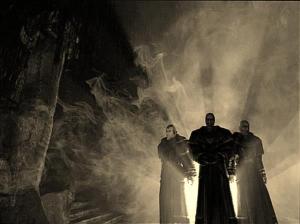
JOS The Righteous

The Righteous: Rachel and Daniel will be working with the Righteous in an upcoming sequel

Q:  Do you plan on writing other novels in the future?

A: As soon as I finish the JOS trilogy I plan to write a few stories about Rachel and Daniel being occult archaeologists and working with the Righteous. It’ll be a stormy partnership, vampires will always hate the Righteous and they will never trust each other, even though they may appear on the same side. But I hope it’ll work.
I do have another story that I plan to write about a serial killer and a woman who dreams about him and his murders – that’s for another day.

Q: Some authors who’ve started out writing short stories later released short story compilations – Steven King certainly comes to mind. Do you see yourself doing something like that in the future?

A: I don’t plan on it. Once the story is done, it’s done. Why go back and
re-do them or collect them to put in one bigger book? I may write a few more short stories if I have time in between the novels but there are no plans. But then – never say never!

Q:Is there any advice you’d give to new writers, just starting out, who might

JOS Vampire Safehouse

Vampire Safehouse from “Judgement of Souls”

read this interview?

A: Don’t give up. If you have a story that is dying to be told, then work hard to tell it. But make sure you are doing your best work and you get an editor that can help you make the most of your manuscript.
Don’t give up even though you may get rejection letters.  We all get them! If everyone thought like that there’d be no books, no films.  Keep writing, even if its dribble! Then read, re-read and edit.  Try and write a little each day.  One hundred words a day is seven hundred a week, twenty-eight hundred a month and one hundred words a day is so simple!
And carry a Dictaphone or a notebook and pen!

Q: Finally… is there anything you’d like our readers to know about you that we haven’t covered yet?

Cardiff Castle

Cardiff Castle (or Castell Caerdydd in Welsh)

A: I love living in Cardiff because, for all its modernisation, there are still remnants of an old Victorian city. I love writing and base my stories in Cardiff because it has such character. When I can, I go out to the coast and take photographs, mind you, we have a lovely castle in the city centre and a fairytale one just on the outskirts, so when I feel I can’t write anything, I take a ramble to those locations and it clears my head. I suppose it was inevitable that some day I would write a novel. My teachers at school used to limit me to no more than ten pages.  I am Gothic; I love the fashion, the architecture and the music. The club in my novel is real. When I was writing Judgement of Souls 3: The Kiss at Dawn, I got all my club material and clientele from a club called Bogiez, I wouldn’t have finished that section without them.

I’m not one of those authors who have no time for people. If you want to ask me anything, go to the JOS Facebook Page (<–link) and ask. Whether you want to know about me or the characters in my book or you just want to come by for a chat, if I’m online we can talk! Or send me a message on Twitter @felicm60, but so you know, I’m hopeless on Twitter, I much prefer Facebook.

Time Management vs. Time Travel

•June 15, 2012 • Leave a Comment
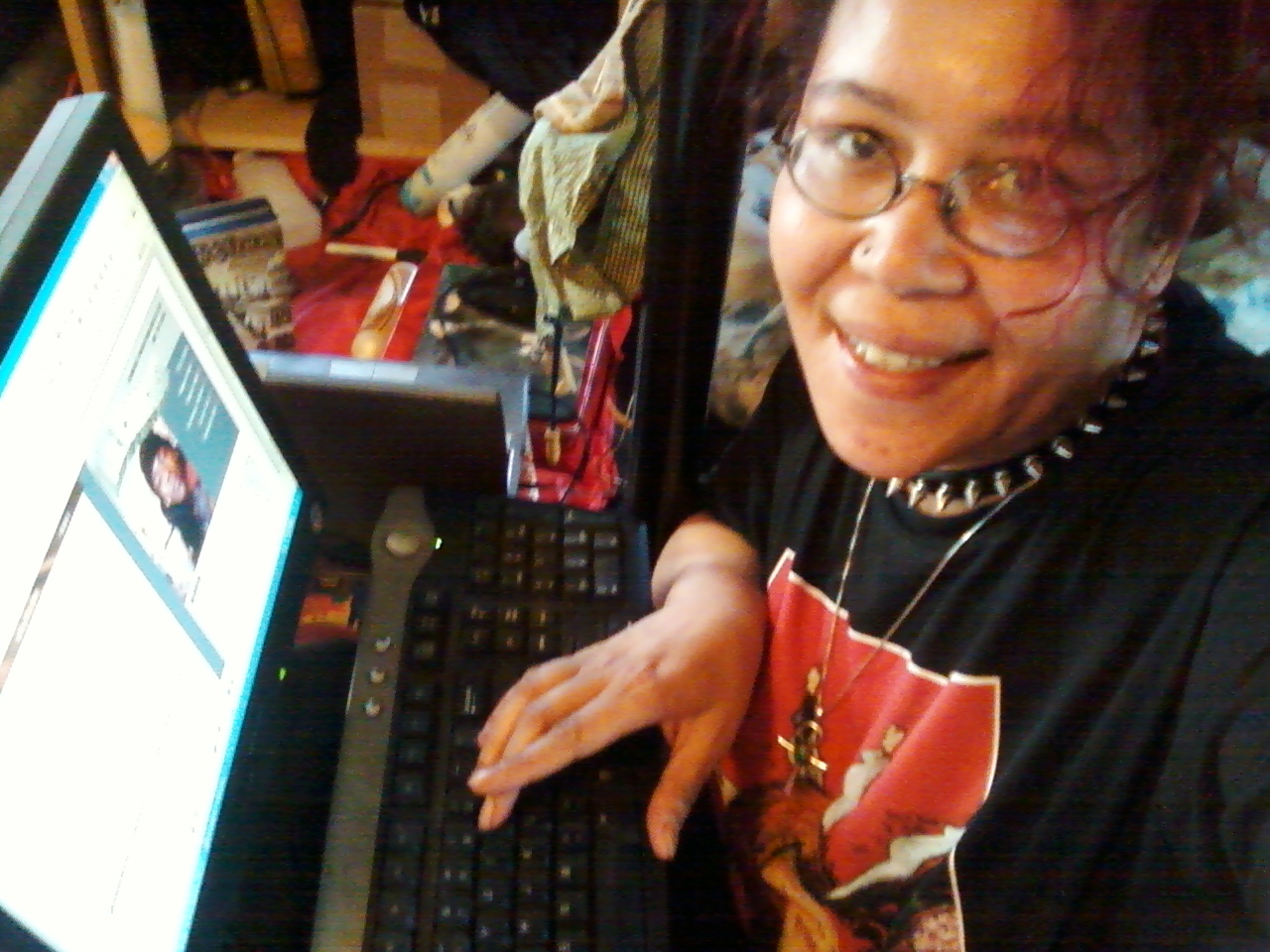
Me on Computer

The harried look of me with four open browser tabs

I currently have four tabs open in my browser…. and before this sentence is finished, I will have opened and closed Photoshop in order to save a screenshot of my four open browser tabs, because I am busily attempting to multitask. In between these episodes of either frenetic or non-frenetic lazy, slacker-like multitasking I have to go outside, and attend to the daily functionality of my life. This includes things like working, cooking, cleaning, shopping, and getting exercise.

Sadly… or perhaps, fortunately, my brain is not yet able to connect to a cybernetic computer matrix directly, and casually browse the web or focus

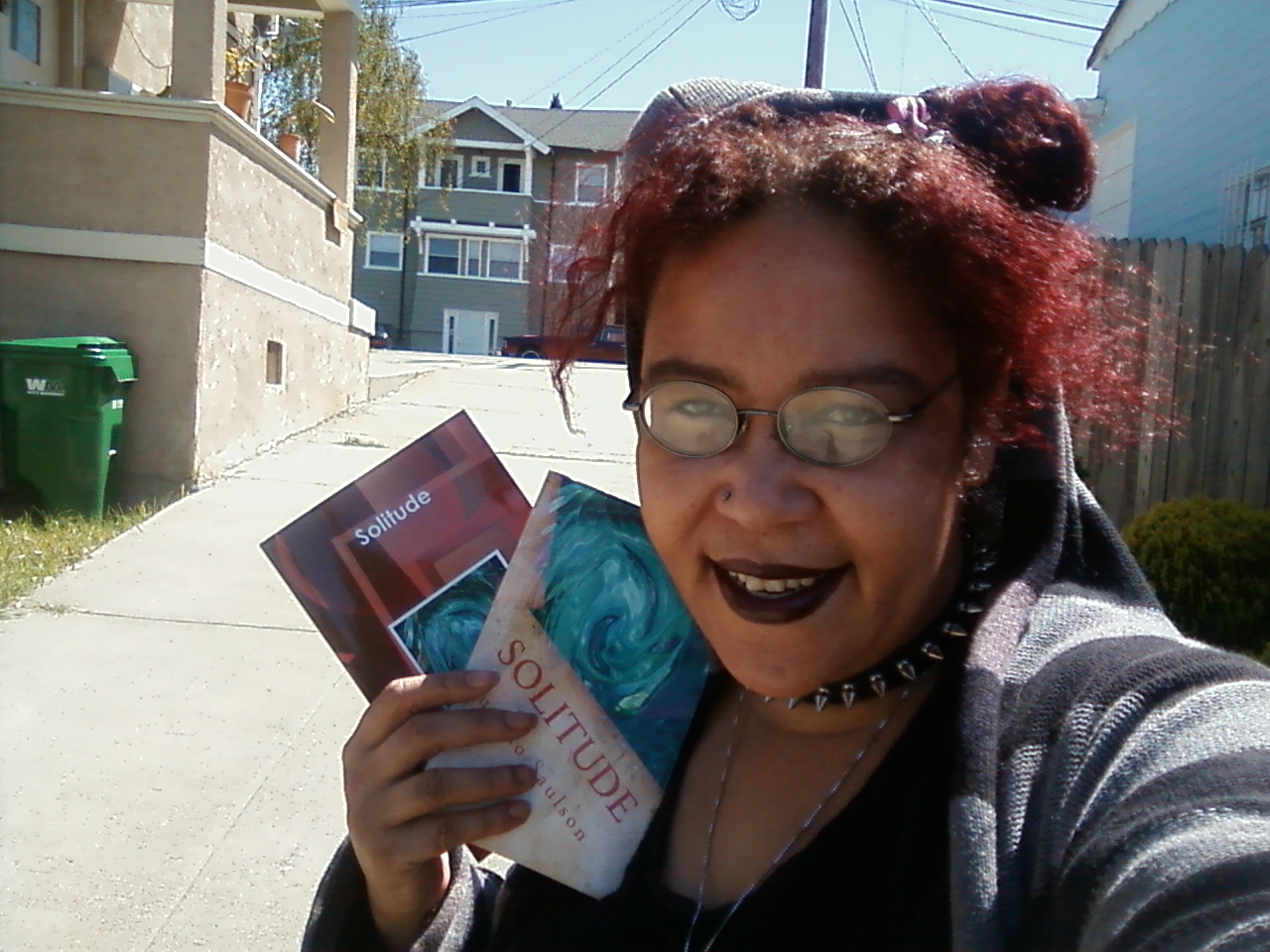
Me books

Can I sell you these books?

and work on projects while jogging. Even if the technology did exist, I would probably be unable to afford it. I’m still a starving artist. I bust my ass to keep my bills covered, and I can’t make a living off of book sales. When I do sell a book, I’m often selling it out of my trunk haggling with someone who wants to see if they can get away with paying $12 instead of $17.95. No… the book costs that much. What? Yes, I will accept a payment plan.

In the meantime I have had a Day Job, or Two Day Jobs, and/or School

Me and my certs

Me at home with my certificates and day-job hair

occurring throughout the time I’ve been a writer. But not always. I’ve got a part-time long term job that’s 16 hours a week/flex time as a care worker for a relative with a mobility impairing health issue, and I take part-time jobs as a computer repair technician – yes, IT, but not as any kind of programmer, I’m the person who replaces your broken fan, upgrades your memory, installs the latest operating system, and runs Norton on your junk. I do this as a temporary worker, which means I’m on temporary contract jobs through an agency, which means sometimes I’m on assignment, and sometimes I’m not. Sometimes I’m at home, and sometimes I’m furthering my education. I wrote the book “Solitude” during a three month period where I was at a technical school working on my A+ and Network+ certification (because my old Novell certifications are dated, expired, largely useless) and renewing my Apple Macintosh Certified Technician (AMCT) certificate. I worked with Stephen Douglas on editing it during a 9 month period where I had two different part time contract jobs as consecutive second day jobs (aside from IHSS/carer).

When I have two day jobs, or am in school, I plan my time around these activities. It’s the times when I have a lot of free time that are problematic. A

toiletclock

The problem with free, unstructured time

lot of unstructured, free time creates difficulties for me. I have a tendency to overbook myself. At the moment, I have a bunch of reading assignments connected to interviews or reviews I wanted to do for my blog. I’ve got a copy of Richard Cotton’s short story “The Reaper” in the other window, because I want to give it a much closer read-through because he just asked me for my opinion in a bit more detail over on Facebook. I will do it…later. Right now, I need downtime. I need time to digest my own thoughts. I guess it’s no different than other people – with a day job, who have times when they want to watch reruns of “Heroes” on Netflix and play Diablo (these are my recent leisure activities). The only difference is, when you have a set schedule, such as school, or work, it’s a lot easier to understand that you need time at ease to regenerate your mind. It’s a lot easier to compartmentalize work from leisure than it is when you are working at a flex time job and at a small business. Because I don’t have a day job, I find it harder to say “no” – easier to feel like my me-time is just me flushing time down the toilet.

Different people deal with this unstructured time differently. In my case, I make lists of things that I know that I need to do, and I keep calendars, so that I

Lokal Boy

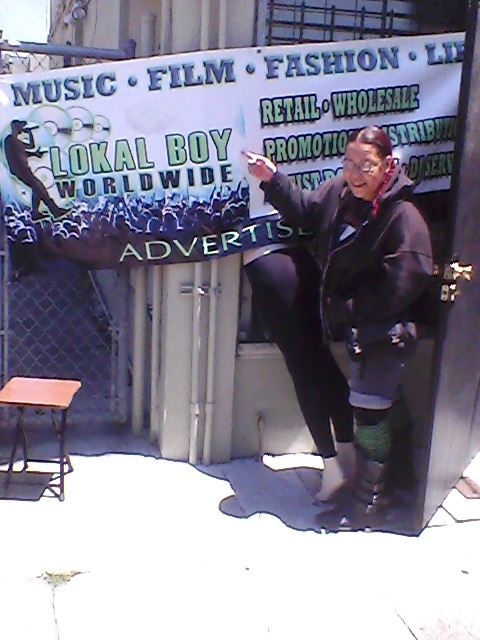
This is me after Greg got my books into Lokal Boy

can get everything done that I feel needs doing (or that actually does need doing – like going to the doctor, paying bills, collecting money to pay bills with) on a calendar and/or a list. Because otherwise, I’d forget what I needed to do. I really would. I’m curious as to how the rest of you deal with this kind of thing: I mean, can you leave some comments? I could use any advice I could take on my weak subject of time management. In case you were wondering about the Time Travel, well, I’d never seen “Heroes” before and I’m watching every episode in a row, and thinking how if I had any of these powers, I think Hiro Nakamura’s time traveling power would be pretty awesome. All those do-overs. But no, I don’t have that. I have to manage the time in a linear fashion, alas. You know that saying “Necessity is the Mother of Invention?” – I think that it’s also the mother of entrepreneurial effort. Now that my day-job income is cut back, I notice me and my fiance Greg are both a lot more focused on book sales. A couple of days ago, Greg got the books into a new local outlet, ironically called Lokal Boy. Go, Team Solitude!

Ghouls Just Want To Have Fun

•June 13, 2012 • Leave a Comment
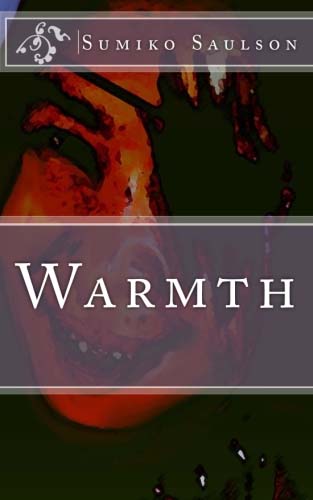
Warmth

Warmth

“Warmth” is a little different than my other two novels, “Solitude” and “The Moon Cried Blood”. Compared with “Warmth”, the other two are actually pretty serious. I have a tendency to not stay very strictly within my genre – that’s the benefit of small publishing houses and independent publishing (two separate entities with a few common perks), you don’t become strictly married to a certain genre, and you don’t need a special pen name to secretly write novels that are outside of what your audience expects from you. You have a small audience whose expectations are still fairly fluid.

This environment allowed me the freedom to go ahead and write “Warmth”, a horror novel with rich elements of parody and dark humor. My inspiration for “Warmth” came during a particularly heated vetching section among the fans on Anne Rice’s page, or “People of the Page” as she calls us, about the latest Twilight film, “Breaking Dawn (Part 1)”. I’ve never read Stephenie Meyers’ books, so I’m not going to criticize it. I have seen the movies. Yes, all of them. Anyway, the thing that caught my eye about the debates (aside from the definite probability that I wasn’t supposed to admit in public to watching all the movies.. but I did, neener neener) was all of the fans who said “Vampires can’t have babies! They’re dead!”

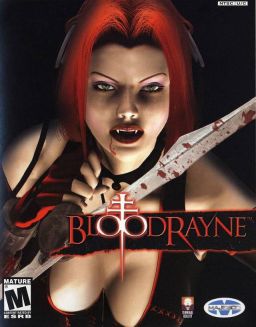
BloodRayne

Butt-kicking video game damphir 

I started squealing something all fan girly about the Damphir, and BloodRayne, my favorite Damphir. Then – something weird started to take place in my mind, and it was a sort of Anti-Bella. Instead of being a human impregnated by a vampire, she was just some sort of nearly immortal creature who was pregnant for a really long time. I started to think about Elephants, and how they stay pregnant for 2 years. Most humans get cranky enough with a 9 month pregnancy – how would this character feel being pregnant for much longer than that? Longer even than the shark, which can be pregnant for up to 4 years.

That was the beginning of Sera (it is pronounced “Surah” and yes, I was watching “Spartacus” onDemand when I wrote it – how did you know?). She has to endure a 600 year long pregnancy, and is really not even remotely happy about it. She’s pissed off. To make things worse, her life isn’t very glamorous. Some of her Kind – “The Afflicted” – like to play at being vampires, flouncing around after expensive plastic surgery and cute little dental implants and deceiving humans into believing that they are immortal – but it’s all one big lie. They aren’t vampires, and there are no such things as vampires as far as Sera knows.

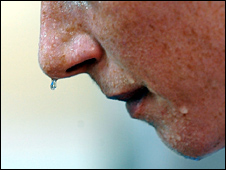
Sweating

The constant sweating and feverishness experienced by the Afflicted give Sera that “not-so-fresh” feeling.

What the really are is infected with something – something that causes them to live a really long time, but not forever. Living a really long time sounds like fun, but in so many ways this Affliction is just not all that socially attractive. Those Afflicted are constantly ill with a strange ague, and spend much of their time trembling with fever chills, suffering night sweats and hot flashes, popping aspirins, feeling uncomfortable and desperately seeking warmth. Sera doesn’t feel very attractive because she’s constantly sweating. Sometime back in the 1400s, before the dental implants were available, she followed the example of her Mayan buddy Itzel and sharpened her teeth into the shapes of shark teeth to make life easier for her. Life for the Afflicted can only be sustained by the consumption of human flesh and blood.

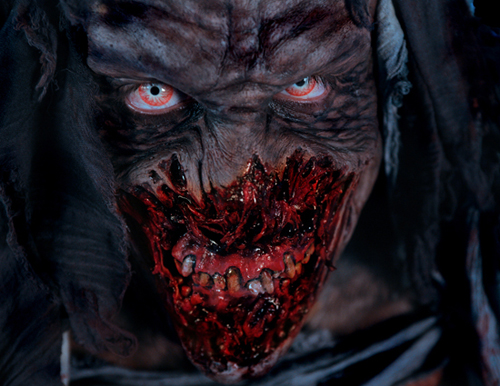
Ghouls

Still from the movie “Ghouls” demonstrates that ghouls just don’t have the glamorous image that Vampires do…

Early into her life, Sera, who longs to travel, makes the discovery that it doesn’t have to be living flesh: they can very easily survive on the flesh of the dead. Eating dried, dead flesh allows her to traverse the ocean, traveling from Spain to the New World, where she meets Itzel, without eating the crew to extinction and revealing herself for a stow away. Before she leaves, she runs into two brothers in a graveyard who grace her with a new word: “ghula” – the feminine of “ghul”. She decides that is what she is: a ghoul. She is not the only one who sees her kind as such.

Ghouls age very slowly… no one is sure how slowly, but Sera’s own pregnancy is a pretty good gauge, since she seems to have gotten pregnant just prior to becoming a ghoul, and she stays pregnant for 600 years. A ghoul can’t turn another person into a ghoul by any means, while he or she lives. However, a dead ghoul can infect others…. when a ghoul dies, he or she reanimates and immediately attempts to eat every person in its immediate vicinity. In short, upon death, they enter a “zombie” phase.

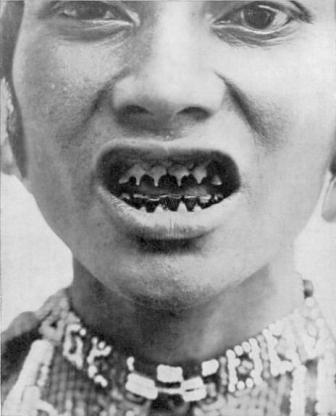
Ota Benga

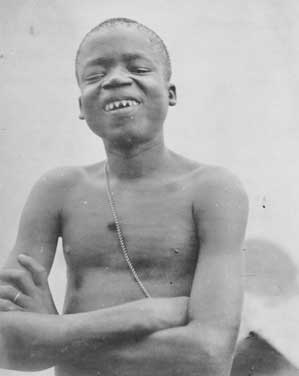
Tooth sharpening, on Ota Benga in 1904

Only in this phase are they able to pass along the Affliction, but not for very long since as zombies, they soon decompose too greatly to ambulate. Sera hates the Dead – they have no self control, and if their population is not curtailed, they will soon overrun the planet, shoving the entire human world into a downward spiral of increasing cannibalism (through Affliction) causing a decreasing food supply (of humans, dead or alive) and eventual starvation. In order to stop the future she fears, she becomes a serious minded hunter of the Dead. That’s Sera – a pissed off, pregnant, sweaty zombie hunter with shark teeth. And pox marks. Did I mention the small pox? 

Not all ghula are as serious as our grim and single-minded Sera, who refuses an abortion due to fear of a zombie fetus and calls her unborn child a parasite. Unknown to Sera, she has an arch-nemesis: a certain Lizbet, thought to be dead, whose hobbies include plastic surgery, breaking and entering, prostitution, and murder. 

You can read more about Sera and Lizbet in “Warmth”. You can also read a short story about Sera and her friend Itzel here….

https://sumikosaulson.wordpress.com/2012/06/05/a-story-of-sera-and-itzel-warmth-13/

Interview with horror, fantasy author Chantal Boudreau

•June 6, 2012 • 1 Comment

Interview with

Chantal Boudreau

Author of  the Fervor Series, and the Masters and Renegade Series

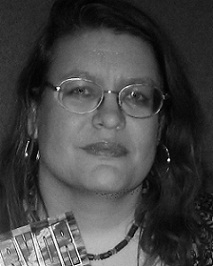
Author Chantal Boudreau

Author Chantal Boudreau

Today I was so fortunate as to be able to interview Chantal Boudreau, a multiply published and high prolific multiple genre author.  The Canadian writer hails from Sambro, Nova Scotia, and is a mother of two. She has eighteen novels to her credit in a diversity of genres, and has been included in numerous horror anthologies.  Most of her novels are serial adventures such as the Fervor Series (Dystopian Future), and the Masters and Renegade Series (Fantasy). A large number of her many short stories, are in our favorite genre here at “Things that go Bump in my Head,” horror.  The zombie stories “Just Another Day”, “Deadline” and “Waking the Dead” to mention just a few.

You can find out more about the author and her works on her website, here:

http://www.writersownwords.com/chantal_boudreau

The Interview

Q: When did you first decide you wanted to write horror fiction?

A: It was sort of an accident.  I was writing mostly fantasy novels but I decided I needed to try writing short stories to get my foot in the publishing door and most of the ideas I had were for horror tales.  I had tried my hand once at a ghost story, without much success, but by this point I had already written several novels, so I took another go at it with “Just Another Day,” my first zombie story.  I wrote it in a single day and I’ve never looked back.

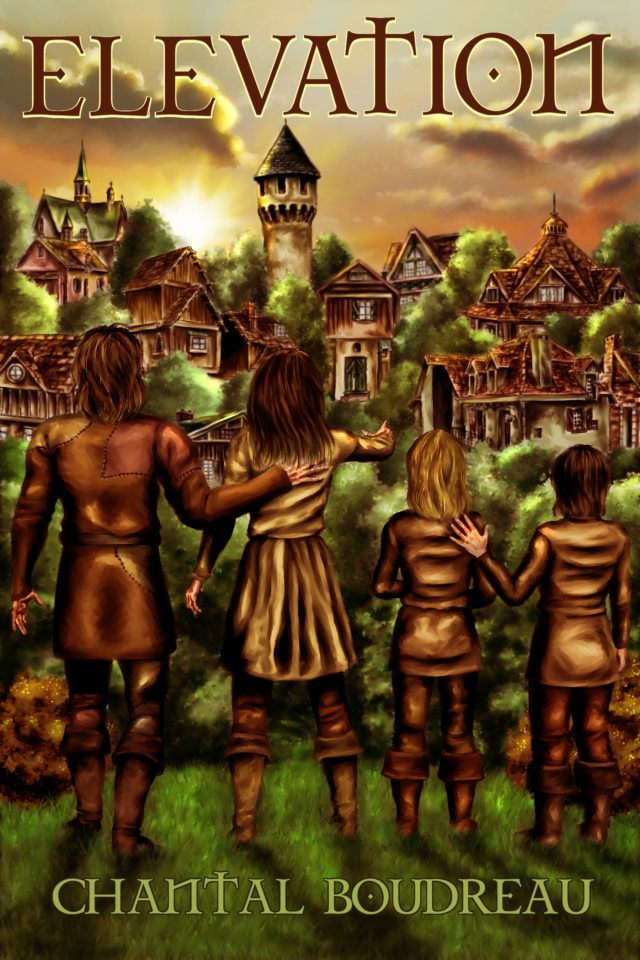
Elevation

Elevation – Second book in the Fervor series

Q: I see that you have a B.A. in English – did studying the language help you with your writing process?

A: It’s interesting, but the focus of my English degree was studying written works, plays, novels and short stories, more than the actual language.  I think I had the basics of the language down from high school and as the result of a voracious reading habit.  The university courses taught me how to break down a story into its elements and how to analyze them. I believe that was actually a very useful start for my writing.  If you can understand how the Masters created their works, it’s a wonderful foundation for your own stories.

Q: Speaking of process, how would you describe your approach to writing?

A: I’ve heard a lot of people complain that using structure and solid plotting generates writing that’s rigid and formulaic, but that’s the technique I use.  It works for me and allows me to organize my ideas properly, and I’ve never heard anyone say those things about my work when they’ve read it.  I think the creative process is relative and different methods work best for different people.

Q: Lately I’ve heard from writers and fans alike that lines between horror, fantasy and science-fiction are blurring, and dystopian futures such as we see in your novel “Fervor” certainly seem, to me to contain elements of horror. Do you agree that the lines are blurring, and if so, how do you think it will affect the future of horror fiction?

A: I think lines are blurring because the smaller presses and indie publishing allow for new ways of thinking and don’t try to box writers in the way others in the industry do.  It’s important because when writers are allowed to explore and tread outside the lines, new genres can emerge.  I wrote a blog posting on this topic.  I refuse to adhere to strict genre norms and the books I love reading the most don’t

either.  I think horror will benefit from this.  Critics of the genre often attack the fact that horror stories are just a rehashing of the same ideas, but whenever you blend the genre with others it opens up a variety of new opportunities for unexplored territory.

Q: What is the Horror Writer’s Association? How did you become a member?

A: The Association describes itself as organization to bring writers and others with a professional interest in horror together and to foster a greater appreciation of dark fiction in general.  I had to apply, and provide evidence I met their membership criteria, which includes certain publishing requirements.  When they approved my application, I also had to pay a membership fee.

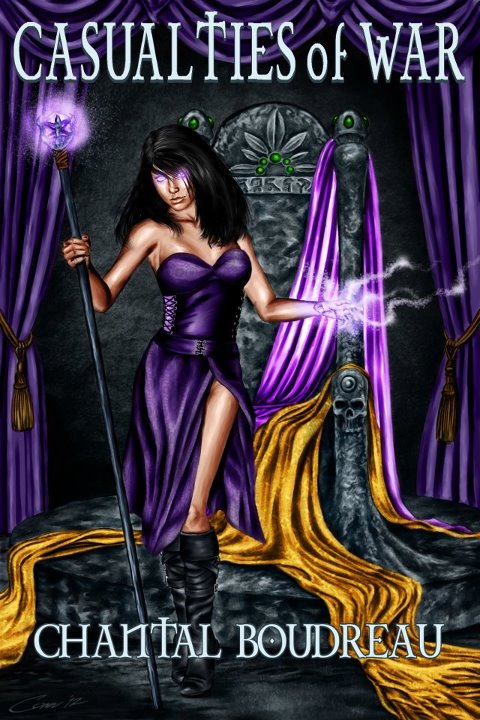
Casualties of  War

Casualties of War – Second in the Masters and Renegade Series

Q: I’ve heard mixed reports from other authors regarding working with horror anthologies, and anthologies in generally. What I had heard was that some were with certainty more professional than others in their dealings with the writers. Having been published in a number of anthologies, what advice would you give to other writers about how to separate the chaff from the wheat?

A: It can be a hit or miss situation with some of the smaller presses, especially if they are newly established and haven’t really had a chance to prove themselves.  On the other hand, it can be really difficult to get an acceptance with the pro-rate paying venues if you haven’t established a presence in the industry, not to mention a newer writer doesn’t necessarily feel all that confident about their own work and getting a couple of acceptances with smaller semi-pro venues can build your confidence, so limiting your submissions to only pro-rate venues isn’t always a good idea.  I guess you have to decide what’s best for you, do your research, take calculated risks if you feel like it, and trust your instincts.

Q: You are an extremely prolific writer, with 16 novels and a nearly innumerable amount of short stories. What would you say keeps you so inspired?

A: Actually, I’m up to 18 novels completed at this point, after I finished my last manuscript, a paranormal thriller called Intangible.  I’m absolutely driven to write and I have been for the last three and a half years.  I can’t explain why, other than to say it’s my passion.

GFMUcover

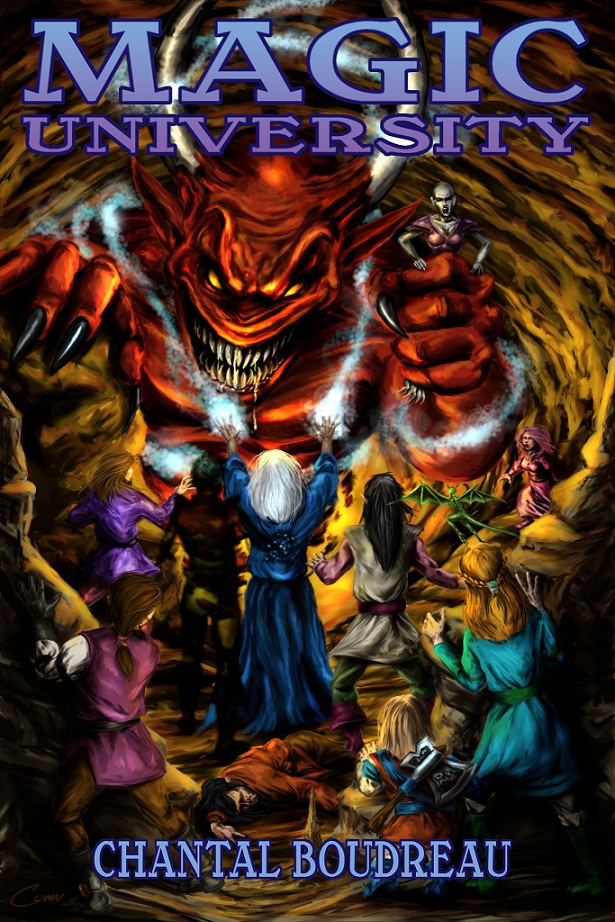
Magic University – First of the Masters and Renegade fantasy series

Q: Of all of your stories, which was your favorite?

A: Of my novels, it’s a toss up between the fifth book in my Masters & Renegades fantasy series, Lines of Opposition, which I’d like to think is an exceptionally dark and moving story, and the dark fantasy/horror novel I wrote based on Siberian mythology, Elements of Genocide – neither of which are published yet.  Of the short stories, I’m really fond of “The Ghost in the Mirror” – more of a supernatural, modern fantasy tale, I guess.  It had been published by Trestle Press, and they have it under contract until 2013, but we’ve gone our separate ways at this point.  I’m hoping to reprint it elsewhere when the contract expires.

Q: Is there anything else you would like our readers to know about you and your writing?

A: That I wouldn’t have managed to write what I have or to get my work published without the wonderful people who support me.  It can be a very fickle industry with lots of obstacles, and it’s easy to get discouraged without good people backing you up.  Make a point of letting a writer know if you enjoy their writing.  It really helps to keep them inspired.

Your Collection’s Department

•June 6, 2012 • Leave a Comment

This is another one of those blogs where I blog about writing. Incidentally, all of those are categorized under the heading “writing” in my blog. Sometimes they are by way of advice, but much of the time, they are by way of venting. Maybe the English Language needs a new word for this? Adventing? No… I think Advent means something religious. Ventice? Advicenting? Hints? Comments? Suggestions? If you can come up with a better term for advice + venting, or if you want to vote for one of these fine terms, please leave a comment below. Now to the subject at hand.

COLLECTIONS

Repo Men

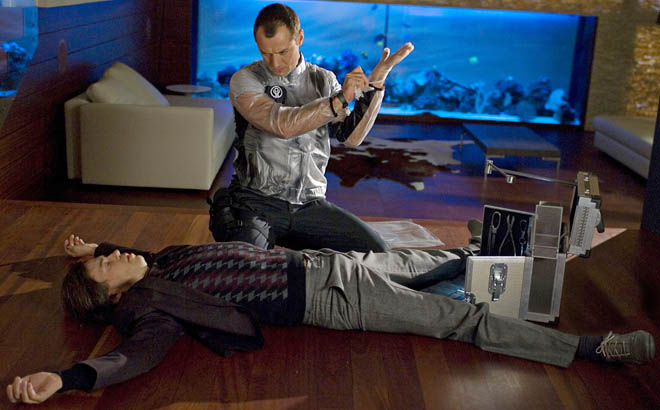
Collecting payment for your book sales is far less brutal than Jude Law collecting human organs, or so we’re told.

This would be a lot more fun if I were writing a horror story about the subject of collections: you know, something along the lines of Stephen King’s “Quitters, Inc.” maybe? Or like Repo Men, but not the automobile reaping classic Repo Man with Emilio Estevez, no… instead, that really depressing dark comedy horror something or the other flick with Forest Whitaker and Jude Law. Collection seems like a great name for a short story along those lines, and frankly, writing short stories and novels is a lot more fun than actual collections. Unfortunately, if you are going to go the independent publishing route, there is a good chance that you will wind up being your own collections department.
Some writers it seems, are able to make all of their money off of Amazon or Lulu or Createspace or whatever they use to self-publish, and they are not, as I am, casually hawking books out of the trunk of their busted ass vehicle.

Too $hort

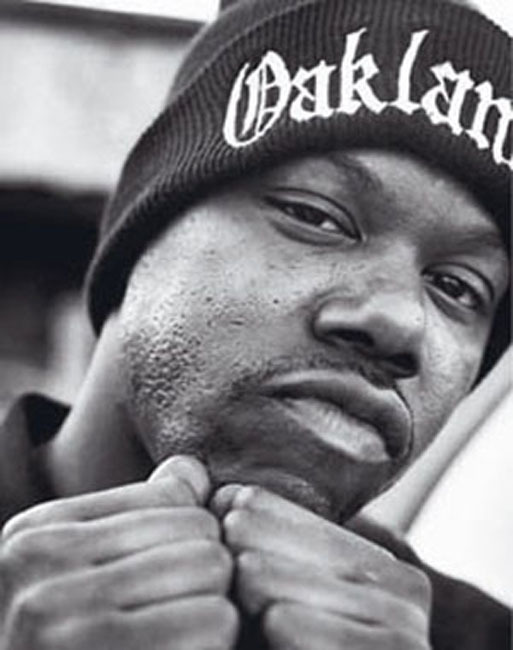
This is Oakland’s Too $hort

Once, when I was sitting around in Burger King with my fiance, eating my Whopper Jr. Meal, a local fellow over there around Jingletown (yes… that is the name of a neighborhood out here in Central East Oakland, and it’s somewhere around Fruitvale, which once did but no longer has fruiting trees in abundance, but I digress). This guy asked me about my books, because there are postcards all over Oakland and Berkeley in shops announcing my book Solitude… not to mention that newspaper ad in the SF Bayview. He asked me about my books, and I explained that while I do sell books online and in local bookstores, a good many are sold out of my trunk.

And he said “Oh, so you’re like the Too $hort of authors.”

I am repeating that in my blog, only because it’s pretty awesome, being called the Too $hort of authors here in my neighborhood. You know, I know Rappin 4Tay, and he opened up for Too $hort at the StreetLow Auto Show, way back in 2004, and I was the camera person. As a result, I met Too $hort for about the third time in this life, because I also met him back when I was 19 and he was doing volunteer work in a local program that helped young people to learn to do audio production, and I was the representative that the non-profit he was asking for money sent out to inspect said facility.

4Tay and Sumiko

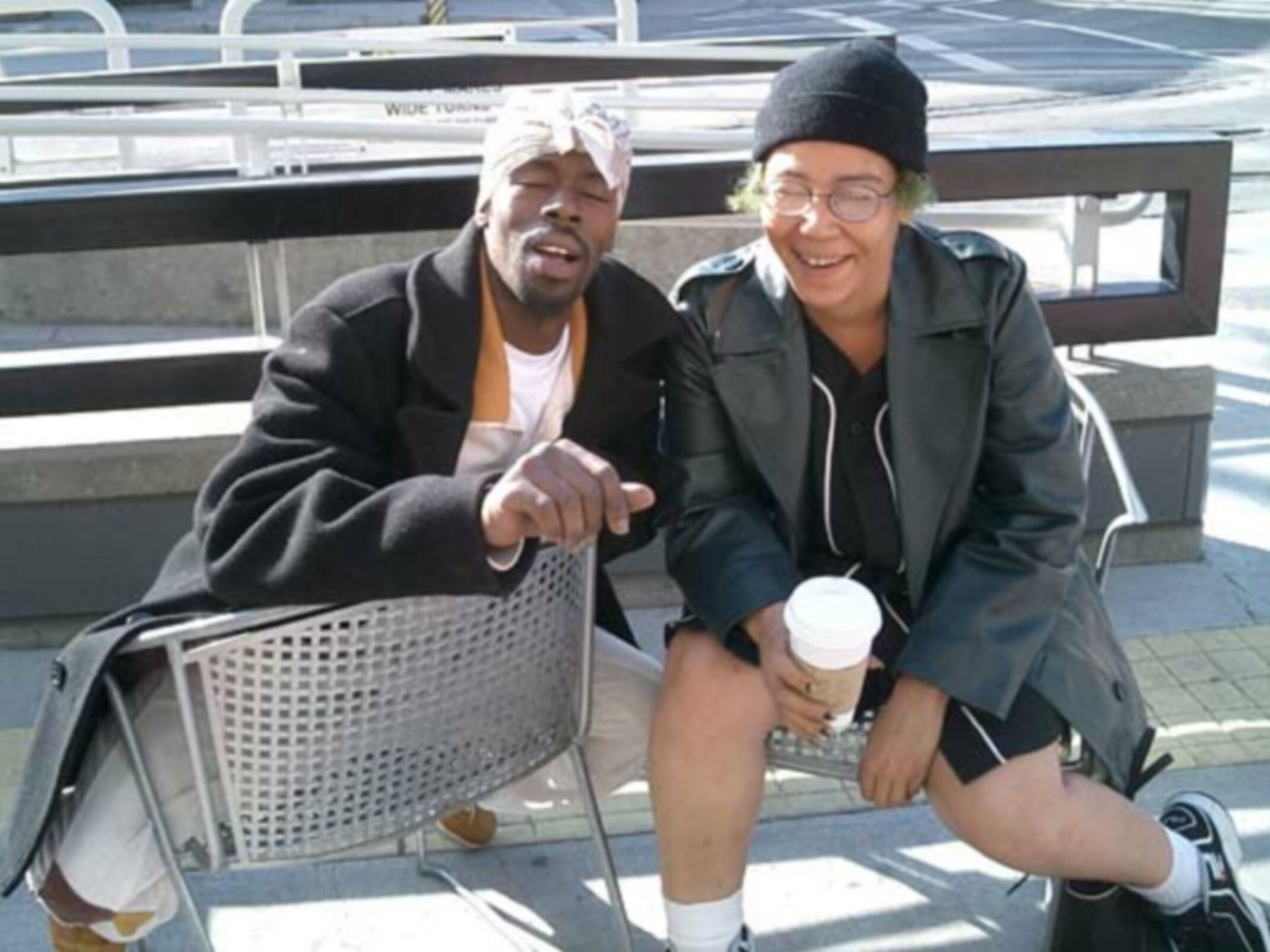
This is me having coffee with Rappin 4Tay back in 2004, when I was videotaping his concerts.

These three meetings made me understand that when it came to getting funding for the non-profit, he was all business and community minded. Later, when I saw him performing and promoting “Married to the Game” while I was working for 4Tay (who was promoting “Gangsta Gumbo”) he was all entertainment.

Most of you are wondering “what does this have to do with books?”

Well, when you are selling out of your trunk, or your back back (mine is a Hello Kitty back back, and it’s pink) you have to make sure you get paid. In my case, I give people books and let them pay me later sometimes, because they live in my neighborhood or go to my school or work in my local businesses, go to my local churches, and eventually will pay me. If I remind them. So far, not one person has ripped me off.

But I still have to remind them.

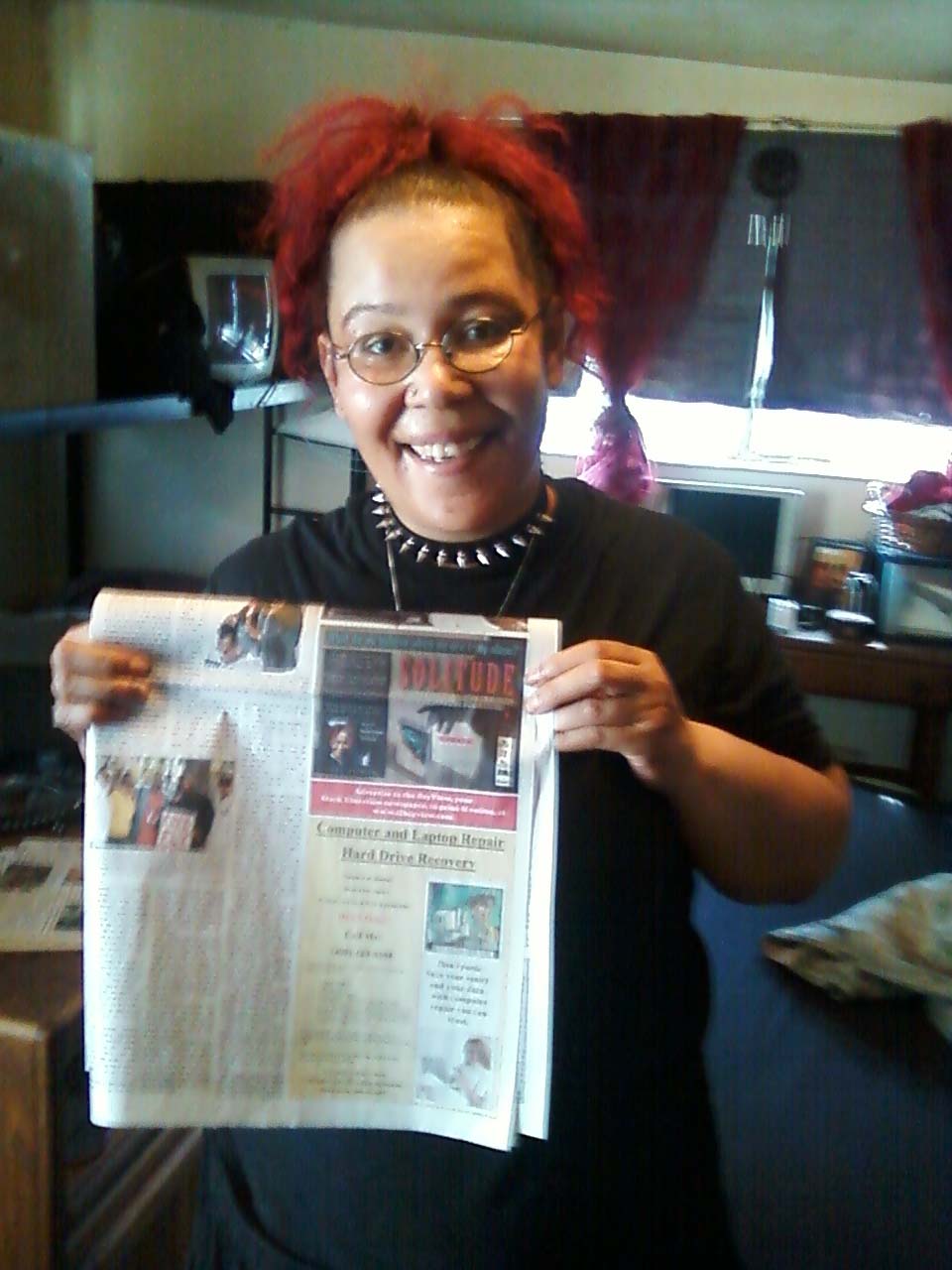
Solitude Newspaper Advertisement

Excitedly holding a copy of the San Francisco Bayview Newspaper with an advertisement for my book “Solitude”.

So today I made a really neat discovery: called “invoicing” on PayPal. It seems that I can send people an invoice on PayPal and it will allow them to pay that way. The problem is, it charges me about 70 cents per sale. That means I will have to start charging people an extra 70 cents moving forward into the future if they get my book and pay me later. Because I have to make money.

You always have to price thing so that they earn you money. That means that I had to raise the price of my paperback books when I put them into stores, and stores started needing a cut. I had to raise it to cover marketing, because those postcards and newspaper ads do not pay for themselves. I have to make sure to cover the cost of gas. I’m no expert on these matters, but I have taken a few Small Business Administration Micro Business workshops explaining how you begin to make sure you aren’t losing money while pursuing your small business dreams.

Guess what self-publishing is? It’s a Small Business.

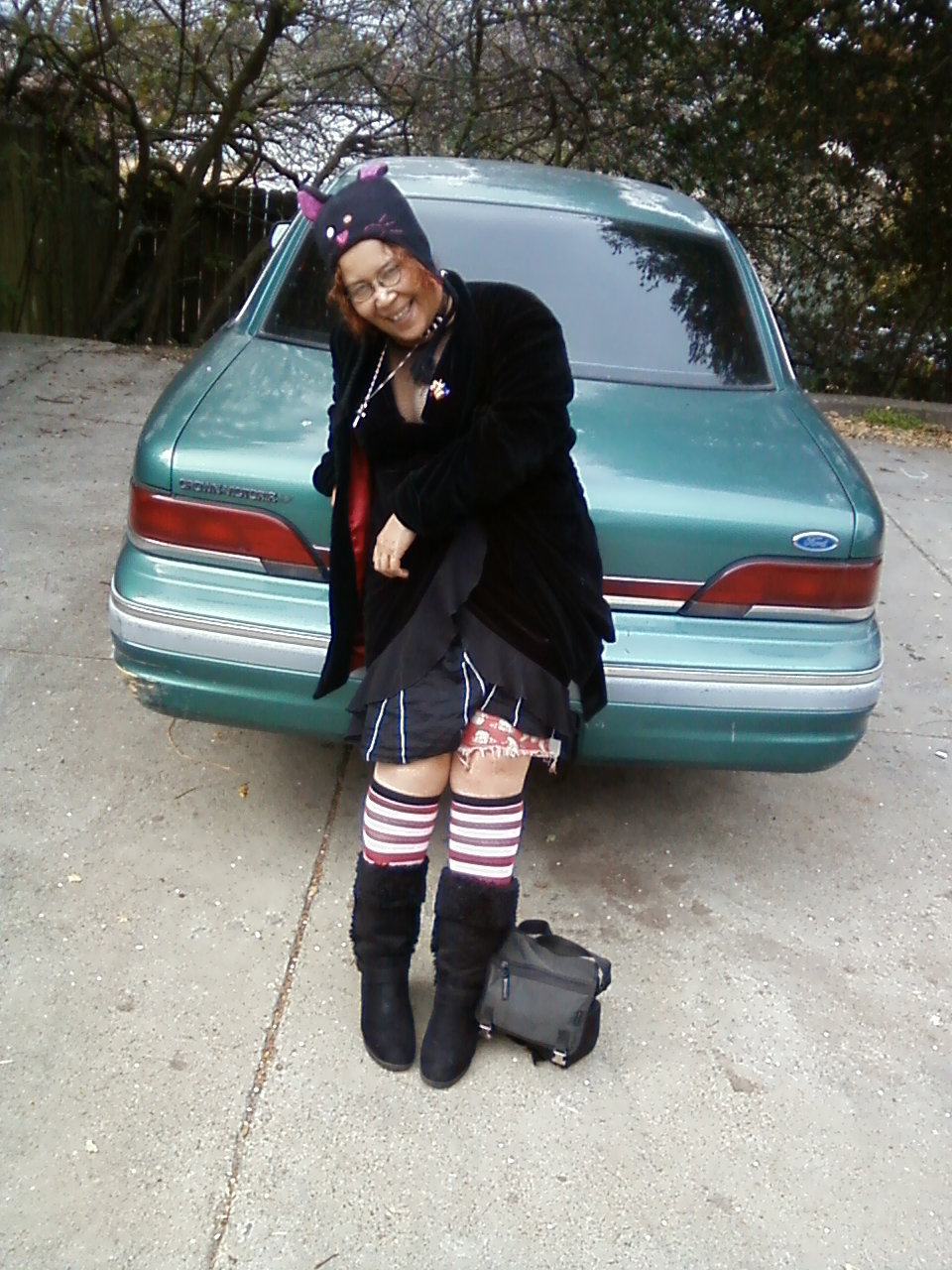
Car

Me in front of my sales vehicle, with my clearly evil striped socks.

As a small business person, you have to ask for money. Further, you have to make sure that you are asking for enough to keep yourself in business. For me, that means I need enough extra money to purchase extra copies of my books to put in my trunk and/or backpack to sell to individuals and/or bookstores. I need to cover the cost of the gas to get back and forth to these bookstores to drop off books and pick up checks. This isn’t optional: if I want to keep doing this, it is 100% necessary. I don’t make enough money at anything else to “carry” this as a hobby, so I’m hungry. Hungry makes you work harder.

I hate having to ask for money. It makes me feel like Cruella Deville.

That’s a neurosis I have. It’s not really evil to ask for money for your hard work. But it feels evil at times.

Decidedly less evil, however, than reaping vital organs from the living or electrocuting smokers.

When you start out and until when – and if – and that’s a big if, you make enough money to have a staff, you are an independent who must man every department of your very small business (or in SBA speak, “Micro Enterprise”).

THANKS FOR TUNING IN FOR THIS EPISODE OF “THINGS THAT GO BUMP IN MY HEAD”

We’ll be having a couple of more interviews with other writers in Horror, Sci-Fi and Fantasy in June. Stay tuned for interviews with Serena Toxicat and Chantal Boudreau.

A Story of Sera and Itzel (Warmth)

•June 5, 2012 • 1 Comment

Sweat poured down her cheek in sticky rivulets, clinging briefly in the corner of her blameless and unlined eye. Sera, although certain it was the only water to be found for at least 50 miles in either direction, was not at all concerned with dehydration. They could both be out of here long before that was a problem. Still, they must be growing near their destination. The other woman, whose name was Itzel, was slowing down.

The Caves

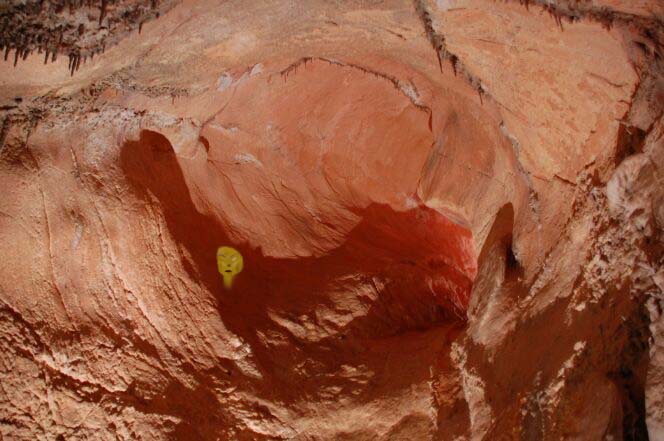
The Caves – They see a face in the rock from the distance

“Are we almost there?” Sera asked her.

“Yes,” Itzel answered. She swatted absently at a small, buzzing insect near her eye – a fly perhaps, maybe a gnat. “The petroglyphs are right over there, near the entrance of that cave.” She pointed towards a cavern in the face of the red of rock. Sera thought she could see a face scrawled into the surface of it. Both of the women walked up to it to get a closer look.

“Who knows how long this has been here?” Itzel remarked.

Tooth Sharpening

The Ladies engaged in the practice of Tooth Sharpening

The women didn’t bear even a passing resemblance to one another, and it was clear they weren’t related. The woman Sera was unusually tall, and of a thick, muscular bearing. Her hair was of thick, wool-like curls that fell past her shoulders, and her skin was the color of a chestnut, with brown hair not much darker in hue. Her arms and legs were thickly muscular, and while she wasn’t fat, she was heavily built. Itzel was short, a full foot shorter than Sera. Her skin was the color of a hazelnut, and her hair as black as the very centers of her eyes. Her arms and legs were thin and wiry, and she appeared to be quite a bit older than Sera. In fact, she looked old enough to be her grandmother. They had this much in common, though: both had jagged, sharpened teeth, like the teeth of a shark.

“The Dead,” Sera said, agitated. “They have been here longer than I, indeed, I knew as much. Yet I never imagined that they lived before you lived.”

petroglyphs

When they got close, the women saw this petroglyph (by Kateryna Fury)

“The Pox,” Itzel said, pointing at the marks on her own face – and then, on Sera’s. “The Pox destroyed them all, and with them, it took most of us… the Afflicted, and the Unafflicted of my people along with them. I am all that is left, but believe me, child, the Dead wandered in this place before the men who lived here knew how to count the time.”

Sera shuddered. “I hate the Dead. They have no self control.”

“All of us are near the Dead,” Itzel chided. “When you die, you will become that.” She tapped on the green face on the red rock before them. “It would be better for the Unafflicted if there were no Afflicted, if we all were to die at once, of the Pox or some illness that would prevent us from turning. The more of us there are, the more danger there is to them. We are little better, Sera. We are little better.”

Sera shrugged. She was hungry. She rifled around in the leather satchel at her side until she found the snack she’d stored near the beginning of their journey. Finally, she found it – slightly overripe from the heat, but still delicious. Her sharpened teeth tore easily at the flesh, and she spat the bone out on the ground.

Conquistador's Ring

Conquistador’s Ring

“Ouch!” she yelped. Then she spit something out on the ground. Whatever it was, it glittered in the sun. Itzel ran over to pick it up.

“A Conquistador’s ring,” Itzel announced. She smiled, revealing two lovely rows of saw-shaped teeth stretching wide across her pockmarked visage. “I’ll be able to trade that for something good.”Sera shook her head and laughed. “I really should look before I eat.”

The two Ghoulish women stood for a time, staring at the petroglyphs in awe and in silence. There used to be other Ghoul in what the Conquistadors called the New World, that world which to Itzel, was the old one. There used to be other walking Dead, the inevitable result of the Ghoul. But now there were none.

Neither of the ladies would see another of their kind for the next 300 years.

READ MORE ABOUT SERA AND THE REST OF THE AFFLICTED!

Keep up with Sera and her valiant journey to keep the Dead from destroying the earth with their ravenous appetites and impulsive natures in a world where the flesh-eating Ghoul are apparently the lesser of two evils… at least for now. Buy “Warmth” and read all about it:

http://www.amazon.com/Warmth-Sumiko-Saulson/dp/1475105142/ref=sr_1_1?ie=UTF8&qid=1338959092&sr=8-1

THANKS TO KATERYNA FURY

For the Zombie Art. Keep up with her blog Textual Fury here:

http://textualfury.wordpress.com/

Congrats to our Contest Winners!

•June 2, 2012 • Leave a Comment

I wanted to give warm thanks to… uhm warmly thank… oh okay, I wanted to thank everyone who participated in the “Feast, Flesh or Foul” zombie/ghoul contest and offer a round of applause to the two winners, Kateryna Fury and Keun Hicks, each of whom won a signed copy of my latest novel, Warmth.

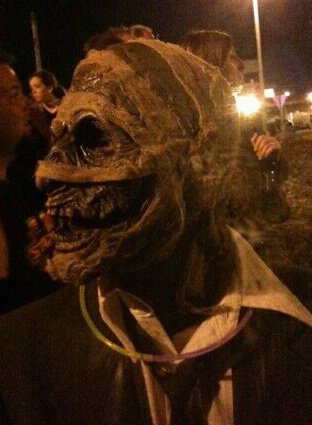
2nd Place Winner! Keun Hicks Zombie

2nd Place Winner! Keun Hicks Zombie

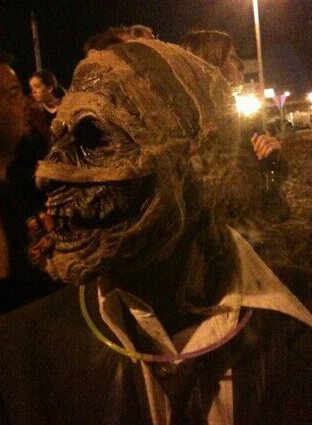
“Warmth” is the gruesome tale of ghoulish zombie hunter Sera, currently going by the name Leilani Paoli. She hates the Dead – zombies. They have no self-control. She would love to believe that if it weren’t for zombie hunters like herself, humans would have lost the war against the oncoming hordes of zombies hundreds of years ago – she’d like to believe it, but it really isn’t true. For one thing, The Dead are merely a single, brief point in the life cycle of the Afflicted. First one is bitten, then one is Afflicted… once Afflicted, if one fails to survive the zombie bite, or inevitably dies of some other source down the line, one becomes a zombie: a mindless member of the Dead, with but a single impulse: to devour as much human flesh as possible as quickly as possible before one’s corpse rots and falls apart. Few of the Dead will survive long enough to achieve the advanced stage of decomposition Keun’s mask-work entry seems to have obtained.

1st Place Winner - Kateryna Fury Zombie

1st Place Winner – Kateryna Fury Zombie

No one is really sure how this whole mess started, but according to Sera’s oldest friend, the Mayan woman Itzel, there were once ancient wall drawing in the Americans that showed that zombie outbreaks took place during seemingly prehistoric times – long before she herself was born. She said that the outbreaks of Small Pox first in Europe, then later in the new World after Columbus showed up, were responsible for wiping out most of the Afflicted: both the Dead and the Living.  The Afflicted seemed particularly sensitive to the disease, so much so that most of the Elders had had it sometime before becoming Afflicted, and still bore the scars. Sera and Itzel were among the Living, Afflicted:  ghouls who required a diet of human flesh to survive. Both of the ladies had their teeth sharpened into shark-like points to aide with the tearing of flesh from bone during mealtimes. Perhaps the primitive drawings Itzel remembered seeing on some of the forgotten ruins of ancient American cities looked like the neo-primitivist zombie artwork created by 1st Place winner Kateryna Fury?

Each of the Winners receives a signed copy of Warmth and an opportunity to have her artwork included in promotions for the book.  The novel “Warmth” is currently available on Amazon.com, for the Kindle Reader, on Lulu.com and locally at Laurel Bookstore in Oakland, CA.

http://www.laurelbookstore.com/

http://www.lulu.com/shop/sumiko-saulson/warmth/paperback/product-18961589.html

http://www.amazon.com/Warmth-Sumiko-Saulson/dp/1475105142/ref=sr_1_1?ie=UTF8&qid=1338696417&sr=8-1

http://www.amazon.com/Warmth-ebook/dp/B007PGLGJ6/ref=sr_1_2?ie=UTF8&qid=1338696417&sr=8-2

Contest Time! Don’t Forget To Vote

•June 1, 2012 • Leave a Comment

Guess what today is? June 1st, the final day of the…

Zombie-Ghoul Contest Thingie

Click on the link above for the Contest Rules. Anyway, today being the final day, I am asking that all of you go over and VOTE for your favorite entry HERE:

https://www.facebook.com/authorsumikosaulson

… at my author Facebook page. You vote on the entries by “liking” them on the page.  Each of the entrants would appreciate you taking out the time to vote for their work (and some of you probably know some of these people, so you can vote for your friends).  Winners will receive a signed copy of my novel “Warmth”. Here I am talking about the novel:

http://www.facebook.com/v/10150985639577246

We had a fun Zombie Video Shoot out on Shattuck and Tommy and Seames would like to enter to win an autographed copy of Warmth, too, so we will be including those entries in the contest.

And now, our lovely contestants:

ZOMBIE CATEGORY:

Radioactive Zombie by Katernya Fury

Radioactive Zombie by Katernya Fury

Zombie - Julie Hoverson

Zombie – Julie Hoverson

Zombie - Jimmy

Zombie – Jimmy

Zombie - Seames Castelblanco

Zombie – Seames Castelblanco

Zombie - Keun Hicks

Zombie – Keun Hicks

Zombie - Keun (scarier)

Zombie – Keun (scarier)

GHOUL CATEGORY

Ghula, Scarlet Winter by Kateryna Fury

Ghula, Scarlet Winter by Kateryna Fury

Ghula - Des Hobbit

Ghula – Des Hobbit

Ghula - "Oh, Nevermind the stain" Des Hobbit

Ghula – “Oh, Nevermind the stain” Des Hobbit

Critics: Already?

•May 27, 2012 • Leave a Comment

“Better to write for yourself and have no public, than to write for the public and have no self.” – Cyril Connolly

I have a lot of respect for people brave enough to post snippets of whatever it is they have to be writing at the time. I have no such intestinal fortitude: I really don’t feel like opening myself up to critics before I’ve reached a certain point in my writing: for a novel, this is generally about a third of the way through, which is the point at which it has gained some momentum. For short stories, I won’t share them until they are complete first drafts. There is a reason for this: and that is that publishing of any sort invites critics.
The Critic

This Critic was bought to you by Al Jean and Mike Reiss

Posting a blog invites critics: there is always the possibility of persons who will post criticism in the comments field. Writing on your damned Facebook page invites critics. Given that writing things for which you have no intention of gaining anything concrete (okay, maybe the thumbs up likes on your Facebook page…) attracts critics, it should come to no surprise to you that as soon as you begin to label anything you write as some category of literature, you’ll invite criticism of aforementioned work. You’re writing really, really serious thing now. What did you expect? Well… let me tell you something, as much as most of us hate criticism, there are certain types of criticism you should welcome and invite. There are other kinds you should ignore. Which are which?
Ignore Generalized/Personal Criticism by Non-Readers

Groucho Marx

“Please accept my resignation. I don’t care to belong to any club that will have me as a member.” – Groucho Marx

In separating the chaff from the weed, the first step is one most of us wouldn’t even imagine would be necessary: and that is to eliminate the people whose criticism is on the level of Junior High School students out to identify who the Cool Kids are. Another variant on this are people who have decided that you knowing them, in and of itself somehow lessens your capacity. For instance, shortly after I stated that I’d written a novel, an acquaintance posted a sarcastic comment about people who claimed to have a novel in them most likely being constipated. There was nothing wrong with what she said: some people thought it was funny, and she got a few likes on her page. However, you as a writer should ignore criticism that has to do with who you are as a person, and not in any way with what you actually have written. You should categorically ignore criticism by people who haven’t read any of your works. The word for this sort of criticism is “irrelevant”. Relevant criticism has to do with the content of your work, the effectiveness of publicity for your work, and in general: it revolves around the work itself. It is not personal. What makes personal criticism irrelevant is its basis in a logical fallacy known as a “genetic fallacy“. That is where an idea is judged by its source rather than its merit. Such criticism is not relevant.
Pay Attention to Specific Criticism, Especially by Readers

Reading-a-book-001

Always pay attention to what your readers have to say.

Always pay attention to specific criticism: even when it’s by non-readers. For instance, the initial observation about the cover of “The Moon Cried Blood” – which was that it appeared to be the cover for a Young Adult novel – came from non-readers, specifically bookstore owners. That criticism was right-on:  as soon as I changed the cover art to something more grown-up I began to sell copies to readers of my previous work, “Solitude”.  If I was trying to open a new niche as a writer of Y.A. fiction, I may have shrugged and said, “well, that’s the audience it is for.” But I wasn’t trying to, and the inappropriate cover art only made it difficult to sell it to the audience I already have.  Criticism by actual readers of any description should be taken even more seriously. I don’t care if the only thing they read was the dust cover for your book. The fact that they have read anything is showing that they’ve put some time and interest in you. You should pay close attention to anything that a person who shows interest has to say until you become well known enough to have a staff of assistants – then, have them pay close attention.  If your readers have an issue with spelling, typesetting, continuity, grammar… anything that can be qualified specifically so that change is possible – consider what they have to say, and consider if you need to change what you’ve done accordingly. I don’t just mean people who paid for your work, I mean anyone who happens to have taken the time out to read it. Readers are a valuable resource. If you have any readers you are a lucky B, regardless of whether or not those readers are fans. Treasure them.