
The summer issue of Writer’s Muse Magazine is out!
•July 8, 2013 • Leave a Comment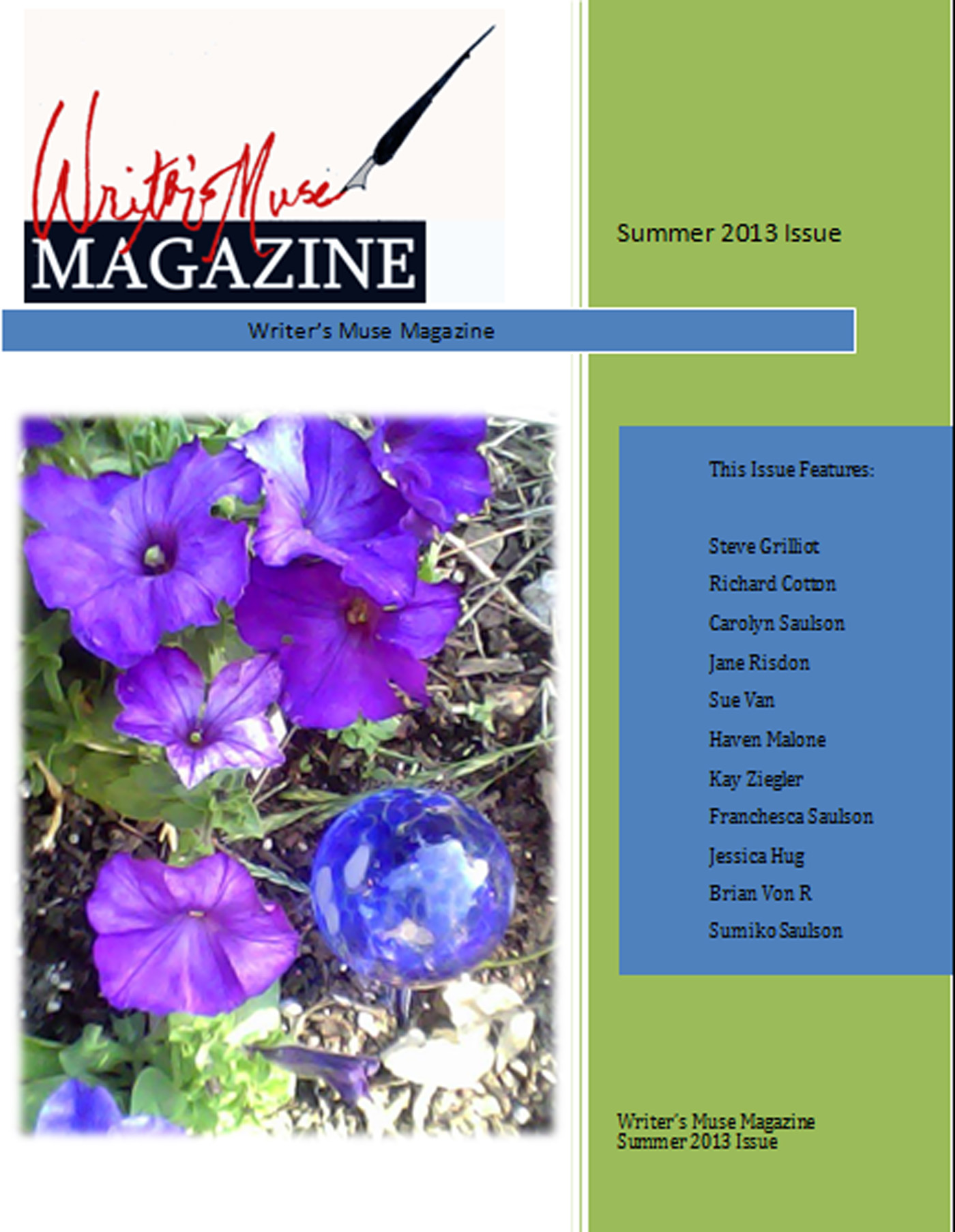
Writer’s Muse Magazine is a free quarterly periodical featuring the works of members of the Writer’s Muse Group, a creative writing group with over 500 members, based on the concept of writers helping writers.
Writer’s Muse Group was founded by Richard Cotton and can be found on Facebook here:
https://www.facebook.com/groups/writersmusepage/
This issue features writing by: Steve Grilliot, Richard Cotton, Carolyn Saulson, Jane Risdon, Sue Van, Haven Malone, Kay Ziegler, Franchesca Saulson, Jessica Hug, Brian Von R, and Sumiko Saulson.
The Writer’s Muse Page was founded by Richard Cotton in 2012 as a place where writers could meet other writers, and get support and feedback. Originally concieved of as an online writer’s group, the small group of less that twelve people kept expanding. Although the Writer’s Muse Page is an English-speaking group, it includes members from all alround the globe.
The group started with this simple statement:
“The Writer’s Muse Page is a group where writers can share with and support one another. Any writers are welcome to join this group.”
Writer’s Muse Magazine was launched in December 2012 by Sumiko Saulson, the editor of the magazine and one of the adminstrators for Richard Cotton’s Group. The first magazine was a Christmas Holiday edition. After a six month sabatical, the magazine returned for this, the Summer 2013 edition.
Moving forward, the magazine will be quarterly, with Spring, Summer, Fall, and Winter issues coming out once every three months. For more information about this free magazine, email Sumiko at sumikoska@yahoo.com.
To join the Writer’s Muse Group, visit the Writer’s Muse Page and join here:
https://www.facebook.com/groups/writersmusepage/
Pick up your copy of Writer’s Muse Magazine at Smashwords, here:
https://www.smashwords.com/books/view/334334
On a personal note:
My mom submitted two stories to this issue: she’s in a writing class at school, and reading her writing I really get this feeling that “Wow, that’s where my writing skill came from.” I love her writing. One of her pieces is a work of fiction, and the other is an autobiographical bit about the recent passing of my father… my parents were divorced for years (since I was seven years old) but she has written a very moving piece about how she felt about her children losing their father.
My mom is Carolyn Saulson.
My niece, Franchesca Saulson, contributed a piece, and so did Jessica Hug, she’s my fiance’s sister. I hope you’ll check out their work and support them – I am very proud of Franchesca and Jessica. Also, I hope you will check out the other stories in this compilation. I really loved Steve Grilliot’s piece.
This issue contains romance, suspense, and poetry. Check it out, and if you are so inclined, leave a review for the magazine and our Writer’s Muse writers.
Interview with Briana Lawrence, author of “Treat Me Kindly”
•July 1, 2013 • 5 Comments
 This is a part of our Black Women in Horror Interview Series. February is African American History Month here in the United States. It is also Women in Horror Month (WiHM). The Black Women in Horror interview series celebrates the place where the two intersect. These interviews are included as a part of the free eBook “60 Black Women in Horror Fiction.” The Black Women in Horror Interview Series is designed to raise the profile of and bring attention to the more than 60 black women who write horror and related genres of speculative fiction.
The Author
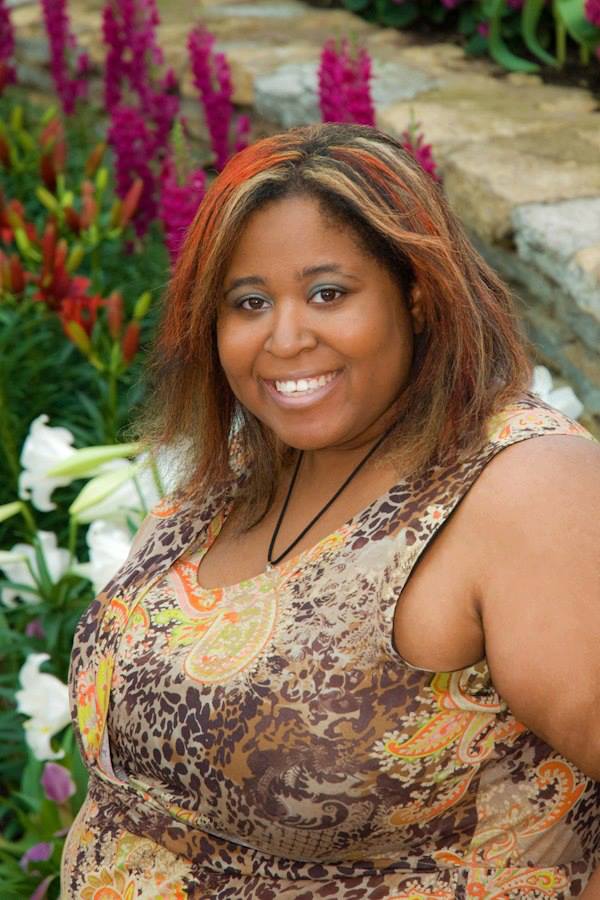 At the age of nine, like most kids, Briana Lawrence had a dream. She wanted to be the best “WRITTER” in the whole wide world. Her fourth grade class laughed and wondered how one hoped to become a “writer” if they couldn’t even spell the word. Back then her stories were created with crayons and construction paper. As she grew older they progressed into notebooks and colored ink pens of pink, blue, and purple. When she lost her older brother, Glenn Berry, in a car accident, she stopped writing.
The Book
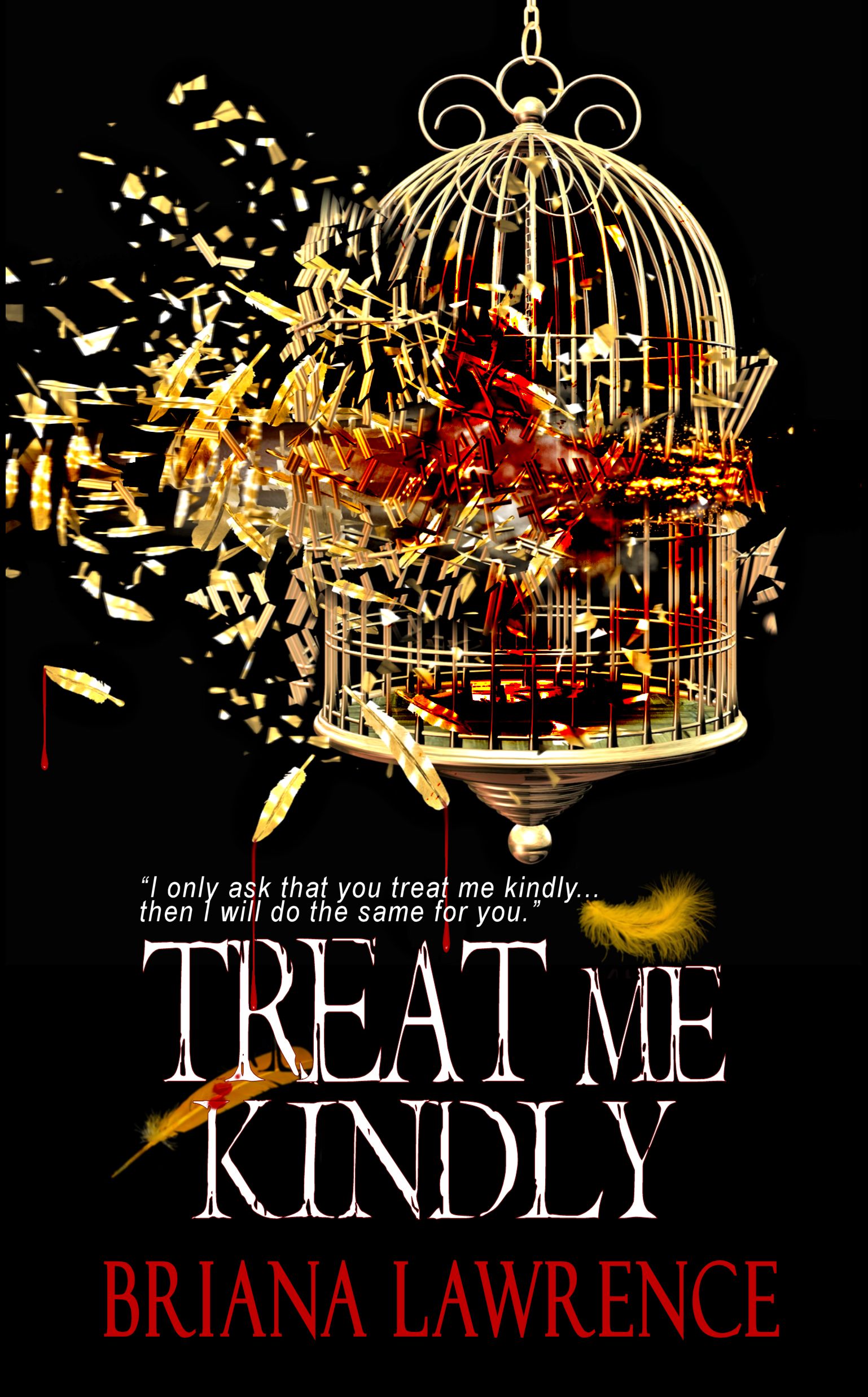 Treat Me Kindly” is a supernatural murder mystery that takes place in current times. Mild mannered Matthew Sharpton is having the worst existence possible. He lives in his parents’ basement after his fiancee upgraded to a better man. To make his father happy, he goes to a charity auction hosted by the company the old man works for. While there, he ends up bidding on a beautiful bird and taking it home. It’s here that he discovers that this isn’t an ordinary bird. The bird has the ability to turn just as human as Matthew — minus the thinning hair. The woman is more than happy to belong to Matthew as long as he does one simple thing. “Treat Me Kindly.”
The Interview
A. Absolutely! In fact, this book is something that use to be a fanfic, but I never finished the fic. Then, one year, I decided to try NaNoWriMo and I reread this fanfic I had written because I remembered that I liked the plot. I edited it like crazy, changed and added characters, outlined what I wanted to happen, and suddenly… I had a book.
I think people take fanfiction for granted. Just like fanart. To me, all artists start somewhere. When I was a kid I would draw pictures of the cartoon characters I liked. Or, I would write stories about things I like. I was writing fanfiction before I even knew the name of it. I loved Dragonball Z, so I started writing stories about the characters in my notebook. Later, I found out that doing such a thing had a name: fanfiction.It’s because of fanfiction that I kept writing. Writing has always been a dream of mine, but I switched focus after my brother died when I was 13. But even when I stopped, I still had that notebook about Goku and Vegeta and the rest of the DBZ gang. I just called it a hobby. It followed me into college (though the fandom changed from DBZ to Gundam Wing) and I would just write and write and write while telling myself I would go into pre-med. Unfortunately (or fortunately, depending on how you look at it) I was terrible at it. I ended up finding Women’s Studies, which required a lot of reading and discussion and writing. That writing, plus the fanfiction writing I kept calling a “hobby” reminded me that, hey, I love writing! I should be doing this!So fanfiction went from being a hobby to being a good way to hone my craft. I learned a lot from becoming an English major and taking writing classes, but I also learned a lot through fanfiction. If you’re brave enough to actually post your fics online, people will tell you what they think. Sure, you can get comments from your instructor or your class, but fanfiction exposes you to all sorts of people and it quickly teaches you that you need a thick skin in this business. Not everyone is going to love what you write, and in the realm of fanfiction, people aren’t afraid to tell you that. Whether it’s a long explanation as to why they don’t enjoy your story, to quick sentences like “this sucks,” you want to hear the good, but you have to be ready for the bad because it will happen.I’ve met so many people through fanfiction, from readers to writers, and I’ve learned from reading their stories and talking to them. The transition from “fanfiction” to “professional writer” happened gradually. It happened without me even realizing. At some point I realized that those Naruto characters weren’t really Naruto and Sasuke and Sakura anymore. I had made original plots, and the characteristics of each character started deviating from how they acted in their series to how they would fit the story I created.If you’re thinking of going from fanfiction to actual fiction, I do have some suggestions. There are things you can get away with in fanfiction that you can’t really get away with in actual works of fiction. You actually need to describe your characters, instead of relying on people to know how the character looks and acts. Every “Black Butler” fan knows that Sebastian has black hair and wears a suit, but you have to start thinking outside of that circle. You can’t just say “Sebastian entered the scene” to a person who has never heard of “Black Butler.” Who is he? What does he look like? How does he act? In your own story, you have to develop your character, otherwise, how will people know who they are?Also, there are some things done in fanfiction that are completely unrealistic. I’m not talking about in the realms of fantasy or horror or things like that, but in a more… personal sense. Let’s sit down and have “Briana Lawrence’s Storytime” to explain what I mean. I am a huge yaoi fangirl. Yaoi, for those who don’t know, is Japanese for boy/boy romance. When I started writing professionally, I always ended up having a gay character in my stories, whether they were the main character or not. This wasn’t just because of me liking yaoi, but I’m part of the LGBT community because let me tell you, once you’re with a girl for 11 years I think that means you like females. Anyhow, I remember submitting my gay romance short story to “Dreamspinner Press.” It got edited, and the editor liked it, but when it came to the sex scene she was like, “This is hot and all but… there needs to be some sort of lubrication, otherwise, it’s going to hurt. Also, the characters just met a few hours ago, your lead character should really use protection.” In the realm of fanfiction, things like protection or lubrication and things like that don’t seem to come up all the time. The sex is hot, that’s all that matters. But in real life, we use those things with the partners we’re sexual with. It might be fiction, but there needs to be some realism.
A. Ha! No, I didn’t. I’ve never won NaNoWriMo (I’ve participated twice so far) but it really helped me work on the book and take it to where it needed to be. Sure, it’s great if you complete that 50,000 word challenge, but the most important thing NaNoWriMo does for you is that it pushes you to write. I know people who won’t do it because “they don’t have time.” You don’t have to make it to 50,000, but let that month help you flesh out your story, get something written down, and motivate you to keep going. That’s what it did for me. Before NaNoWriMo, my book was completely different. It wasn’t a murder mystery at all. Alex wasn’t a detective, and there were no crimes to solve. With NaNoWriMo, I sat down and looked at what I had written, read over it, and started to really think about what I wanted the book to be. It helped turn it into what it is today — along with my mother and partner, who helped give me some ideas.This also happened with my second book, a joint story with my partner. She used NaNoWriMo and actually finished it! So she won, not me. But once she wrote the draft, I went in and reread it and added to it, and we ended up creating what I think is a fantastic book. This particular book with her goes back to your first question about fanfiction. This book is actually something we created together, we use to chat online because we were long distance, and we would roleplay with different anime and video game characters. Then, suddenly, we realized that those characters were completely different than how they act in their series and the plots were our own, so we put together a book. This one isn’t horror, though, it’s more urban supernatural adventure.My third book, which is a supernatural horror gay romance, is also fleshed out thanks to NaNoWriMo. I signed a contract for it about two days ago, but thanks to NaNoWriMo the last couple of chapters were finished.
A. I feel great about being in this sort of “small” group, because I hope that people take notice to what I’m trying to say with my work. I hope they see it as something unique and want to give it a chance because of it. I jokingly told my partner that I should use my black lesbianess to my advantage to get my book out there! I’m kidding… sort of.Honestly, before Damnation Books published it, I didn’t really see it as horror. But my mom read it and told me how creepy it was (she enjoyed it though, she meant it as a compliment). So, suddenly, I realized that yeah, it is kind of creepy. There’s some disturbing moments and grotesque imagery, I guess I wrote a supernatural murder mystery horror novel somehow, but it’s what I had in my head. I didn’t really start thinking about the lack of black female horror writers until my publisher, Kim Richards, brought up talking to Kinitra. Then suddenly I was like, “Wow yeah there aren’t many of us.” Then Kinitra brought up Toni Morrison, who I read in college, but I don’t remember her being called a horror writer. However, when Kinitra brought it up I thought back to books like “Beloved” and thought “yeah that book is creepy!” So not only is it a small group to begin with, but not everyone sees it as horror.It may be the predominant assumption about what a book by a black woman, or a story with a black female lead, will be about. I talked to my dad before the book’s release and he told me how his girlfriend reads the “angry black woman” books. And, you know, that’s not a bad genre, I just think that it’s this huge idea that people have about black female writers, period. That all of our work is going to be about us being pissed off. Now I’m not saying that black women don’t have a reason to be angry, I just think — no, I know — that there’s more to us than that.I think I surprise a lot of people, because I’m so incredibly geeky, and my book isn’t about what people think a black woman would write about. I use to work at GameStop for 6 years and the looks I would get, oh man! Not only because of my gender, but because of my race, and not just from white people but black people too! I’ll never forget these two black guys who came in and said, “We just didn’t think a woman like you would have time for this kind of stuff.” So it’s like… even my own race doesn’t see me coming!Granted, there are some women in the book who snap (and one is black), but it’s not because of their race or their struggles because their women or women of color. They’re treated like crap because they’re shifters who are presented as pets, so their owners assume they can do whatever they want to them. The animals in the book are all different in human form: black, white, male, female, it doesn’t matter. And each one is mistreated in one way or another, whether it’s abuse, or neglect, The abusers are also different, too. They’re not all part of the majority (white male), they’re all different, because it’s not always the majority that hurts us, sometimes, it’s minorities who hurt each other. In the end, you should treat EVERYONE with respect. Men, women, black, white, gay, straight, whatever. This book is just a different way to show that. I didn’t set out to make a book with that message, it just sort of happened while I was writing. Honestly, I set out to make a cool, unique, supernatural story, then suddenly this whole “Treat Me Kindly” message took off!
A. I think the easier question would be “how don’t I feel.” There’s such an array of emotions that it’s hard to list them all. Incredibly happy, of course. But there’s also this nervousness with it. The creative field is one of the hardest things you can do. It’s hard work getting your book out there and even harder to get people interested. Your publisher helps, of course, but you have to work at it too and it’s hard. Then you start to wonder what people will say about your book. It’s really emotionally draining, but honestly, I wouldn’t trade it for anything in the world. I’ve always wanted to do this, and now that I’m at this point I have no intention of ever stopping.
A. The thing about Jazzmyn — and all of the animals — is that they’re not actually very dangerous. Not until you mistreat them. If you treat them with respect, like people, then they’ll treat you well too. Matthew is a nice guy, he’s just down on his luck. Him and Jazzmyn have a good relationship. It’s Matthew’s father that makes things difficult, and Matthew is stuck in this position of wanting to keep his father happy, but absolutely loathing him. So does he make sure his father treats Jazzmyn well or does he let him be the asshole that he knows he is?
A. Failure to treat them kindly is connected to the deaths, to a certain extent. What makes it complicated is that the people who are killed aren’t necessarily the best people in the world. They did hurt these creatures. The fact that they can turn into humans further illustrates the hurt, I think. No one wants to see a person abused, especially if that person thinks they deserve it. The animals are loyal to their masters, they tend to hold out pretty long before they snap. Sadly, that’s something that animals — and even people — do sometimes. They endure the pain because they think they have to. However, these creatures are different. They make sure to tell a person, “If you treat me kindly, I’ll do the same for you,” but if they reach the breaking point then that’s it.As the story progresses you find out that the animals are actually from a different world than ours. You also learn that this whole concept of auctions and being pets to humans is something introduced to them, not something they’ve been doing on their own. Before the auctions, they pretty much lived just fine on their own.
A. Sort of. There’s definitely some sleuthing going on. Alex gets assigned to a case where a former rock star is found dead. It’s up to him to find out what happened, then things get more bizarre with the other murders. They’re much more brutal than the rock star’s murder was, but all of the murders are weird. Frank Marko, the rock star, looks to be poisoned, but all that’s at the crime scene is a butterfly. Butterflies don’t bite or sting people, nor are they capable of poisoning a person to the point of killing them. Also, the butterfly found on the scene is an extinct species. It’s one of those stories where everyone around Alex seems to know what’s going on, but he doesn’t. His friend on the force, Nicholas, figures out the mystery behind the animals, but how do you tell a guy that animals can turn human? It also gets personal for Alex because his sister is involved. She runs the company where the auctions take place, and this puts her life at risk. Alex has a lot to lose in this book, so it’s important to him that he solves the case. At the same time, he can’t work on the case after a certain point because his family is involved.The story does focus on the strange and supernatural more. The case is important, but there’s more focus on the animals and what they can do, and whether or not they’re in the wrong. Alex is important in that aspect too, because he does have a job to do, but are these creatures wrong in wanting to fight back against the people who’ve hurt them?
A. The book has a diverse set of characters. That was something that was important to me. White, black, gay, straight, all sorts of characters, because that’s how it is in real life. We’re not all the same, so I wanted everyone to be different and to have different backgrounds. At the same time, I wanted to make them go beyond being “the gay guy.” Yes, Nicholas is gay, but that’s not his main role in the book you know? Cassandra, one of the animals, is black, but her main role isn’t “the black woman.” They’re still people, and are all important in the course of the book. But I suppose the most important thing about the book is: enjoy reading it!
Where to Find Briana Online:
Seamas Castelblanco’s Birthday at People’s Park July 15
•June 30, 2013 • Leave a Comment Some of you may remember the popular Zombie Contest from last summer, and some of our fun contestants. Well, one of our zombies from Shattuck, Seamas Castelblanco is having a birthday party at People’s Park in Berkeley, 2556 Haste St, Berkeley, CA 94704. There will be music, food, fun, and games… come play ball, hang out, and get a slice of birthday cake! We’ll be there from 2pm to 6pm. Meet Sumiko Saulson, the author of Warmth, and Solitude, and The Moon Cried Blood. Yes, of course, that’s me. I’ll be there.

Congratulations Hugo and Fadrique! Your marriage is legal in California.
•June 27, 2013 • Leave a Comment When I woke up yesterday, I found out that the SCOTUS (Supreme Court of the United States), after a string of regressive civil rights decisions this month such as determining that we have no right to remain silent (unless we specifically state that we are taking the 5th), and striking down parts of the voting rights act, they surprised me by making a progressive decision in striking down DOMA (the Defense of Marriage Act) and refusing to uphold California’s Proposition 8.
The decisions on same sex marriage are a good start, but when it comes to equality for all, we have a long way to go. Same sex marriage is still not legal in the majority of US states, and other civil rights are being eroded. Still, this is cause to celebrate: especially for Californians, who can see a decade-long battle for marriage equality finally coming to an end.
I am a California writer, and I usually write about California. Because California is diverse, and I seek to show our diversity in my horror and science fiction stories, I do have some characters who are members of the LGBT community: about a half a dozen of them at this point. Of those, the ones this legislation would most immediately and directly affect if they were not fictional characters would be a married couple, Hugo and Fadrique Saunders.
How the ruling would affect would Hugo and Faddy
Hugo Saunders is a 20-something gay man living in Southern California. He is married to Fadrique “Frederick” Saunders, a 600-something year old bisexual ghoul with a thriving plastic surgery practice: actually, two thriving plastic surgery practices, one that serves rich and famous Hollywood humans and one that serves ghouls.
Before the recent rulings, Faddy and Hugo had been married in a state where gay marriage was legal, but they were living in a state where it was not legal. Now, it is legal in California. According to this handy New York Times chart on how the ruling affects same-sex couples, starting 25 days after the decision, the couple will be eligible for the same 1,000+ programs and benefits all couples enjoy upon marriage.
Because they are a couple who has a large difference in their incomes (Hugo was working as Faddy’s receptionist when they met), the couple will enjoy tax breaks related to married couples. Hugo is a native Californian, but Fadrique is an immigrant from Spain. In the unlikely case that Fadrique’s actual citizenship is discovered (he is 600 some years old and has forged papers), he would have the same rights as opposite-sex binational couples enjoy with regards to citizenship.
If anything should happen to Fadrique, as a legal step-parent to Fadrique’s child with the heroine of Warmth, Sera (yes, Fadrique is the probable biological father of the child Sera has been pregnant with for 600 years) Hugo would enjoy the same right as any other step parent when it came to asking for visitation or (if anything happened to Sera) even custody.
If anything should happen to Fadrique, Hugo would also be able to inherit as his spouse, his considerable estate.
In honor of Author’s Day… and Father’s Day… past.
•June 25, 2013 • Leave a Comment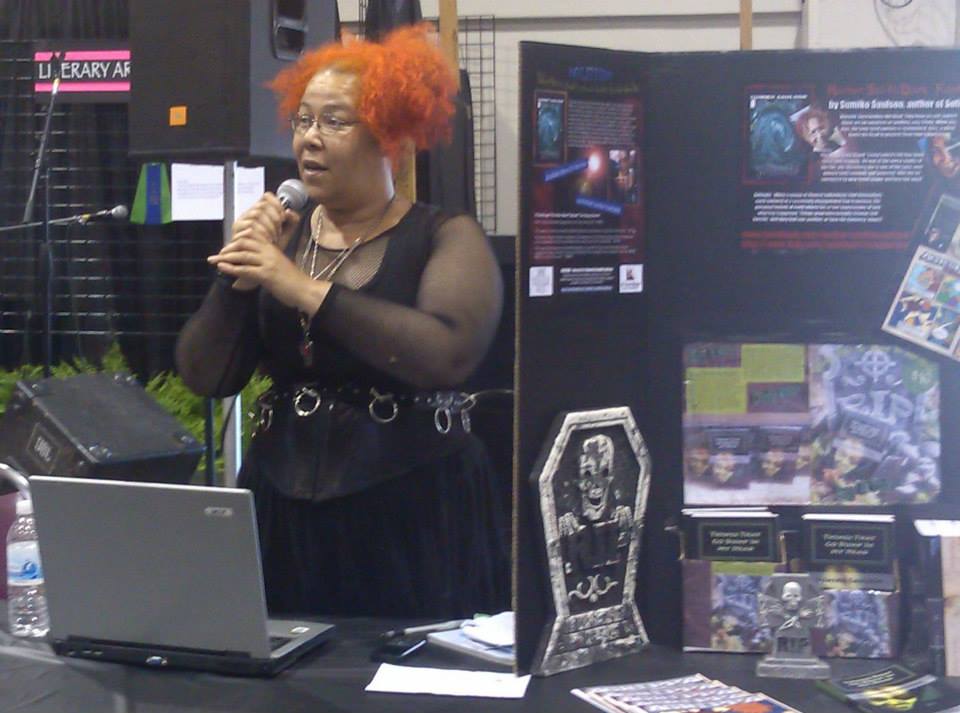
Sumiko Saulson at Author’s Day
As many of you know, I lost my father this January. What you probably do not know is that his birthday was July 2. I just got through the first father’s day without my dad, and now his birthday is coming up. I have been a little tired, and I seem to have come down with the flu, but I am happy to say that I had a good weekend for Father’s Day filled with other thing to do. My mom and I spent Father’s day with my brother, Scott, and his kids.

Sumiko Saulson and Andres Weimz, Pirate Festival
I met a lot of great writers (there were more than twenty of us there), and I sold a couple of books! And I was thinking that, in honor of the event, for those of you who could’t make it in person, or were there but could not pick up a book, I would like to offer a free eBook, actually TWO free eBooks, tomorrow:
The Moon Cried Blood – Free for the Kindle on July 26
Warmth – Free for the Kindle on July 26
Don’t have a Kindle? No problem! You can get a free Kindle Reading Application for your Mac, PC, tablet or smartphone from Amazon.
Interview with Greg Wilkey, author of “Star Blood”
•June 25, 2013 • 1 CommentThe Author:
 Greg Wilkey is the author of the Mortimer Drake series. He was born in Chattanooga, Tennessee in 1971. He developed a love of stories and adventure at an early age. He has always loved to read and write. He graduated from college with a degree in education and began a career in teaching world languages in 1993. He spent the next 15 years as a classroom teacher of Spanish until moving into school administration in 2007. He has been married for 20 years to his wife, Alicyn. He makes his home in Chattanooga where he and his wife are the proud pet parents of three spoiled cats.
The Book:
 Mortimer Drake is a teenage boy living in River Turn, TN. River Turn is a city right on the border of Tennessee and Georgia. Mortimer is a typical young boy in middle school. He hangs out with his friends, plays around in his free time, but when it comes to grades, he is very serious about his work. He’s an only child and he enjoys spending time with his parents.
Of course, there is one thing about Mortimer that is anything but typical…he is not 100% alive. His mother, Marian, married a 925 year old Greek vampire named Alexander Drake. This union between mortal and immortal was forbidden and feared by both the living and the undead. Poor Mortimer…he had no choice in the matter. The night he was born, everything in both worlds changed.
The Collapse of the HOPE movement brought a renewed sense of unity to the world. For the first time in recorded history, humans lived side by side with creatures of myths and legends to build a new life fueled by optimism. Vampires are joined by their preternatural kin – merfolk, fairies, and werewolves – to pave a new path for life on Earth. But this feeling of faith and hope is short-lived. Mortimer and his friends must now a face a new enemy from somewhere beyond the stars that threatens to destroy all life on the planet.
The Interview:
A. Mortimer’s journey throughout the series has been difficult. I wanted him to truly struggle with the stress of growing up. You know, all that stuff that we go through – pleasing our parents, making friends, fighting, falling in love, going to school. But I used the supernatural setting as a backdrop for all of that. As Mortimer grows and matures, he has to learn how to survive in both a human world and a preternatural one. He endures tremendous loss and suffers enormous tragedies that take him from a naive 14 year old boy to a young adult of 19 on the verge of manhood (or vampire-hood!)
A. To really understand Mortimer’s world, readers need to read the series in order: Growing Up Dead, Out of the Underworld, Hope Against Hope, and Star Blood. Mortimer is taken through very specific events in each book that ultimately make him who he is by the end of the 4th book. Many of the characters in Star Blood are introduced in the earlier books.
A. Oh yes, there is a very strong science-fiction element in Star Blood. In fact, there are subtle hints to this alien presence in the other books as well. When I set out to create Mortimer’s world, I knew that I wanted to take my vampires and other supernatural creatures to a very different place. These aren’t your garlic-fearing, wooden-stake vampires. No way!
A. Ran Valerhon is an amazing talent. Once my books began to move and I started gaining a steady following of readers, I knew I wanted to make some changes to my books. As a loyal fan of Anne Rice, I had seen Ran’s artwork on her Facebook page. I thought the work was exceptional. I had a few e-mail correspondences with Ran about the vision I had for my series, and that was it. He took it from there and produced four beautiful covers for my books. I think he really captured the feel and mood of Mortimer’s journey. I could not be happier with Ran’s work and I hope to work with him again.
A. I am still in shock! Truly. I have been a fan of Anne Rice’s novels since I was in high school. I read Interview with a Vampire in 1985 and fell in love with her vampires. I have since read just about every book she’s written. To have her public support and praise is a dream come true. I remember when I first posted on her Facebook page and asked her permission to share about my work. I did not expect a response, but I thought I’d try. When she said yes, and then began to show true interest in not only my work, but the indie community as a whole, I was just blown away. Through Anne Rice, I have met some fantastic people that have helped me with my writing career. She is an amazing, gracious woman. I feel very blessed to have her support.
A. I am still seeking traditional publication. I think we all want that. I send out query letters and synopsis of my work all the time. Rejection is just a painful reality in publication. I decided to self-publish when I realized that the digital book market was growing and very indie author friendly. I loved Mortimer’s world, and I wanted to share his adventures with others, so I began to read and research the pros and cons. I hesitated for a long time before I decided to do it. I didn’t want to make a mistake and ruin my chances to be recognized by the traditional publishing houses. I am happy to say that so far it’s been a great experience. I have sold over 6,000 books, and I have gained a loyal following of readers. I am very glad that I made the decision to indie publish.
A. Like with anything else, don’t give up. Keep writing. Keep submitting. It’s all about the journey. I have made so many mistakes. I did not hire an editor before I published my first few books. I would never do that again. I hired Todd Barselow, another Anne Rice Person of the Page, to proof and edit my books. He is an extremely talented and professional editor. I would recommend that you get your best product ready before you launch it out there. I have learned that people will read your work. Some will love it. Others will not. Be prepared to take the accolades with the criticisms. You can learn from both.
Where to Find Greg Online:
Summer Fiesta! In Oakland’s Fairfax Business District! I’ll be there…
•June 22, 2013 • Leave a Comment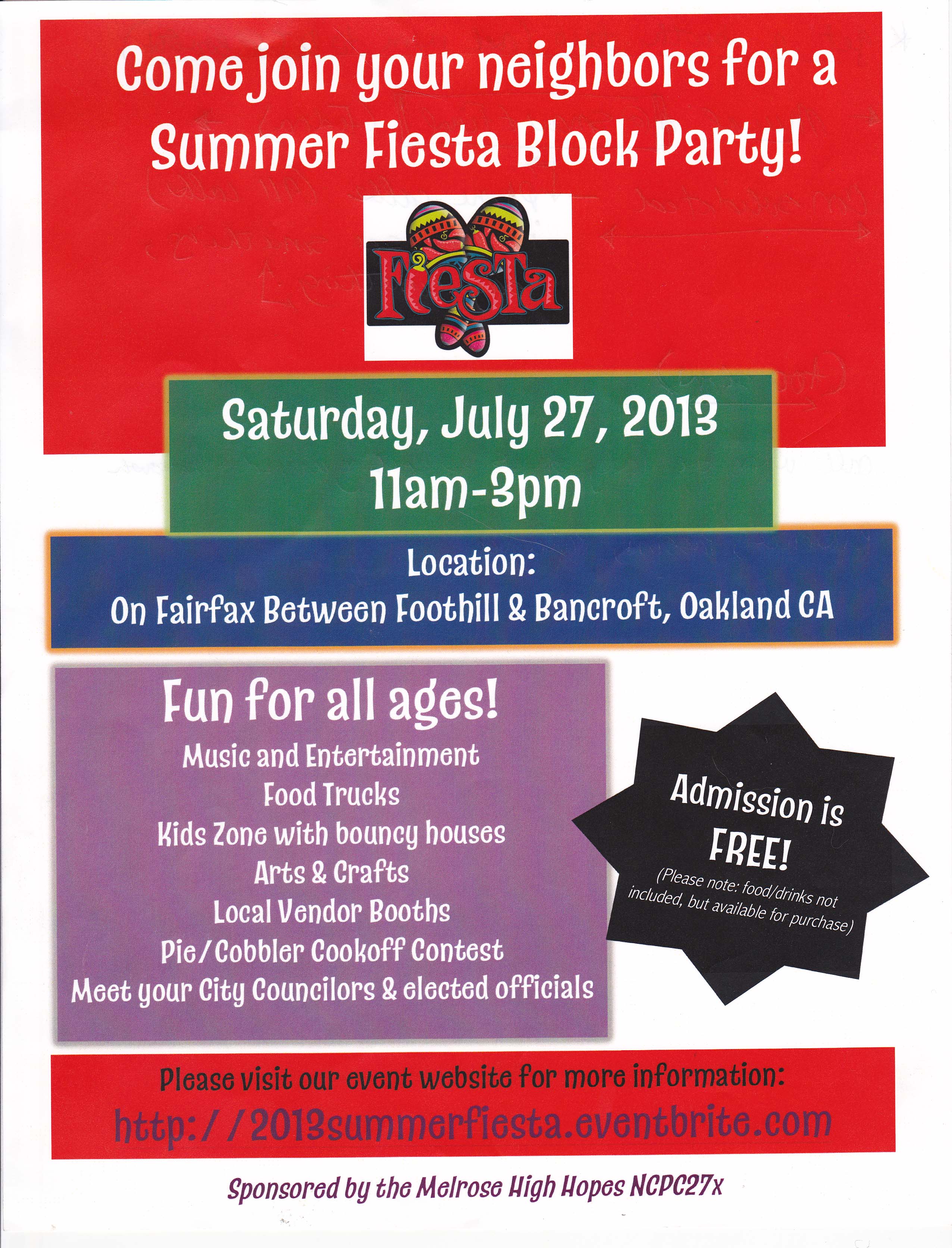
I am a member of the Melrose High Hopes NCPC 27x, and my neighborhood group is putting on a big party! There will be a bake-off, fun activities for children, arts and crafts (that’s where I come in), and music! I’m going to have a booth there, and I’ll be selling copies of my books, my comic book Agrippa, and signed prints of my acrylic paintings.
I hope you can make it. The event is FREE.
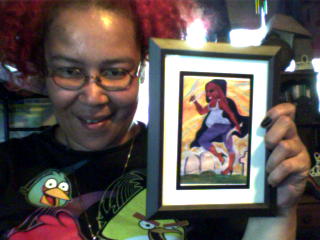
Sumiko holding a print
Here is a picture of me holding a print of one of my paintings – this is the artwork that graces the latest cover for “Warmth.” The photo gives you a sense of the size of these prints and frame, but they don’t do them justice. You can see the texture of the paintings, the brush strokes – really a lot of detail. I love them! Also, I’m signing each one individually.
If you’re in Oakland, stop by and say hi! Even if you don’t buy anything. I am trying find out if I will be able to do a reading there as well, I’ll be talking to the organizer on Tuesday, so as soon as I find out, I’ll let you know.
I’m not sure how to price the prints. Any ideas? What do you think they are worth?
Submissions open for the summer issue of Writer’s Muse Magazine
•June 22, 2013 • 4 Comments
The Writer’s Muse Page is a Facebook page created by my friend, Richard Cotton, for writers and aspiring writers to meet, network, and offer critiques of one another’s work. With a simple description:
“The Writer’s Muse Page is a group where writers can share with and support one another. Any writers are welcome to join this group.”
This group has grown since it started last year, to over 500 writers. I was one of the first dozen or so writers involved with the group, and in fact am a co-admin. Richard is the one who created the group, and mostly responsible for its growth. I just add people who request adding. Well, that’s not all I do: I’m also the editor/publisher of the group’s eMagazine, Writer’s Muse Magazine.
The first issue of Writer’s Muse Magazine came out in December 2012, and the idea was to have the magazine come out every two months; unfortunately, my father passed away January 3, 2013 and we never did have the February 2013 issue we planned. Now that things are on a more even keel in my life, we are relaunching the magazine, and we are looking for submissions.
Guidelines:
- July 7, 2013 is the submission deadline for the Summer Edition of Writer’s Muse Magazine. The deadline coincides with the deadlines for two current Writer’s Muse Page contests, the 500 or the 5,000 Word Contest, and the Writing and Poem Contest. The contest winners will be highlighted in the magazine, and all entrants into the contest will be considered for the magazine, but you DO NOT have to enter in the contest to submit to the magazine.
- You MUST be a member of the Writer’s Muse Page in order to be published in Writer’s Muse Magazine. Membership is FREE, but you have to have a Facebook account to join – you can join by asking to join at this link: https://www.facebook.com/groups/writersmusepage/
- We can’t offer any payment for publishing you. The magazine is free, and advertising free, and we don’t get any money for it, nor can we pay anyone for it.
- We will be accepting poetry of any length, illustrated short stories and comics of up to 5 pages, and short stories of 500 to 5000 words in length.
- Not previously published works get preference, but we will consider publishing previously published works – please indicate if your work was previously published, and where.
- You retain all rights to your work.
How To Enter:
Enter by posting your work and whether or not it has been published here.
KBatz: Cat People Cat People Cat People
•June 18, 2013 • Leave a Comment
Cat People (1942), Cat People (1944), Cat People (1982)!!!
By Kristin Battestella and Leigh Wood
Cough up your hairballs, sit back, and lick your paws for not just one, but three chances at feline mayhem: the 1942 classic Cat People, its 1944 sequel The Curse of the Cat People, and the update of the original Cat People (1982). Meow!
Lonely and new to America, Serbian fashion designer Irena (Simone Simon) meets Oliver Reed (Kent Smith) at the zoo. Though they are quickly in love, Irena fears the legend of her people- ancient stories of witches and evil folk who escaped the wrath of Serbian King John by turning into panther like cats. Despite her hesitancy, Irena and Oliver marry, even though his co-worker Alice (Jane Rudolph) is also in love with Oliver. Seeing psychiatrist Dr. Judd (Tom Conway) doesn’t help Irena overcome her cat obsessions, and she becomes increasingly jealous…
View original post 2,361 more words
 Sumiko Saulson