
I am so excited to be one of the writers profiled in this article on Horror Addicts!
20 Black Women in Horror Writing (List 1)
•February 12, 2013 • 71 Comments
Black History Month 2013
February is Black History Month here in the United States. It is also Women in Horror Month (WiHM). As an Ambassador for WiHM, and as a woman of color (I am Black and Jewish) who is a horror writer, I am poignantly aware of the fact that while women writing horror is a rare occurrence – women of color are exceedingly so. The number of black women writing horror that most people are aware of can still be counted on one hand. For a lot of people, in fact, it can be counted on one finger: “Octavia Butler“. Most people are aware that the talented Ms. Butler, best known for her Science Fiction works, has also written horror. Far too many fans of the genre are unfamiliar with Linda Addison, first African American winner of the Bram Stoker award, or Stoker award nominees Tananarive Due and Jemiah Jefferson. I am pleased to announce that I will be interviewing Linda Addison and Jemiah Jefferson for Women in Horror month as a part of the 2013 Women in Horror Interview Series. Every February, Women in Horror Recognition Month (WiHM) assists underrepresented female genre artists in gaining opportunities, exposure, and education through altruistic events, printed material, articles, interviews, and online support. You can find out more about WiHM here: http://www.womeninhorrormonth.com/
This list has expanded to include two other lists for a total of 60 women.
20 Black Women in Horror Fiction (List 1)
21 More Black Women In Horror Fiction (List 2)
19 More Black Women in Horror Fiction (List 3)
I am working on an eBook alphabetically listing all 60 women. If you can think of anyone who should be on this list but is not, please leave it in the comments for either article or send me a tweet @sumikoska or – email me sumikoska@yahoo.com and let me know.
1. Octavia Butler
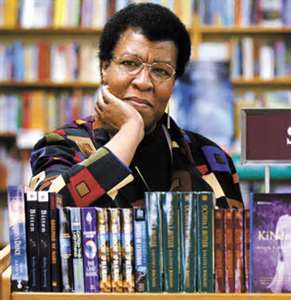
Octavia Butler
The first time I walked into a bookstore with a copy of my book “Solitude” and the shopkeeper at Marcus Bookstore read that it was science-fiction/horror the conversation quickly turned to Octavia Butler. The Hugo and Nebula award-winning science fiction writer was high-profile as a genre writer, although not all fans were aware of her race. She successfully crossed barriers of race and gender on the page, breaking down doors for generations to come. While she was best known as a science-fiction writer, some of her paranormal fiction such as “Fledgling”, the story of an adult vampire forever trapped in the body of a child, are considered by many horror. She passed away in 2006 at 58 years of age, leaving a legacy of firsts behind. One door she didn’t break down, though, was Hollywood. Unlike her contemporaries such as Harlan Ellison, none of her stories were ever made into a movie. http://octaviabutler.org/
2. Linda D. Addison
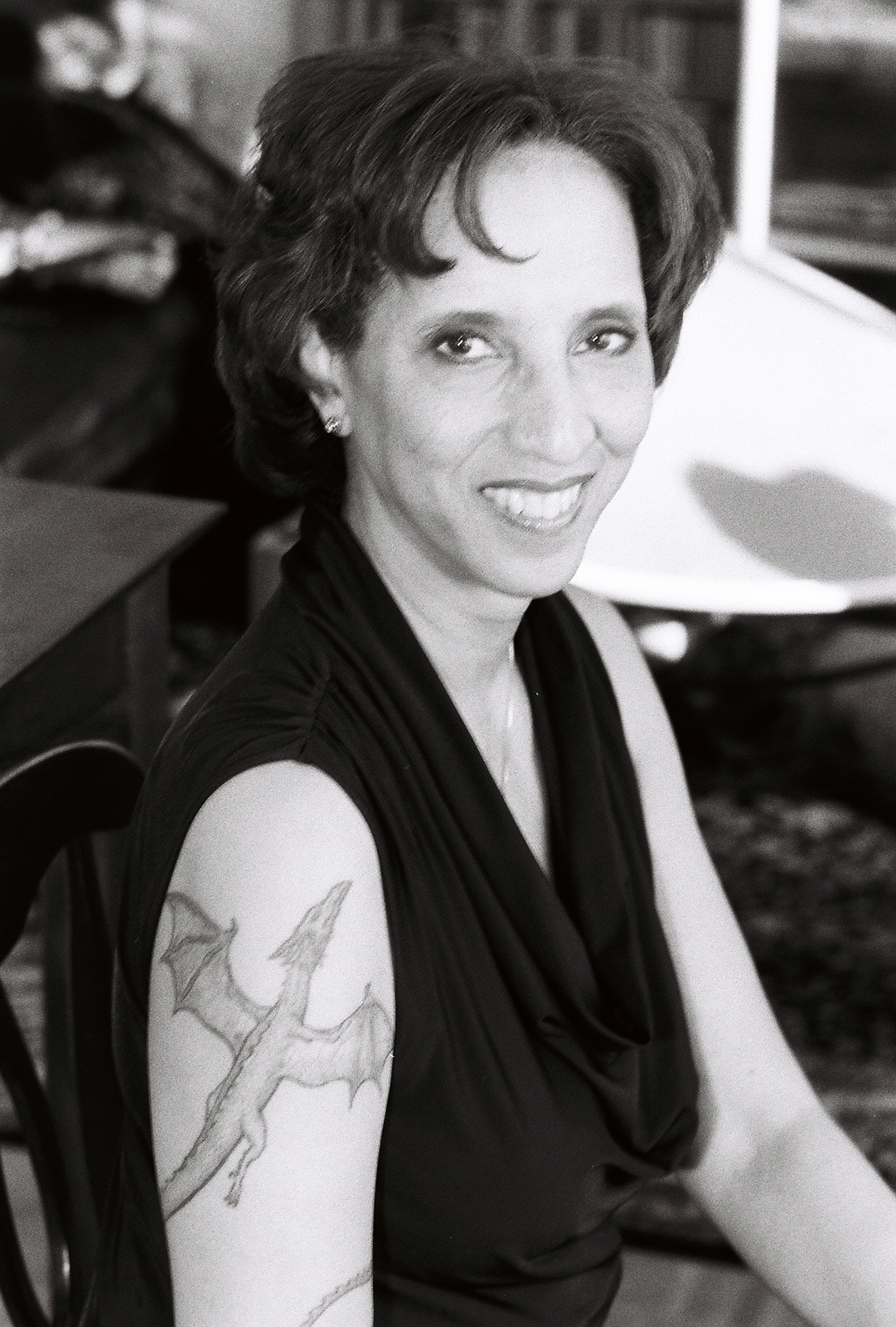
Linda Addison
Poet and horror writer Linda D. Addison was the first African American to win the coveted Bram Stoker Award in 2001 for her critically-acclaimed “Consumed, Reduced to Beautiful Grey Ashes” – the book’s first signing was at Barnes and Noble at Rockerfeller Center on 9/11/2001 and it’s themes connected with readers and critics alike in the wake of this national tragedy. The groundbreaking award winner went on to win the Bram Stoker Award an impressive total of three times, most recently for her 2011 poetry and prose collection “How To Recognize A Demon Has Become Your Friend?” Other current projects include “Four Elements” with three other female Stoker Award recipients, and “Dark Duet”, a book of music-inspired poetry. http://www.cith.org/linda/
3. Tananarive Due

Tananarive Due
Two-time Stoker Award nominee Tananarive Due is an NAACP Image Award and an American Book Award winner. The New York Times called her novel “My Soul To Keep” “Riveting, and masterfully researched.” A highly prolific writer, her impressive body of work includes over a dozen titles, written alone or in collaboration with her husband, Steven Barnes. Taking on everything from supernatural viruses to zombies to vampires, she is a trailblazer in that she is one of the first African American purely genre horror writers. She doesn’t just write stories from another genre that cross over into horror – she writes pure, unadulterated horror. http://www.tananarivedue.com/
4. L.A. Banks
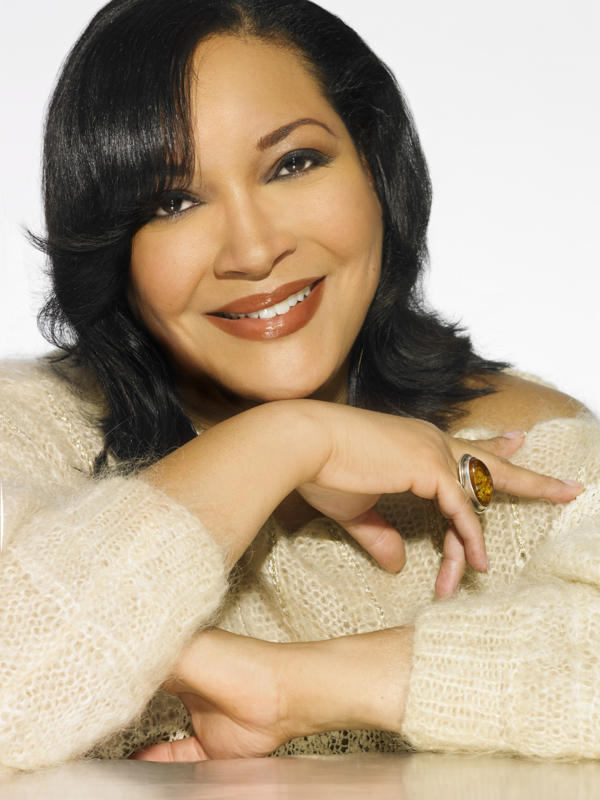
LA Banks
Leslie Esdaile Banks wrote in four different genres under four different pen names, all based on her own name, but it was her Vampire Huntress series under the “L.A. Banks” moniker that first caught my notice. When I first started reading them I didn’t know she was black, or a woman, but I loved the story… “The Forsaken: A Vampire Huntress Legend[TM]. And I wasn’t the only one, apparently: I left it on the bar at a the local karaoke club and someone stole it while I was in the bathroom. The series read like a streetwise Buffy the Vampire Slayer movie with a hip, multicultural cast and grittier adult entanglements rife with lust and complication instead of teenage romance. Her experience as a romance writer definitely complemented this aspect of her highly entertaining stories. Unfortunately, she passed away in 2011 after a battle with cancer, leaving behind her a massive body of work. http://www.leslieesdailebanks.com
5. Jemiah Jefferson
Jemiah Jefferson
The hero of nerdy black women everywhere (me included), Jemiah Jefferson is like a superhero: comic book editor by day, author by night. No… seriously, editing comic books is her day job. She works at the editorial department of Dark Horse Comics (my fiance just said “hell ya!). Her Gothic Horror series “The Vampire Quartet” begins in San Francisco with the adventures of Daniel Blum and then follows his extended vampire family across the ocean and back in time. It has been published in multiple languages. She has also written erotica, and a comic coming of age story called “Mixtape for the Apocalypse”. http://www.jemiah.com/
6. Toni Morrison
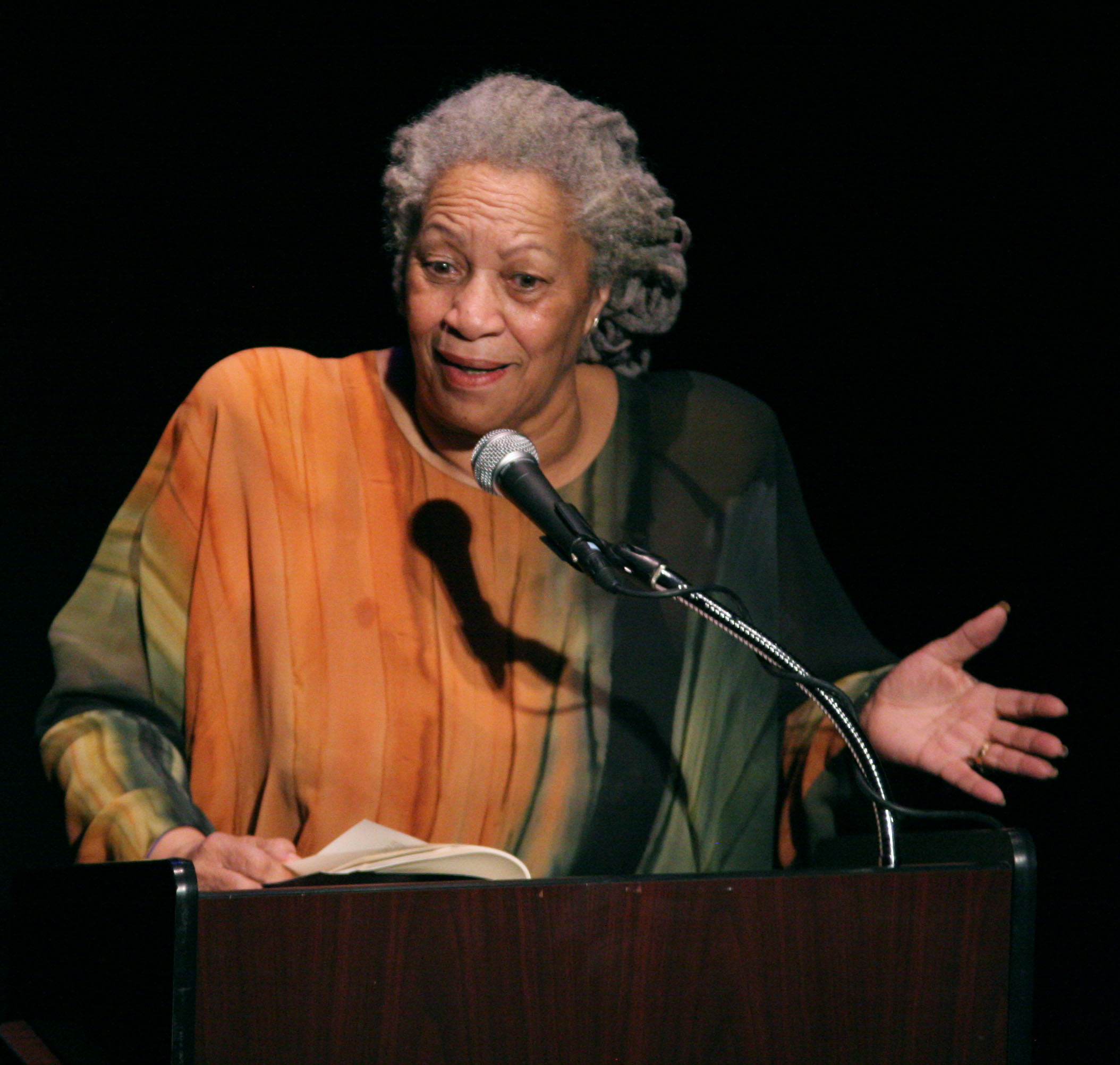
Toni Morrison
One of the preeminent voices in African American literary fiction, Toni Morrison, while not a horror writer, has written a work that definitely warrants entry into the genre’s cannon of literature. Her Pulitzer Prize winning 1987 Civil War era drama “Beloved” is a classic ghost story. It tells of presence at 124 Bluestone Road – thought of as malevolent by some. The magical realism of “Song of Solomon” and the dark psychological spaces in “Jazz”, “Love” and “The Bluest Eye” certainly hold aspects in common with horror, which often deals in perception distorted, but only “Beloved” can be identified as a horror novel. http://www.tonimorrisonsociety.org/
7. Helen Oyeyemi
Helen Oyeyemi
British author won the 2010 Somerset Maugham Award and was nominated for the Shirley Jackson Award in 2009 for her work of dark fantasy and Gothic horror, “White is for Witching”. It isn’t the first foray into horror for this young author. Born December 1984, she was still in her early 20s when she wrote her 2006 book “The Icarus Girl” mixes Nigerian myths with elements of the ghost story tradition and psychological horror. Two other novels, 2008’s “The Opposite House” and 2011’s “Mr. Fox” are not horror but the share elements of myth, magic and mysticism that horror so often shares in common with fantasy. http://www.amazon.com/Helen-Oyeyemi/e/B001IXQDBI
8. Nalo Hopkinson
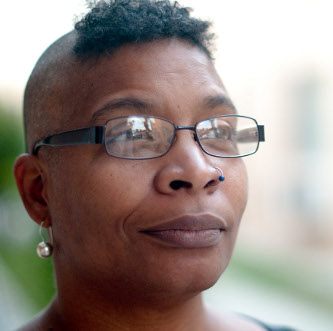
Nalo Hopkinson
Jamaican sci-fi and fantasy writer Nalo Hopkinson received multiple awards, including the 1999 Locus Award for Best First Novel for her debut work “Brown Girl in the Ring”, a tale against a post-apocalyptic backdrop involving a seer named Ti-Jeanne whose psychic visions only include the deaths of others, and a criminal mastermind overlord with a necromancer like ability to summon the dead. If that sounds a lot like horror to you – you’re not the only one. Her short story anthology “Skin Folk”, creepy folk tales about skin-shedding shape shifters, also fits the bill. She’s written three other novels, and a short story called “The Smile on the Face” appeared in a horror anthology. http://nalohopkinson.com/
9. Nnedi Okorafor
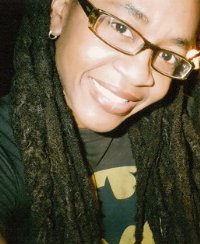
Nnedi Okorafor
She won the Locus Award and was nominated for the Nebula award for her critically-acclaimed dystopian fantasy “Who Fears Death?”, and her Young Adult novel “Zahrah the Windseeker” appeared on the same short-list as Octavia Butler’s “Fledgling” in 2006. She counts among her influences Octavia Butler and Stephen King. This prize winning Nigerian American author is generally associated with the science-fiction and fantasy genres, although dystopic and post-apocalyptic literature is sometimes considered horror. “Who Fears Death?” is the post-apocalyptic tale 0f Onyesonwu, the last surving member of a tribe decimated by genocide, who discovers she possesses great magic and a mysterious shamanistic destiny. http://nnedi.com
10. N.K. Jemisin

NK Jemisin
Science-Fiction & Fantasy author N.K. Jemisin has won the Locus Award and twice been short-listed for the Hugo and Nebula Awards. Anyone who spends any time reading her witty political blog will know in a short while how compelling her writing style is. It is her dark fantasy “The Killing Moon” that got her on this list, however. Death, dark magic, and a peaceful religious society with a creepy “angel of death” style mercy-killing squad with a dream blood addiction all add up to the kind of disturbing thought provocation associated with top-notch science-fiction. One positive Amazon review of “The Killing Moon” said it was great, other than the fact it made it hard for the reader to sleep. As any Harlan Ellison fan can tell you, that is precisely the line at which speculative fiction becomes horror. http://nkjemisin.com/
11. Alaya Dawn Johnson
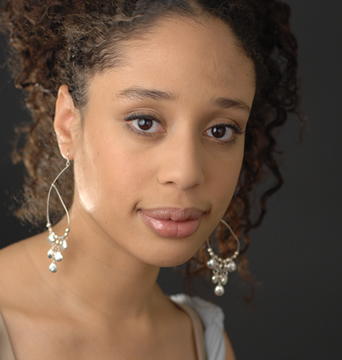
Alaya Dawn Johnson
Speculative fiction writer Alaya Dawn Johnson’s work of paranormal science-fantasy “Moonshine” gives us an alternate 1920’s New York that is crawling with blood-drug addicted vampire mobsters. Social activism isn’t enough to keep her protagonist, Zephyr Hollis off the radar of a darkly seductive blood sucker named Amir. It’s sequel “Wicked City” gives us more of the plucky heroine. whose new cause is outlawing the blood-drug Faust. That’s when the vampires start dying. Here latest work, “The Summer Prince”, is dystopian young adult fiction. http://www.alayadawnjohnson.com/
12. Chesya Burke
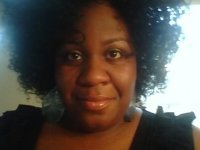
Chesya Burke
Speculative fiction writer Chesya Burke successfully blends literary fiction in the African American tradition with contemporary horror. She’s published over forty short stories in various publications including Dark Dreams: Horror and Suspense by Black Writers, Voices From the Other Side, and Whispers in the Night. She won the 2004 Twilight Tales award for short fiction. Publisher’s Weekly said of her short story collection “Let’s Play White” “The label of “dark fantasy and horror” fits this collection both ironically and genuinely.” The short story “Unremembered” available for free on her website, is a powerfully moving piece about a young autistic girl and a boy with leukemia. http://www.chesyaburke.com/
13. Dia Reeves
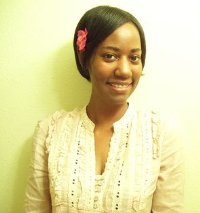
Dia Reeves
Up-and-coming novelist Dia Reeves has two books to her credit: 2010’s “Bleeding Violet” and 2011’s “Slice of Cherry”. Both works of dark fantasy/horror are marketed as Young Adult, but contain enough blood, sex and angst to make them inappropriate for younger teens.”Bleeding Violet” is a coming-of-age story where bipolar biracial protagonist, Hanna, runs away from home only to find herself in a hotbed of paranormal activity. Before long, she must help combat an ancient evil. “Slice of Cherry” is a buddy story about a couple of mixed up kids getting ready to follow in their serial killer father’s footsteps. The psychotic duo live in the same strange town Hanna ran away to. http://www.amazon.com/Dia-Reeves/e/B002A530KU
14. L. Marie Wood

L Marie Wood
L. Marie Woods is one of a half dozen black female writers who embrace the horror genre label. Her novel “Crescendo” debuted to positive press reviews. Her short story anthology “Caliginy” offered tales of psychological horror and suspense featuring vengeful women and restless spirits. This extremely prolific writer whose has ten published books, over one hundred short stories, and twenty poems to her credit. Crescendo,received critical acclaim from such entities as Midwest Book Review and Buried.com.
http://www.goodreads.com/author/show/5709521.L_Marie_Wood
15. Pearl Cleage
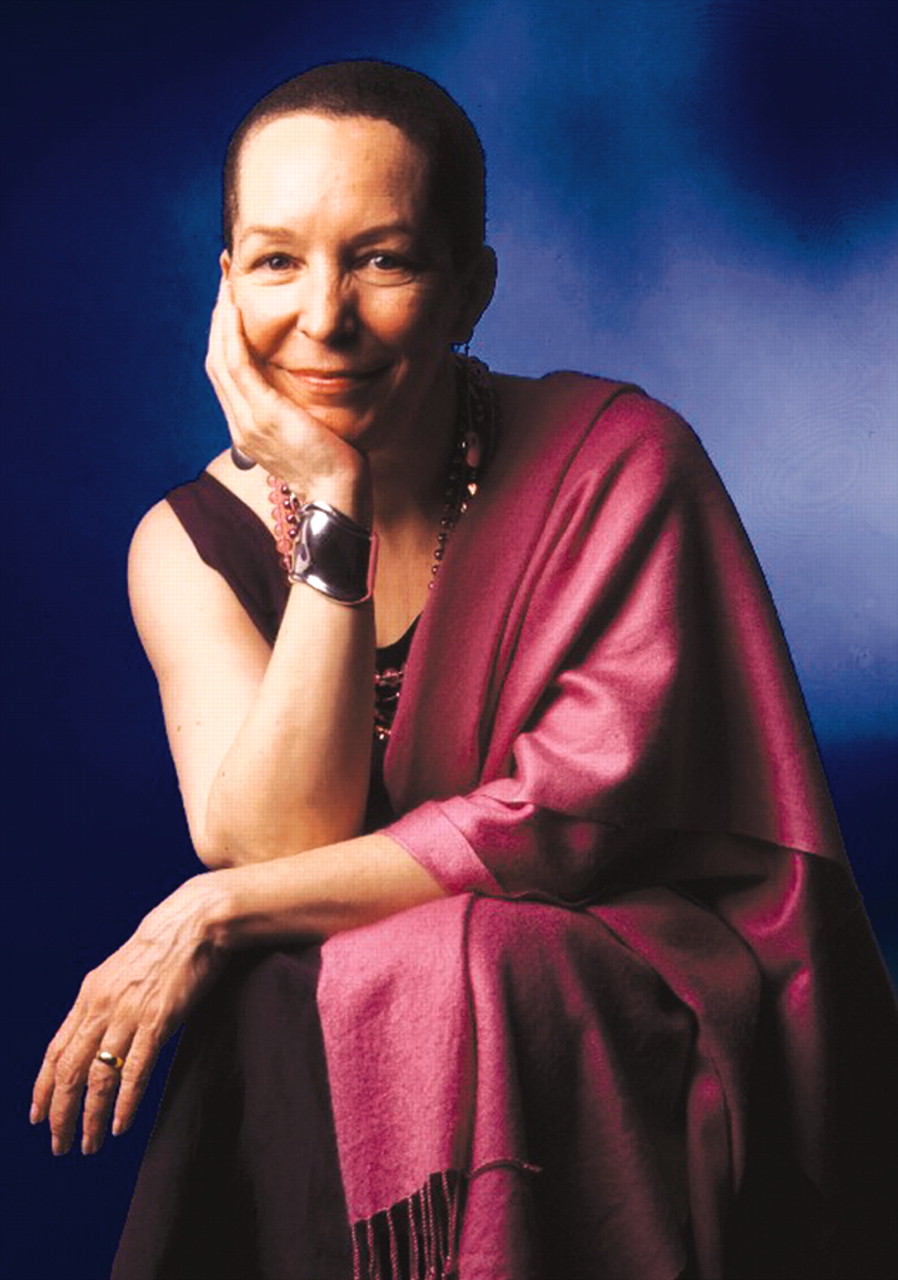
Pearl Cleage
Known for her civil rights orientation and her feminist views with regards to what black women experience, Pearl Cleage has achieved critical acclaim and commerical success for her non-fiction titles and her genre-hopping fiction. Her latest in a long list of excursions into new genre territory is the supernaturally themed 2011 “Just Wanna Testify” is about a couple of black fashion models in Atlanta who just happen to be vampires, although they have a whole lot in common with succubi. In a biting bit of social satire, the two women don’t survive off of life’s blood, but do feel the need to use and discard men for stud in the most brutal possible interpretation of the word. The story has the usualy warmth, wit and wisdom of Cleage stories and while humorous tone of the tale puts it a bit out of the genre, it definitely belongs on this list. http://www.pearlcleage.net/
16. Evie Rhodes
Evie Rhodes
Award-winning gospel singer Evie Rhodes is also the author of several books in the urban fiction genre stories about the battle between Good and Evil. Her best received work, critically speaking was her 2006 novel “Criss-Cross”, a psychological horror novel that pits Detective Micah Jordan-Wells against a dangerous serial killer who marks the bodies of the young women he murders with an “X”. Rhodes does a good job of getting into the head of her villain here and mixing elements of realism with fantasy in a world where the evil is both human and supernatural in origin. Other works which contain supernatural elements and can be categorized as horror include “Out “A” Order’ and “Expired”. Unlike “Criss-Cross”, which was published by Kingston Press, her later books under Dafina came under some criticism for sloppy editing. http://www.amazon.com/Evie-Rhodes/e/B001H6NH7E
17. A.L. Peck
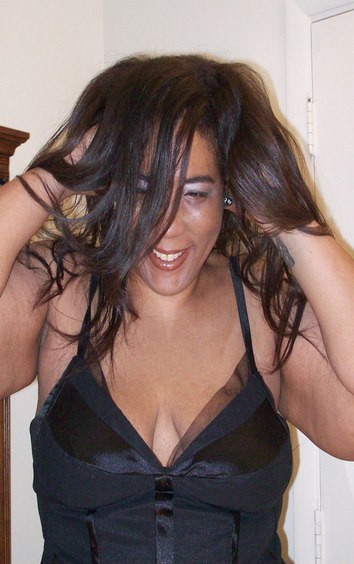
A.L. Peck
Psychological horror novelist A.L. Peck is not just the first black woman I interviewed on this blog – she’s the first author I interviewed of any kind. Her well-researched debut novel “Abstract Murder” puts the reader inside the minds of the criminals and detectives alike as we follow the terrifying lives of the monsters next door – serial killers – and the officers who track them down and capture them. Fan favorite serial killer “Mr. Nobody”, a.k.a. “The Artist” intrigued some readers so much that Andie began entertaining her fans by writing posts on Facebook in character. She is working on a second book in the series, which will be a prequel to the novel tentatively titled “Abstract Horror”. https://www.facebook.com/groups/268295249931688/
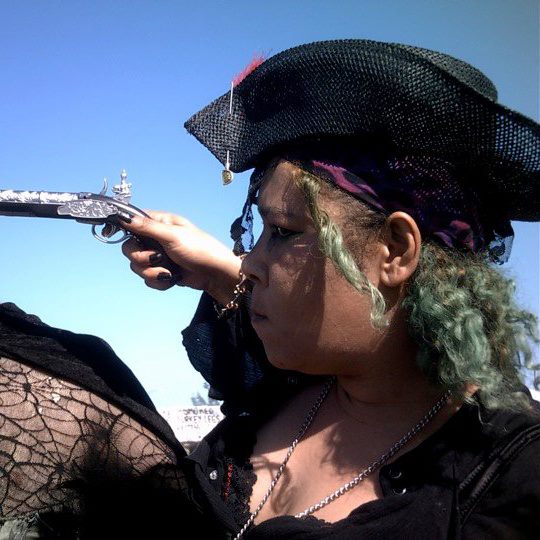
18. Sumiko Saulson
Sumiko Saulson
Sumiko Saulson is… well, this blogger. I am the author of three horror-genre novels, my well-received 2011 science-fiction/horror novel “Solitude”, the dark fantasy/horror novel “The Moon Cried Blood”, and the dark humor ghoul-and-zombie gorefest I lovingly refer to as “Warmth”. I also released a short story anthology at the end of 2102 named after this blog, “Things That Go Bump In My Head”. Although generally well received, my novel length works have (like the works of Evie Rhodes) received some criticism for poor editing, but were praised regarding plot and character development, cultural understanding and research. My stories tend to have multicultural casts and urban settings. The short story book – my most recent offering – is said to benefit from improved editing and so far is quite well received – if you can trust the author’s undoubtedly biased opinion on such things, that is. https://sumikosaulson.com/
18. Darlene Black
Darlene Black
African American novelist Darlene Black is the author of the 2008 horror title “Necromancy”. She is working on a second novel, “Hollis Hill”. She hails from Philadelphia, which she sets as the backdrop for her debut work: an occult horror story about a man who follows his fiance further down the rabbit hole after she gets in too deep with a woman who has convinced her that she can speak to the dead. In attempting to know what is better left unlearned, Lansandra has pierced the Veil, which separates the living and the dead… and now she can indeed see the dead, and along with them angels, and demons, and Satan himself. http://www.amazon.com/Necromancy-Darlene-Black/dp/1425776876/
20. Angela C. Allen

Angela C Allen
The “Dark Thirst” Anthology includes short vampire stories by five different African American authors, three of whom are women. I’ve listed it under the name of it’s editor, who also has a short story in the collection, but horror writer Linda Addison has a story in the anthology, as do young adult novelist Monica Jackson, and romance novelist Donna Hill. In Ms. Allen’s short “Vamp Noir” a charming young vampire is exiled from her clan and decides to start a new life in New York – as a mafia enforcer. Her story is a stand out, one of the two that showed up most often in association with positive reviews of the book on “Goodreads”. Although many in the blog-o-sphere have praised the work, we haven’t heard more from the talented Ms. Allen since 2004 – but we are certainly hoping we will in the future.
UPDATE
This list has expanded to include two other lists for a total of 60 women. 21 More Black Women In Horror Fiction (List 2) 19 More Black Women in Horror Fiction (List 2) I am working on an eBook alphabetically listing all 60 women. If you can think of anyone who should be on this list but is not, please leave it in the comments for either article or send me a tweet @sumikoska or – email me sumikoska@yahoo.com and let me know.
Wicked Woman Writing Contest
•February 10, 2013 • Leave a Comment HorrorAddicts.net just announced it’s 2013 “Wicked Women Writers” contest. 2013 marks the 5th annual wicked woman writer challenge. You don’t have to be published to enter: the contest is open to published and unpublished women horror writers. This year’s challenge involves an apocalyptic theme. In order to enter, you must create an original story based on the prompts provided when you enter, and then create a 10 minute podcast of the story.
In order to enter, email your name and short bio to: wwwchallenge2013@gmail.com
Killion Slade, the 2012 Wicked Woman Writer Winner, will contact you for further challenge details and timeline. Deadline to enter the 2013 Wicked Woman Writer Challenge is June 20th – but hurry – slots fill up fast!
Women in Horror Month 2013
•February 10, 2013 • 4 CommentsThe Women in Horror Interview Series

Sumiko Saulson
I am proud to announce that my interview series on women horror writers has been approved for the 2013 Women in Horror Month seal. I am now considered a Women in Horror Month Ambassador which comes with specific responsibilities to maintain the integrity of the seal. The biggest component of this is remaining professional and represent WiHM and the underrepresented female artists with respect.
I would like to thank the Viscera Organization for this opportunity.
In order to honor Women in Horror, I will be applying the seal to and reposting interviews with Women in Horror from the past year, in addition to interviewing new women whenever possible. The proposal is below.
The Interviews:

If you are interested in being interviewed, please see my Interviews page.
Women in Horror Month:

Anne Rice
You can find Women in Horror Month’s official website and connect with other activities associated with Women in Horror Month HERE:
Facebook:
https://www.facebook.com/pages/Women-In-Horror-Recognition-Month/218331100557
Twitter:
https://twitter.com/#!/wihmonth
Tumblr:
http://womeninhorrormonth.tumblr.com/
WiHM Interview Proposal:
Here is my project description:
Full Name: Sumiko Saulson
Primary Contact Email: sumikoska@yahoo.com
Hollis Jay
Introduce yourself, company, or organization: My name is Sumiko Saulson. I am an independently published horror writer. I am a woman of color. I blog about horror, and interview horror writers. Whenever possible I try to find and include as many women and women of color as possible.
Explain in detail about the event/project/media that the Seal will be used for:
I would like to be able to apply the Women in Horror Recognition seal to the interviews with female horror writers I have already completed. Many of them are women of color, which as a whole are under represented in horror. I would repost the interviews in February with the Women in Horror seal.

Cinsearae S
Discuss how your proposal is in line with the WiHM mission:
It will recognize female authors in horror, both established and up and coming in the genre. It will recognize women of color, who are underrepresented as horror authors.
My interview page is here: https://sumikosaulson.com/interviews/ – I would simply like to highlight the female authors on the list.
URL connected to event/project/media: http://www.sumikosaulson.com
If you are interested in being interviewed, please go to my interviews page.
Women in Horror:

A.L. Peck
These interviews are part of the 2013 Women in Horror Interview Series. Every February, Women in Horror Recognition Month (WiHM) assists underrepresented female genre artists in gaining opportunities, exposure, and education through altruistic events, printed material, articles, interviews, and online support. WiHM seeks to expose and break down social constructs and miscommunication between female professionals while simultaneously educating the public about discrimination and how they can assist the female gender in reaching equality.
Find out more about Women in Horror Month here:
http://www.womeninhorrormonth.com/
“Things That Go Bump In Your Head” is actively seeking new women writers to interview in the month of February.

Joslyn Corvis
The Guest Blogs:
In addition to the interviews, we will have a series of Guest Blogs in honor of “Women in Horror” month, written by female horror authors! So far we have:
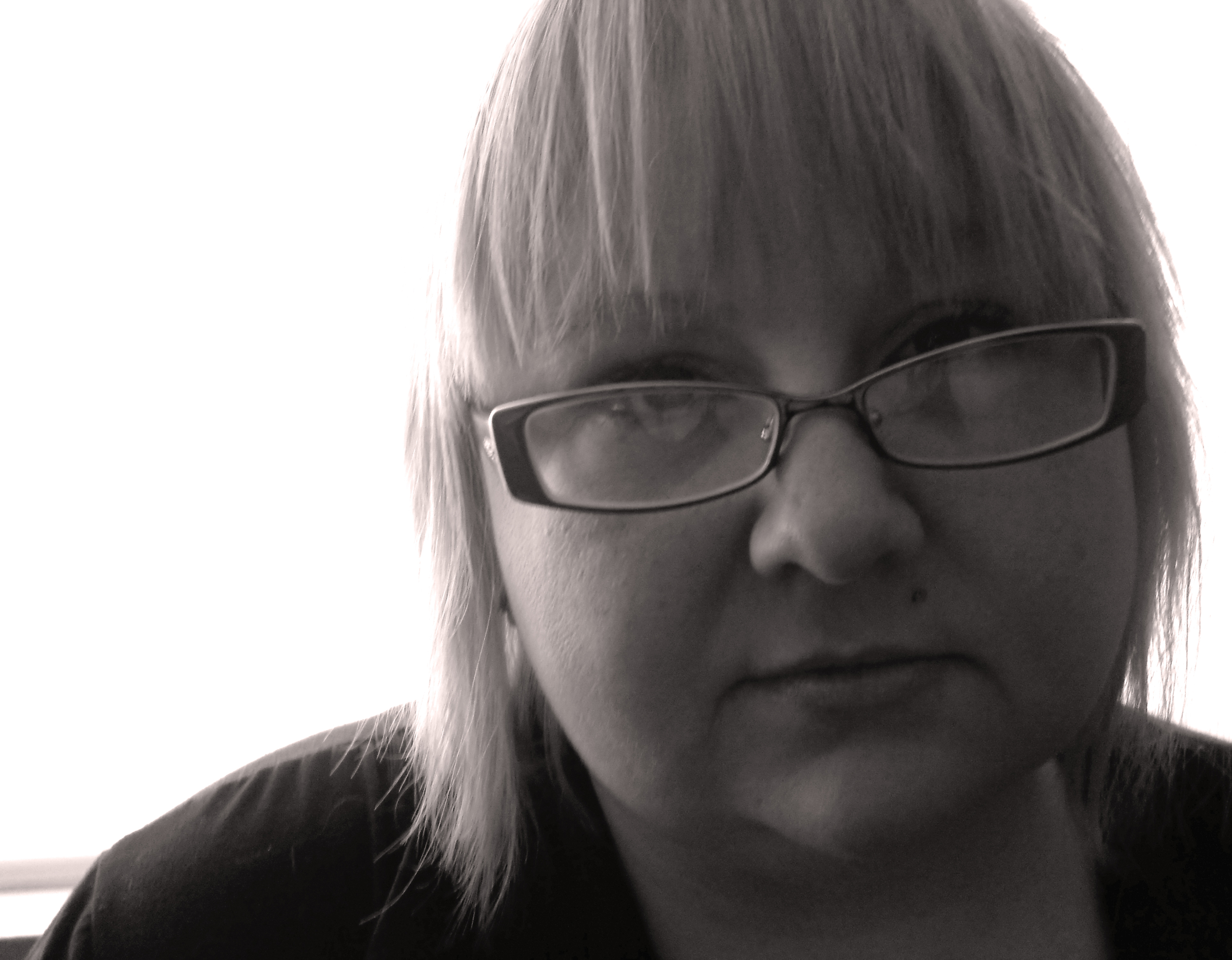
Hollis Jay is also writing a guest blog. Please let me know if you are interested in being interviewed or having a guest blog for WiHM 2013. “Things That Go Bump In Your Head” is actively looking for bloggers who are interested in writing on topics of concern regarding women in horror.
Thank you. – Sumiko
Features of Fantastic of February
•February 8, 2013 • Leave a CommentMy Bloody Valentine
 Recently there has been a lot of discussion about the role of women, especially young ones, in supernatural fiction and paranormal romances such as “Twilight”. There have been discussions of what are considered stronger female roles in Young Adult fiction, such as Katniss Everdeen in the Hunger Games. As February is Women in Horror Month, I’ve given a lot of thought not only to women as writers, but the roles of women in fiction.
With that in mind, I have decided, for February, to make available for free my novel “The Moon Cried Blood”. It’s resilient protagonist Leticia Gordon is every bit the strong female, even though she is very vulnerable and often alone. Here is a review of the novel:
 Very powerful imagery, September 29, 2012
This review is from: The Moon Cried Blood (Paperback)
Cycles of the moon, Generations of women, a young woman unaware of her incredible gift. A delicate weaving of history, character development and esoteric overlay that makes for an interesting saga. I read it twice, I missed a lot in the first round with all the symbolism. A lot of work went into the background and technical aspects of the writing itself and it shows.
Borrow it free now if you’re a prime member, or get it for free on Valentine’s Day whether you are or not. Find it here:
http://www.amazon.com/The-Moon-Cried-Blood-ebook/dp/B007P9WL4W
Women in Horror Month
A.L. Peck
I waited awfully late to put in my application to “Women in Horror” month – but I do have a proposal in, which is a request to add the seal to the interviews with women in horror that are currently on my blog and then repost them here. I am also interested in interviewing Women in Horror and having more guest blogs (like the one we just had featuring Joslyn Corvis.)
February is “Women in Horror Recognition Month”. Sponsored by The Viscera Organization, a 501(c)3 Non-Profit, it’s mission is as follows (taken from the website):
Every February, Women in Horror Recognition Month (WiHM) assists underrepresented female genre artists in gaining opportunities, exposure, and education through altruistic events, printed material, articles, interviews, and online support. WiHM seeks to expose and break down social constructs and miscommunication between female professionals while simultaneously educating the public about discrimination and how they can assist the female gender in reaching equality.
You can find out more about it here:
http://www.womeninhorrormonth.com
Some of the many women in horror, sci-fi and fantasy who have been interviewed right here on this blog include Margarita Felices, Hollis Jay, Pamela K. Kinney, Leandra Martin, Dr. Maria Nieto, A.L. Peck, Cinsearae S, Sumiko Saulson, Gretchen Steen, Serena Toxicat and best-selling author Anne Rice.
Black History Month

Ron Houston
There are a number of African American horror writers in the realm of independent publishing, including some I’ve interviewed or been interviewed by here on this very blog: they include George L Cooks III, author of the Dead War series, A.L. Peck, Ron Houston and Sumiko Saulson. African American horror writers are still very rare in the mainstream. L.A. Banks and Octavia Butler are two pioneering women – both no longer with us – who helped to make genre fiction a bit more acceptable for both black writers in general and black female writers specifically. Unfortunately, they remain the only African American sci-fi or horror writers many people have heard.
Here is a list another blog put together last year:
http://horrorbooks.co/african-american-horror-author-book-list/
Guest Blog by horror writer Joslyn Corvis, author of “Pimped to Satan”
•February 4, 2013 • 4 CommentsIntroduction by Sumiko Saulson
 In honor of “Women in Horror” month, I invited fellow female horror author Joslyn Corvis to come by and tell us about her new eBook, the darkly humorous “Pimped to Satan”. I was surprised when what I got back was a response to one of the few stories in my most recent work, the short story anthology “Things That Go Bump In my Head,” that is not in any traditional meaning of the word a horror story: although it may be a venture into a personal kind of horror. That is “Hungry Minds”, an autobiographical short-short of about 500 words regarding my experience with being on the receiving end of junior high school bullying, and how reading the works of horror writers over the school lunch break likely saved my life. You don’t have to buy “Things That Go Bump In My Head” to read the story: it is one story that I offer for free both on my blog and on Smashwords.
And now, without further ado
Guest Blogger Joslyn Corvis
It was my original intention to do a guest entry on Sumiko Saulson’s blog to promote my new ebook, “Pimped to Satan.” Yesterday I read quite a bit of “Things That Go Bump in My Head” by the one and only Sumiko and decided “Pimped to Satan” (two mentions of my book so far, because I just *had* to work it in there somehow), could wait because I was so inspired by one of the stories in her book that I wanted to do something different. That particular piece, though very short, hit really close to home. Of course, you’ll have to purchase a copy of her book and read it for yourself to know which one I’m referring to. So, this blog entry is basically my response to a story from Sumiko Saulson’s “Things That Go Bump in My Head.”
I was a bookish introvert as a kid. I still am. In the third grade I picked up a book about sea monsters; that’s where I first learned about Ogopogo. I think I heard about Champ on Unsolved Mysteries, but he was in the book as well. As a baby bat (which is usually used to refer to a young goth, but I didn’t actually go goth until I was around fifteen so in this context, read baby bat as “kid”) I read books about the supernatural with enthusiastic voracity, preferably true stuff.
In my younger years I was picked on. My lunches were stolen on a daily basis, and I would be too afraid to talk to anyone or go to the teacher to turn in a paper, so the other kids would call me stupid. For the most part I was ignored because I was so painfully shy, something I still struggle with sometimes. But I didn’t have many friends and stayed inside during recess for the most part, doing extra credit reports on animals and people. Why the shift from supernatural to animals and biographies? Simply because the school libraries in my district had a lame and outdated selection of YA scary stuff. But eventually my social status changed from “invisible” to “target”.
I still didn’t really have many friends at that point, but I was picked on mercilessly. It didn’t matter that I dressed differently than everyone else because I was different inside, not to mention overweight. It’s almost as if other kids can pick up the scent on someone who doesn’t fit in.
It was happening in front of the teachers, but they turned a blind eye. There was an eerie experience I had at home, of the supernatural kind, and some boys threw a sock at me. The flying sock resembled what I had seen, a bat-like creature, so I fell to my knees and screamed like a crazy person. The vice principal was walking by with another faculty member and when I composed myself through my embarrassment, I sheepishly said, “Um, they were throwing things at me.” She glared and walked on. The only time something was done was when one of the girls from a clique who was bullying me every…single…day…got a little too close for comfort and awakened the sleeping tigress, so to speak. She made a few comments but finally after one on my weight, it got physical. And yes, I started it, but even though she was harassing me, she got off the hook without even a reprimand; I had to go to Behavioural Adjustment Center and was told to report it when someone was picking on me. Why? The teachers didn’t do anything, anyway, even when they saw it going on.
Part of the problem was that I didn’t feel anyone was in my corner. I tried reaching out and they tried to listen, but I don’t think anyone knew what to do, and no one could really understood how deeply it was affecting me. I’d get the common answer of, “He probably has a crush on you.” Well, I could go with a Rush-Limbaugh-esque term to add a little humour to my alleged popularity with boys, but I’ll refrain.
Sometimes I would go through these mental breakdowns and just cry uncontrollably because I couldn’t take it anymore. It was bad enough that I’d started believing what the bullies had said about me, but I also heard adults whisper that I brought it upon myself because I was weird. I wasn’t like other kids. If she would just be more like everyone else…. In response to that, refer back to my statement on the keenness of the olfactory abilities of children to pick up on that scent of “Eau de Different.” Besides, if you’re not picked on for one thing you’re picked on for another so does it really matter? But when you have a lack of support, you feel helpless and hopeless, not to mention deserving of that treatment.
Bullying is something that I have zero tolerance for. I’ve lived it, but I’m over it now. I’m happy where I’m at and despite the suggestion that I should change in order to fit in, I never caved to the pressure. I’m even able to say that I accept myself now and don’t care so much about what other people think, even when they have something negative to say about me. I still wish I could be a little more this, a little more that, but don’t we all? I no longer hear the echoes of the cruel name-calling in my head; it’s just a distant memory. I’m one of the lucky ones because some people hold onto the pain well into adulthood, as if it’s a part of who they are. For me, it’s not who I am but something I experienced that made me sensitive to the plight of others in that same situation. I’m worried about kids who are currently living the nightmare, because at the time it seems that nothing can rival the emotional toll bullying can take on someone. You try to deal with it the best way you can. In my case? Alone.
Maybe it was a good thing that I didn’t have access to the type of supernatural reading material that I wanted to read, because I had access to other reading material, and as I had mentioned before I loved biographies. When I read about Janis Joplin, a fellow Texan, I was surprised that she had been bullied. She didn’t see herself as this amazingly talented person the way everyone else did. I was even more surprised to learn that she held onto a lot of the negative things people said about her throughout her school years. I knew exactly how she felt. I’d found someone I could relate to!
Everyone talks about putting an end to bullying, but is anyone really and truly taking it seriously? I have contacted the President in regards to the matter and was sent a form email back expressing his concern on the issue along with some helpful .gov links on anti-bullying. I was happy to hear him address it in one of his speeches as well. I even contacted one of the schools I attended to ask the principal what is being done about it. They have some methods that could be better, but it’s a start. His wife was the principal when I attended that school and my friends reported a threat someone made toward me to her. I was afraid, but even so I didn’t want to report it. She said she’d take care of it. And nothing was done. Oh, the irony of it all! I just hoped her husband was the better half! Whether or not you have kids, you can contact the local schools to see what is being done about it and maybe even offer some ideas, because it’s an issue that does need to be addressed.
Kids are like sponges. You can say something around them and think nothing of it, only to find that they’ve repeated it to someone later on. They not only listen to what we say but watch how we act toward others. Whether or not our influence over them is positive or negative, you can be pretty sure that they are going to emulate our habits. Think about what you’re saying about people and how it might affect a child’s sensitive emotional state directly, especially if they feel the comment could apply to him or her. They might even see it as socially acceptable to say those things to others. We definitely don’t want to spawn any more bullies than there are already in existence. My mom always taught me to live by the Golden Rule: Treat others as you want to be treated. She had always taught me to be kind to everyone by her actions. Even when someone is rude to her, she is often able to soften them by “killin’ ‘em with kindness” as she puts it. And if that doesn’t work? She doesn’t really seem to care.
But my Number One piece of advice is to talk to the children in your life, whether they are your own or if you just happen to be close to them. If anything is going on, you may be able to pick up on subtleties of things they say, or they may just open up to you. When and if they do, don’t take it lightly. Find resources to get help for them, because unless we’ve been there, we can’t know what’s really going on in their minds. Since I have, I can give you some idea: I’m worthless. I’m fat. I’m ugly. I’m stupid. No one cares. Why won’t anyone speak up for me? What’s wrong with me? How can I make it stop? Won’t someone just listen? The whole situation can be psychologically and emotionally scarring.
By the way, things got better when I was in high school. Since it was a fairly big school I didn’t really have to deal with the bullies that much so it was kind of like a fresh start in a way. Sure, I encountered a few jerks here or there, but it was pretty minimal and expected when you have a large group of people. For the most part, the upperclassmen were cooler and more open-minded. And imagine my elation at the high school library’s book selection! It was then that I was finally able to get my hands on some Kerouac, which I’d been dying to read ever since I’d read of his influence of other public figures in their biographies.
So, in closing, I’ll just say that I would like to see a world that is a happier place for children and adults alike. Change starts with each and every one of us treating each other as individuals and human beings, first and foremost. We may not be able to stop bullying as a whole, but we can certainly take responsibility for our own actions. Take my mom’s “Kill ‘em with Kindness” attitude as an example.
Secondly, buy “Things That Go Bump in My Head” by Sumiko Saulson, and once you read it, you’ll know which story I am addressing in this post. Not only will you find that story, but plenty of others that will likely make your own head bump. It’s just an amazing collection. It *has* to be; anything that will make a writer veer from a chance at posting on someone else’s blog to promote his or her own work has got to really be something special.
Have you read “Things That Go Bump in My Head” yet? Perhaps you own it already? If you’ve answered yes to either of those questions, you may now precede to the last paragraph. If the answer is no, I’ll give you a few minutes so that you can find it and purchase a copy.
Got your order placed now? GREAT!
My last comment (and third shameless mention of my own ebook) is to please buy a copy of “Pimped to Satan” by me, Joslyn Corvis, and to remember to show everyone kindness through our actions. Keep horror in books and movies where it belongs!
~Joslyn Corvis
Where to Find Joslyn Corvis
 You can purchase Pimped to Satan right here: https://www.smashwords.com/books/view/278237 and expect to see it on the Barnes&Noble website in the very near future, as well as Sony, Apple, and other e-book dealers!
Connect with JC:
TWITTER: http://twitter.com/#joslyncorvis
FACEBOOK FAN PAGE: http://www.facebook.com/JoslynCorvisOfficial
Smashwords: https://www.smashwords.com/profile/view/gothicgenie
Blog: http://gothicgenie.wordpress.com/
Website: http://www.wix.com/gothicgenie/home
Interview with Nicholas Conley, Author of The Cage Legacy
•February 3, 2013 • 1 CommentThe Author
 Nicholas Conley is a young author, artist and traveler originally from California. Through his intensely psychological focus on themes such as the search for identity, internal darkness and concentrated character examination, his stories seek to push the boundaries of modern genre fiction. Nicholas spends his days searching for inspiration, strange places, interesting people and new experiences. He currently makes his home in the colder temperatures of New Hampshire.
The Book
 Who is Ethan Cage?
Is he just a troubled 17-year-old high school student? A quiet, intelligent kid with a bad home life? Or is he a shattered human being, a boy who lost his faith in the world when he discovered that his loving father was secretly a psychotic serial killer?
As Ethan’s world suddenly spirals out of control, he must confront the reality of his dark past and finally make the decision that will either define his life – or cut it short prematurely.
The Interview
Q. You have quite a body of previous works, having published more than 30 short stories. Where can our readers find some of these works?
A. You know, I was going through my publications just recently, and I was really surprised to find out that the number is now getting closer to 50. At the moment, most of my short stories are spread out all over the place in a wide variety of magazines and anthologies. I have links to almost all of them on the “Written Works” section of my website, http://www.nicholasconley.com, and most of these publications are available for purchase on Amazon.com.
Q. It must be exciting to have your first novel out – I remember when my first novel-length work, “Solitude” came out almost two years ago, I was very excited. Certain life events inspired me to finally write a novel. Was there anything in particular that inspired you to write “The Cage Legacy?”
Realizing my dream has really been incredibly surreal. Every time I hold the book and see my name on it, it’s an amazing experience.
A. The Cage Legacy was inspired by the death of my father, which occurred when I was 17 – Ethan’s age in the book. My father was a remarkably brilliant engineer, an MIT graduate whose work is still being used today—but because he was so uniquely intelligent, I think he always suffered from a sense of alienation. As an adult, I understand that feeling quite well—I occasionally feel that I’m not quite a real human being, but merely a reasonably decent facsimile of one. As a kid, though, I didn’t really notice his struggles as much as I maybe should have, and this fact used to weigh me down with a colossal sense of guilt. More than anything else, I remember him as a loving parent and an easygoing thrill-seeker in a Hawaiian shirt. I remember his intriguing ideas, his love of Carl Hiaasen books, and his laugh—a wonderfully warm laugh that made you feel as if you’d just said the most hilarious thing he’d ever heard in his life.
I’ve always been very close to both my father and mother—who, by the way, is an exceptionally-talented poet. Both of my parents were and still are incredible role models to me in many ways, so my father’s death was something I struggled with immensely. I was thrust into adulthood very quickly, I took on qualities of his that I didn’t previously know existed in me, and I was weighed down with a newfound sense of responsibility. It quickly became apparent that I was responsible for the direction of my life from that point on, and like Ethan Cage, I struggled to forge my identity in the wake of my father’s sudden absence.
I’ve been writing The Cage Legacy, on and off, since I was 17. I wrote my first draft all the way back then, threw it away, and I then continued coming back to it year after year. It was a story that spent years burning a hole in the back of my head, screaming for release. It wasn’t until 2011 that I tossed all of my old notes and started from scratch, reimagining the entire story with fresh eyes – and at that point, I’d finally grown enough as a writer to do the story justice. Seeing it finally realized makes me happy in a way that truly cannot be overstated.
Everyone handles the grieving process very differently. I have always used writing to work through my difficulties; I write so that I can come to terms with the world, myself and my past. Writing pushes me to discover my views, to reach my own conclusions, conclusions that I would not reach otherwise. I don’t hold back; I allow my writing to reflect me, no matter how uncomfortable that reflection may be, or what painful personal truths it may reveal. The Cage Legacy was truly a monumental book for me. Ethan’s disturbing narrative, as it evolved through the years, was the story that allowed me to finally get through and truly understand the pain I went through as the introverted, rebellious teenager that I was.
I hope that The Cage Legacy is something that can speak to people – I hope that people can relate to Ethan and learn from his story, as I learned from it.
Q. Where would you place the novel, genre-wise?
 A. I’ve never been one to write for a specific genre. Personally, I feel that it works better to write the damn thing first, allow it to take on whatever unusual shape it takes on, and then figure out how to place it.
That said…
The Cage Legacy doesn’t slot into any particular genre too easily. Parts of the book are fairly horrific, certainly, so “horror” would be the first label I apply. Given Ethan’s young age—and the situations he confronts—The Cage Legacy is a fairly edgy young adult novel, as well. A psychological thriller? Absolutely. Crime? Yes, that as well. Mystery? To an extent.
Q. Were there any challenges particular to writing a novel that differed from writing short stories?
A. It’s really a completely different animal, in every way. With a short story, I usually try to flesh out one self-contained, very specific idea and keep it restricted to several pages. Writing a novel requires the reverse; it requires a heavier, far more complicated series of ideas that are then spread out and dissected in-depth. Writing a short story is like moving your pawn one space ahead and taking the enemy’s queen; writing a novel is like playing three games of chess simultaneously.
But I prefer writing novels. The longer form gives me much more room to really explore my ideas, you know? Since The Cage Legacy was released I’ve already written the first drafts for my next few novels, but I’m still in the long, long process of refining them.
Q. “The Cage Legacy” deals with the most frightening kind of monster: the human kind. Does the story at any point include supernatural elements, or is it primarily psychological terror?
A. The Cage Legacy is a fairly grounded story, for exactly that reason; I generally find that the more real something feels, the more terrifying it is. The idea of one’s father, the adoring dad who drives you to school every morning, secretly carrying on a double life as a vicious serial killer – while still somehow continuing to be an excellent, loving parent – is exactly the sort of notion that creeps into the most uncomfortable place in one’s subconscious. It asks a lot of questions. If I’m Ethan Cage and my dad, a person who, beforehand, seemed as familiar to me as my left leg, is really this…then what the hell does that make me? It’s a notion that sneaks through the doors of one’s mind, violates one’s safety zone and contaminates the concepts that one holds most sacred. That’s true horror, at least in my mind.
Now, I have no problem with writing more supernatural stories. Several of my short stories lean heavily in that direction, as does my next novel; the key thing, I believe, is that no matter how “out there” you get, you have to make it feel human. Keep the characters relatable. Don’t just pull out a severed head and expect people to be scared – look inside and see what actually scares you. This same sense of real, uneasy horror can be accomplished with a supernatural bent just as well as with a more realistic story, of course. For example, look at a novel like Mark Z. Danielewski’s brilliant House of Leaves, where the warm, happy idea of a family home is utterly violated by the sudden revelation that a dark, ever-expanding labyrinth exists inside this house. Stephen King also does this quite well, in stories like Pet Sematary. Kafka’s The Metamorphosis is another great example.
But yeah, as far as The Cage Legacy, its horror stems from very real, very down-to-earth sources; fear of losing a parent. Fear of failure. Fear of losing one’s identity and being swallowed by one’s darker tendencies. In this particular case, any supernatural elements would have detracted from that central idea.
Q. Are your short stories psychological horror, or do they include various genres?
A. As I said earlier, I never write for a specific genre; I write whatever I want to write. While most of my stories tend to fall into the “genre fiction” category—horror, science fiction, urban fantasy, etc.—I’ve also written literary stories. However, if I had to put an umbrella term over the majority my work, I would tend to say that I write psychological thrillers/horror.
Q. Do the innerworkings of the human mind hold a particular fascination for you?
A. Oh yeah, absolutely.
Exploring the notion of “horror” again, I think that horror is the most versatile genre; it can mean anything you want it to mean. The closest we can come to a strict definition, though, is that a horror novel is symbolic of society’s fears at the time it was written.
As a culture, we’re not afraid of aliens in flying saucers anymore. We’re not afraid of giant monsters. We’re not afraid of a big man in hockey mask. Gore ceased to be meaningful once splatterpunk took over, and movies like the 29 Saw sequels and Hostel have more or less worn out the idea of “torture porn.”
We live in the age of “me.” The age of narcissism, where we are all so wrapped up in ourselves that we create multiple online profiles just to demonstrate our chosen excellent qualities. We buy products not for quality, but for the brand – everything from t-shirts, to soap, to cell phones to food is seen as a defining quality of our identity. Today, we all want to stand out. We all want to be individuals. As we walk through the streets with our noses buried in a thousand text messages, updating personal Facebook statuses 15 billion times a day, we’ve lost all focus on the outside world. We now exist within our own heads 24/7, like millions of floating satellites that barely ever intersect. So, what do we fear, in an age where “me” is everything?
We fear ourselves – we fear what lingers within our own minds.
Q. Did you have to do much research in writing “The Cage Legacy?”
A. Since the story was developed over such a long period of time, I researched it over many years, primarily doing an enormous amount of reading on serial killers and understanding the psychology that drives them. Why does someone kill other people? It’s a simple question, but with a very complicated – and at times contradictory – answer.
Q. In all of your writings, do you have a favorite character of your own creation? If so, Which one, and why?
A. Ethan Cage, of course! Ethan is utterly real and painfully relatable, even in his worst moments – so vulnerable, so unpredictable, such an interesting character. Even when his actions frustrated me, I always understood where he was coming from. By the end of The Cage Legacy, it was very hard to say goodbye to him.
Q. Is there anything you would like our readers to know about that we haven’t talked about yet?
A. There’s one question I’m asked more than any other – “Why are you a writer?” Now, I could take the easy route and simply cite George Orwell’s marvelous essay, “Why I Write,” which was an enormous inspiration to me, growing up. However, I feel that as a writer myself, I should attempt to give my own answer. Every writer has their own quirks and strange reasons for choosing such a bizarre career, and my reasons are no different.
So, am I a writer?
Because I couldn’t be anything else.
I’ve known that I wanted to write since I was a kid. The urge hit me out of nowhere; an unexplainable, overpowering addiction to create, a drive to sculpt new worlds, a fervent desire to thrill people with the stories I could generate from my imagination. It all started in elementary school, when I crafted an approximately 50-page sci-fi/fantasy story about parallel dimensions. I knew, all the way back then, that this was what I wanted to do with my life. I never looked back. From that point on, I absorbed myself into this strange thing we call “life,” as if I was living for the first time; suddenly, I felt the ability to see things in the vivid colors I’d never really looked at before. I was fascinated by my newfound ability to discover plot threads in people’s real lives, to subconsciously craft my life story with every moment that transpired. I learned to smell the freshest air and be revolted by the most horrid stenches; before that point, none of these things seemed to exist, but now they were all too real. I learned to look inside people and see who they were; I learned to study people and see what made them tick, and pull them outside of their boxes.
Suddenly, I wanted to shake people out of their apathy. I wanted to use my gift, as it developed, to change the world in whatever small way I was capable of. Once that piece of my life fell into place – once I realized that I was a writer – I feel it was only then that I truly embraced my life as a human being and felt happiness, for the very first time.
Writing IS my life. It’s my love, my passion, my single-minded obsession. Nothing else could ever compare. Without writing, there would be no Nicholas Conley.
Where?
Find at www.nicholasconley.com.
His book is available on Amazon.com,
and also from Post Mortem Press at http://www.postmortem-press.com.
Indie Publishing As A Labor of Love…
•February 1, 2013 • 14 CommentsA Labor of Love
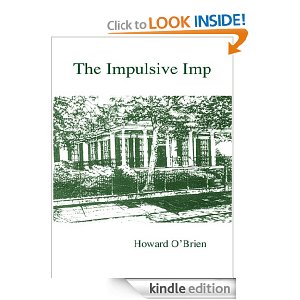
The Impulsive Imp by Howard O’Brien
When I first heard about “The Impulsive Imp” by Howard O’Brien I was extremely moved. Mr. O’Brien was the father of two authors, Anne Rice and Alice Borchardt, and the grandfather of author Christopher Rice. Yet it was his other daughter – Tamara Tinker – who published this book as a labor of love, with some help from Ms. Rice and a Mr. Tinker for the cover artwork. Howard O’Brien wasn’t able to get a publishing deal for his children’s book during his lifetime, but Tamara Tinker published it for him after he passed away.
Hers is a wonderful example of self-publishing as a labor of love, because here she isn’t even publishing her own work – yet she put her own effort into making it possible due to her love of her father and her belief in the quality of his work. In Nola Cancel’s interview in her column on the SF Examiner, Tamara Tinker had this to say about her choice to publish the work (which she inherited from her father) independently: “I believed that if I didn’t act to acknowledge and preserve the IMP, it would be lost.”
Preservation of a work is one of the reasons we choose to publish independently. There are many others… as you will see below, some of them can be political. The modern system of mainstream publishing is not the first publishing system, and while it may seem as though it has been around forever and is an unchanging monolith, it has not and is not. Once being in print was a privilege limited to those who had patrons among the royals or the church, and books were not written for the common man. By the time of the American Revolution, and the French Revolution, independent printing would be a way to get controversial ideas into the hands of the common man. Yet these notions stand in stark contrast to the controversial remarks of Sue Grafton regarding self publishing as a way to “avoid the hard work”. What is Independent Publishing, and why are opinions about it so divided?
Independent Publishing Is Not New

Common Sense – Independent Publishing during the American Revolution
If you look at the print information for the original edition of Thomas Paine’s “Common Sense”, a political pamphlet largely credited with helping to kick-start the American Revolution, you’ll notice something: there is no publisher’s credit but simply the words “Printed, and Sold by R. Bell at Third Street”. The Wikipedia article lists Thomas Paine and his friend Benjamin Rush as the publishers – Robert Bell was in fact, the printer and distributor. The booklet was in fact self published.
If we were to create an analogy between “Common Sense” and a book like my novel “Solitude”, which was printed and distributed using the services of Lulu.com and Createspace.com, then I would be in the position analogous to Thomas Paine, my editor Stephen Douglas would be liken to Benjamin Rush, and Robert Bell would be like Lulu.com, the printer and distributor. The main difference between now and then was that instead of going to Lulu.com, one had to go into Robert Bell’s shop on Third Street and commission the printing of these pamphlets instead of doing so online.
What is Independent Publishing?
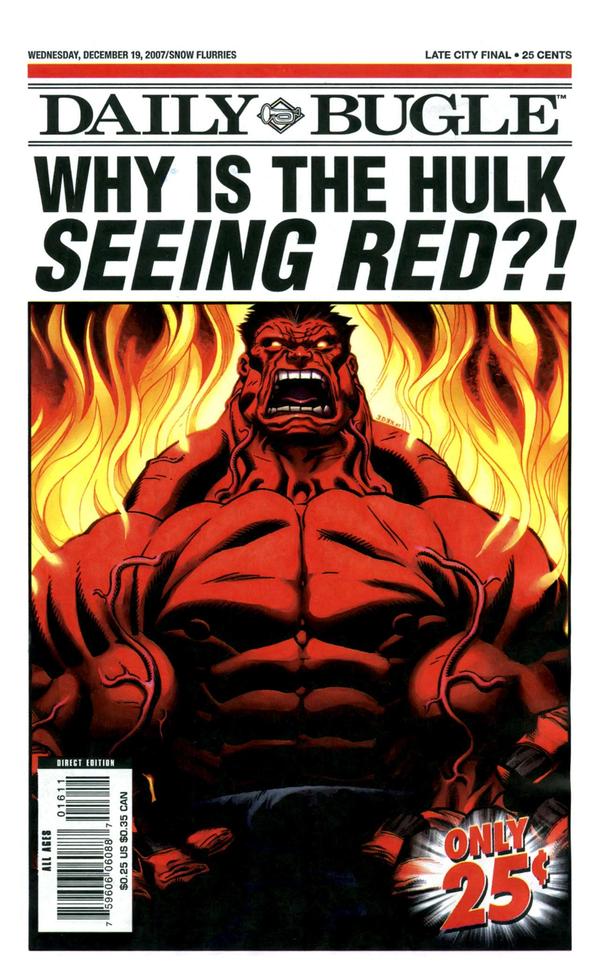
My high school paper… had the same name, but we didn’t get to write about the Hulk.
If you are a Marvel fan, you’ve probably heard of “The Daily Bugle”. That is the name of the fictional publication in the Marvel Universe where young Peter Parker works as a photographer. Like Peter Parker, I worked at “The Daily Bugle” during high school – only my Daily Bugle was a high school newspaper, at the time one of only four daily papers in the country, published by my alma mater, McKinley High School in Honolulu. At some point between now and then, the Daily Bugle was replaced by “The Daily Bulletin”, and as you’ll see when you visit the school’s website, it is now being published electronically. The evolution of my high school paper closely follows the changes in independent publishing that have occurred during the course of my life time.
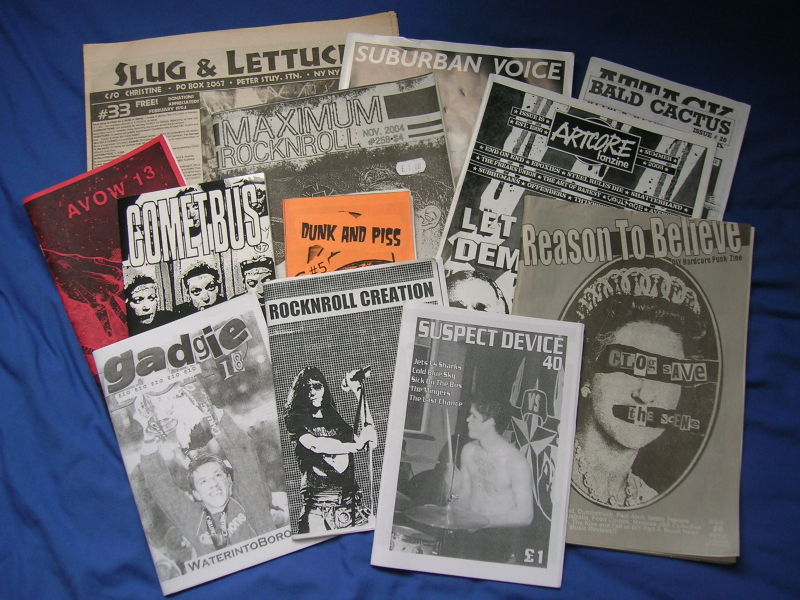
A collection of old punk fanzines
While working at “The Daily Bugle”, I learned how to use white tape and exacto knives to create manual layouts for the paper. We had a word processor to create columns of text. That was the state of computers back then: it was 1984. We didn’t have desktop publishing then and the word processing programs couldn’t create multiple columns of text. The next year, I used the skills I learned at my high school to publish my own punk rock fanzine, “Sects-Kit-10”, for a little over a year. The fanzine has since been lost to the sands of time, but many other fanzines of the era with their use of Xerox machine technology exist to show you what it might have looked like. These were not my first forays into independent publishing: in the late 70’s as a grade school kid I had a greeting card business where I wrote sappy poetry and drew pictures – I could even use a photo of the couple – and did a single page folded into four squares to create a card.
Indie Publishing is a term that has most often been applied to small printing houses like Iron Sun Fiction, school publications and self-publishers like myself. For people like me who began to self-publish before it was called self-publishing, back when we were still in print, before the era of the e-Book, it was and will always be indie publishing. The Ippy Awards (an independent publisher award around since 1996) defines an independent publisher as one that publishes not more than 50 titles a year.
It’s Not Always Prestigious
Many of you probably already know that best-selling crime novelist Sue Grafton came under fire for her statements about self-published authors. However, I am personally of the opinion that Ms. Grafton simply stated what many feel. As a self published horror author, I am already writing in a genre which many people do not take very seriously. I can honestly state that I have received more negative feedback about the genre designation “horror” than I have about being self-published… so much so that the better-selling titles of mine consistently rate higher in their secondary genre science-fiction than they do in horror. So it is very interesting when you are writing in an already maligned genre, to find that even within it, you are not taken as seriously. For instance, I would need to be published by someone else in order to qualify for the Bram Stoker Award – not that I think that I have a snowball’s chance in hell of receiving it. Awards like the Ippy’s have entry fees and then you’re dealing with the other insinuation – that all self-publishing is vanity press.
Not Every Writer Feels Entitled
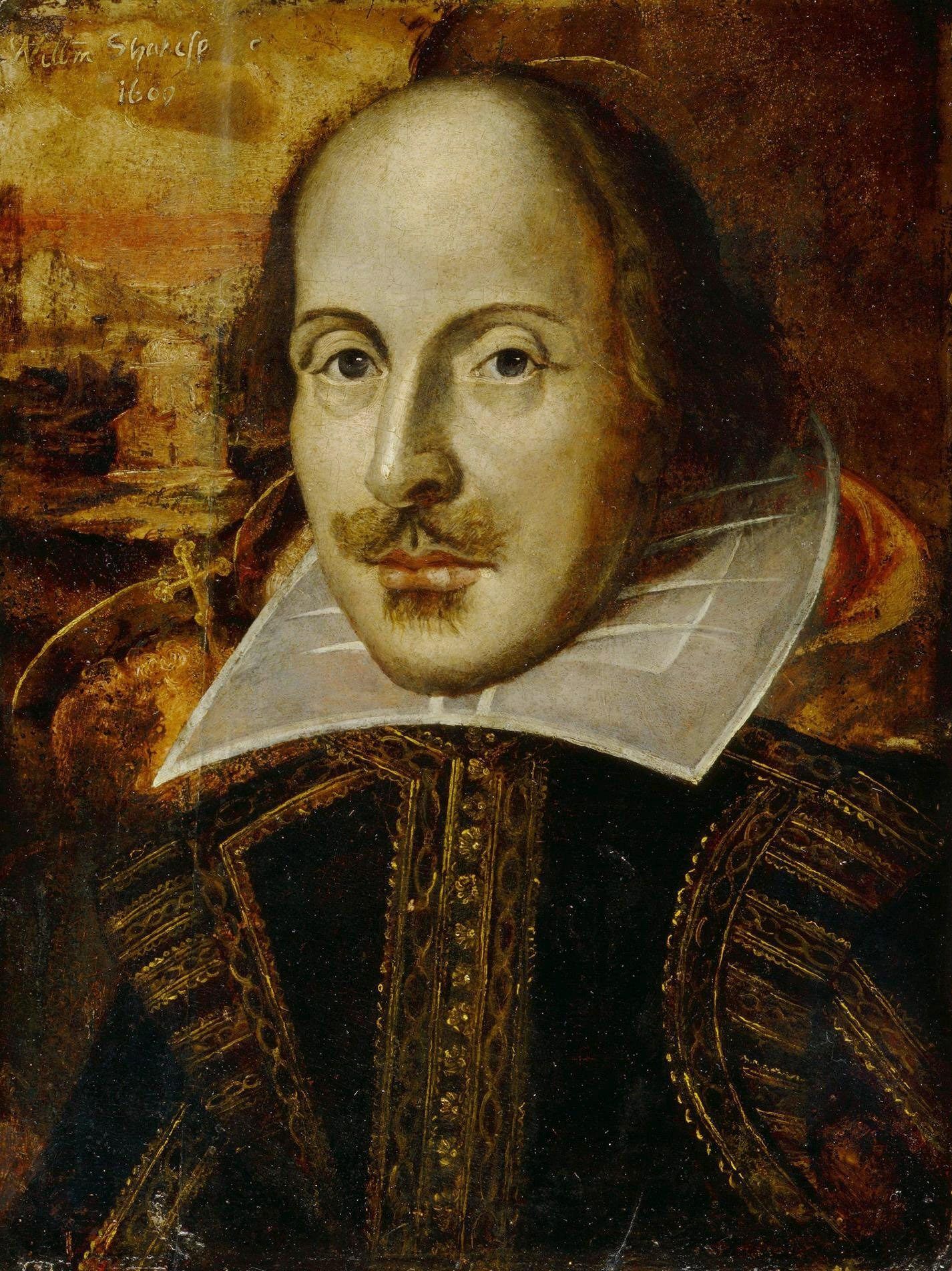
Convinced of his own genius – William Shakespeare
Where Grafton really gets it wrong is where she says “way too many writers who complete one novel and start looking for the fame and fortune they’re sure they’re entitled to”. I really don’t want to single her out, because she is not the only one with a failure of understanding.
Not every writer writes to become famous or wealthy. Most of us – Ms. Grafton included – lack the talent of a Shakespeare or a Milton. However, we also generally lack their sense of absolute conviction that their works were masterpieces designed to stand the test of time. Shakespeare wrote that his verse would live on until judgement day and beyond every monument of stone.
Not every writer is endowed with this sense of entitlement.
Many of us labor at writing for small audiences. Prior to my ventures into writing fiction novels and following my own creative muse, I like many other writers who enter the workplace in jobs that promise neither wealth nor fame, worked as a journalist for an hourly rate that, adjusted to today’s minimum wage scale, would have been about $11 an hour. I was hired on the same page as an administrative assistant, to perform a job that consisted of writing music reviews and articles about music, proofreading, and desktop publishing. The paper had a limited number of staff writers, and we all had a few different pen names, so there would seem like there were more of us. Writing under four different pen names, there seemed to be zero chance that I would ever become famous. In fact, local notoriety was a distant possibility given the fact that not one of the pen names was my actual name, so only a half dozen people knew I was writing.
This situation is not unique to me. A large number of writers labor away in obscurity every day writing content for newspapers, websites and manuals. Others become English teachers and their published works are often educational papers. We write for many reasons – not the least of them being simple love of the craft. One could argue that those of use with more modest successes are universally of more modest talents, but that would be a mistake.
We Don’t All Have The Same Barriers
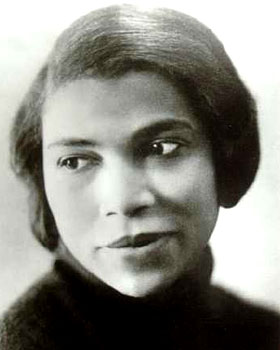
Marian Anderson
Grafton also compared self-publishing “to a student managing to conquer Five Easy Pieces on the piano and then wondering if s/he’s ready to be booked into Carnegie Hall” She has since backed off her statements, but they make a great basis for a dialog on the subject. I am not going to repeat back any of the very convincing arguments supporting indie publishers in the UK Guardian. You can click on the link and read them yourself.
However, I do want to talk about making it to Carnegie Hall.
My grandmother’s maiden name was Eleanora Lynch. You’ve never heard of her, but you probably have heard of her first cousin – Marian Anderson, the famous African American operatic contralto who was the first black person to perform at the White House, back during the FDR administration.
Carnegie Hall apparently, was more progressive than both the White House and the Metropolitan Opera House. Marian Anderson performed there in 1928, but due to the racial climate in the US she was not able to perform at the Met until 1955 – at which time, she was in her late 50. She waited a very long time to perform at the Met, and when she did she was the first African American to sing there.
The problem with making it to the Metropolitan Opera House for Marian Anderson was more complex than the issue of making it to Carnegie Hall – she had to overcome hundreds of years of racial prejudice in the U.S.A. and tour in Europe to make a name for herself because she faced so many barriers in the country of her birth.
The point being simply: that independent publishing gives other options to those of use who might have a harder row to hoe. If you do a web search on “African American Horror Writer” you’re going to find that Paranormal Fiction writer L.A. Banks, who sadly passed away in 2011, tops a VERY short list of traditionally published black horror writers.
Self-Publishing Questions? Ask Catherine
 When people ask me for advice about self-publishing, I most often refer them to Catherine, Caffeinated. It is a blog written by the witty and down-to-earth Irish novelist Catherine Ryan Howard, who has one of the most complete blogs I’ve ever seen on the internet regarding what she calls “self-printing”. She recently invited her readers to submit any question they might have regarding self-printing, and if she hasn’t already answered the question in her impressive selection of more than seventy-five blog posts on the topic, she will write a brand spanking new blog entry on the subject based on your question. Her blog is here:
http://catherineryanhoward.com/
I refer people to Catherine Ryan Howard because she, frankly, sells more books and knows more about self-publishing than I do and possibly ever will. She’s been at it twice as long (which is only two years longer, because I’ve only been at it two years), and she gives this advice away for free: although you can order it in book form on Amazon (I have) in either eBook or paperback form (I got the paperback).
Interview with Cinsearae S, author of “Diary of a Vampire Stripper”
•January 26, 2013 • 7 Comments
This interview is being included in the 2013 Women in Horror Interview Series. Every February, Women in Horror Recognition Month (WiHM) assists underrepresented female genre artists in gaining opportunities, exposure, and education through altruistic events, printed material, articles, interviews, and online support. You can find out more about WiHM here:
http://www.womeninhorrormonth.com/
The Author
Dark Paranormal Romance/Horror author Cinsearae S. is the creator of The ABRAXAS Series and BOLEYN, Tudor Vampire, a Top Ten Finisher at the Predators & Editors Readers Poll in 2010. A digital artist, jewelry designer, and still photographer, she is also Editor/Publisher of award-winning, Dark Gothic Resurrected Magazine (http://BloodTouch.webs.com/darkgothicmagazine.htm ). She also received the Author’s Site of Excellence Award in 2007 from Predators & Editors, and is a Cover Artist for Damnation Books and independent authors. Her website won a Golden Horror Award from Horrorfind.com, and her Etsy shop, Mistress Rae’s Decadent Designs won the Fright Times 2012 Award for “Best Horror Collectible”.
An avid fan of ‘old school’ horror movies and their villains (Freddy, Jason, Michael, Pinhead…) Halloween is her favorite time of the year. She has always been drawn to the flipside of life — the supernatural, odd, bizarre, Gothic and ‘darkly beautiful’ always being an inspiration to her. Find her on Facebook/YouTube/Twitter @ Cinsearae. You can also reach her through her website: http://BloodTouch.webs.com . She welcomes all writers/authors, artists, and lovers of the darker side of life to join her writers’ group on FaceBook (search: Gratista Vampire Clan).
The Book
DIARY OF A VAMPIRE STRIPPER
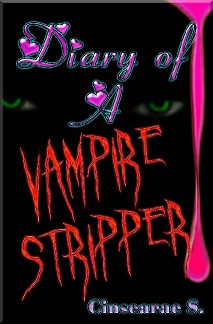 Her best friend is a werewolf. Her boyfriend is a ghoul. And she really, REALLY, can’t stand her vampire husband.
Trying to juggle college tuition and rent, young Audra Perez seeks a fast fix to her financial woes by auditioning as a stripper for the Hoochie Coochie Club. What she didn’t expect was to actually be chosen. Barely a few months into her new job, she becomes acquainted with a mysterious, distinguished gentleman by the name of Darren Von Eldon, and they secretly begin dating against club rules. Then one passionate night at his beach house changes Audra’s life forever.
Now as a newly-awakened vampire, this only adds to her day-to-day mundane burdens. Refusing to drain humans, she hunts birds for nourishment, and finagles a way to avoid going to classes during the day. But bigger problems loom ahead. Radical cops that know about her kind roam the night, seeking to destroy any and all ‘monsters’, and her best friend’s family has a bone to pick with Audra’s. Headless human bodies are turning up on vamp and were turf, each side blaming the other for the murders. It’s up to Audra and her friend Lu to figure out who’s doing the killings before an all-out war happens between their families, their search leading them beneath the city streets to encounter an abomination neither one of them will ever forget.
And the relationship issues? Well, it’s not easy dealing with a boyfriend and a vampire husband, so let’s not even go there…
Life’s a bitch, and then you DON’T die.
The Interview
Q. I love that in “Diary of a Vampire Stripper” you chose to mix dark humor with paranormal romance. So many romances are very serious, and it’s a somewhat daring choice. What made you decide to include the humor?
A. When it came to this story, I let my MC Audra, lead, and her ‘voice’ was very cynical and snarky, to say the least. Already having a dark sense of humor myself, I already knew the tone of the book would be the same. I’m a HUGE Vincent Price fan too, and I’ve always loved the oily and darkly humorous tone of the characters I’d see him play in certain movies. Adding a bit of camp to the horror in Diary of a Vampire Stripper helps most readers ease into the creepier, disturbing aspects of the book. There’s a few scary situations that happen to Audra that would make some folks squirm, if she didn’t handle it with her own sarcastic flair.
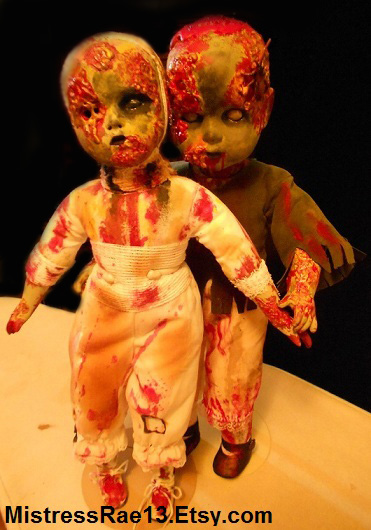
Kathleen and Bart: Etsy Dolls
Q. I’ve always been a fan of vampire stories. There are many different types of vampires. How would you characterize the ones in your book?
A. These vamps survive on blood, and have some aversion to sunlight. They can dwell in the daytime hours if they choose–being able to stay up during the day is tougher–something like that comes with age. They also have telepathic abilities and can compel humans if necessary. These vamps are in stark contrast to the vamps I created for my ABRAXAS series a few years ago–those vamps feed from pranic energy–the life force of others. They also have telepathic and telekinetic powers, among others, and have no problems with being out in the daytime, and they can eat food. My Abraxas vampires are definitely more ‘human’ then my current ones.
Q. I was intrigued to learn that your protagonist Audra Perez has a ghoul boyfriend – I wrote a book about ghouls called “Warmth” about a year ago, but we don’t see a lot of tomes on ghoulish culture anymore. What can you tell us about ghouls in the world of “Diary of a Vampire Stripper”?
A.Well, there are no actual ghouls in Diary of a Vampire Stripper per se, except for Audra’s boyfriend Paul, and he only became that way through an act of rage. Audra’s husband, Darren, snapped Paul’s neck, and she revived him by giving him her blood. The incident doesn’t happen until near the end of the story however, so the book is pretty ghoul-free until then, lol.
Q. Speaking of boyfriends and husbands and the like, Audra has both a boyfriend and a husband. Is she practicing polyamory, or is she just stepping out on her husband because their relationship – well, sucks?
A. She hates the idea of being in a polygamous relationship, and this unfortunate triangle happened out of her assumption that Darren was not coming back into her life after he turned her. Waiting on him for months without a single word from him, she gives up and starts dating Paul. When Darren finally returns, that’s when things definitely start getting awkward!
Q. You’re an incredibly prolific writer. You have written the Abraxas series, which is about vampires, and “Boleyn, Tudor Vampire”. You’ve also written several zombie short stories. Do your vampires and zombies and ghouls occupy a single “world” or many different ones? In other words, does Audra exist in more or less the same time and universe as these other vampires, or an alternate or parallel one to them?
A. Oh, I lump them all in one world— it’s more fun, lol! I like having my characters/monsters very much in the ‘now’. Aside from Boleyn, Tudor Vampire, my stories are urban fantasy, and topics we hear about everyday sometimes find their way into my books.
Q. Women in horror are still relatively rare, but increasingly less so. Do you think that paranormal romance is helping to open up the field to female authors of the supernatural?
A. Most definitely, if they’re willing to take that step! Although seeing women in the horror genre is rare, and tough for those who already write in this field, I think it’s because horror is such a male-dominated genre. It’s a slow and steady race, but I’m actually seeing more women trying to conquer this genre, both in books and indie movies.
Q. You are just really creative, and with your Etsy shop and website as well as your published body of works embody the idea of DIY spirit of the goths and punks I grew up with. I really fell in love with the “Little Zombie Bottle Boy Duo” on your shop. Do you think that the electronic world we live in makes it easier for us to create, as individual artists, and to connect with lovers of art and literature? Where do you see these things going in the future?
A. Thank you Sumiko! And absolutely, living in such a digitized/technological age, it is definitely an enhancement and an asset, for sure. I might not have even begun Mistress Rae’s Decadent Designs if it weren’t for the advent of Internet retail and e-commerce. We can reach out to millions of folks with a few strokes on a keyboard these days, something our grandparents never imagined in their own youth, lol. We can garner new friends and fans of our work, and the possibilities in creating more art is endless. The only thing that bothers me about the digitized age (aside from thieves, scammers and spammers) is the ‘disconnection’ that comes with it. Some people ‘live’ behind their keyboards nowadays and lack socialization/people skills. We have to find a balance between the digital as well as the physical world.
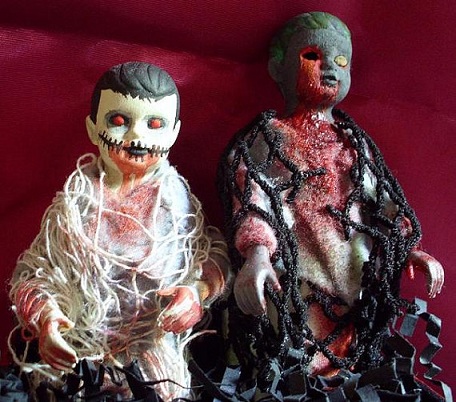
Zombie Bottle Boys
Q. Is there anything we didn’t talk about that you’d like to let our readers know about?
A. I’m a Cover Artist for DamnationBooks.com. They, like I do, specialize in horror and ‘dark’ themes. I’m also a freelancer, and design covers for independent or contracted authors. Anyone who is curious can view many covers I’ve done for both DB and indie authors. I also have pre-designed ‘Covers for Hire’, that authors can purchase at a discounted rate. http://bloodtouch.webs.com/bookcoverdesigning.htm .
I’m also Editor/Publisher of award-winning Dark Gothic Resurrected Magazine. This magazine started out as a way for newbie writers to ‘get their feet wet’ in the publishing world. When I first tried my hand at getting published, I was often met with more misses than hits, and the high-and-mighty arrogance of some editors really pissed me off. It was then that I decided to create Dark Gothic magazine back in the early 90’s, and back then it was run off of copier machines and hand stapled! Then unfortunately I became involved in a very draining relationship which made me put the magazine on hold for a couple of years. Once I was finally rid of the bad relationship, I got my ass back in gear and opened the zine up again. Plus, with the advent of print on demand, Dark Gothic became Dark Gothic Resurrected, and has grown more and more ever since. I know I’m doing something right when I have contributors return back to the magazine, and thanking me for being one of the best editors they’ve ever worked with. I always swore I’d never be like those stuck-up editors I’ve dealt with in the past, as newbie writers have to start somewhere, and I want DGR to be that stepping stone for them. I also love interviewing authors, especially indie ones, and anyone else with a talent for all things dark and creepy, from artists, musicians, poets, filmmakers, and more! http://bloodtouch.webs.com/darkgothicmagazine.htm
You had mentioned my Etsy shop, and the Little Zombie Bottle Boy Duo. I just love any way to express my creepy side, and when I discovered Etsy.com, there was no stopping me then, lol. The themes I create my work around are mainly Victorian, Steampunk, Gothic, Horror, and of course, Halloween! I create insect jewelry, creepy dolls, hair accessories and anthropomorphic creations. I also like to recycle and repurpose items too, which is how my “Little Bottle Boys” were born, made from mainly 1 oz. glass bottles. I also have “Lovely Bottle Ladies” that have Victorian and Steampunk flair, made from 12 oz. glass bottles. My shop also won the 2012 Fright Times Award for “Best Horror Collectible”. My dolls are one-of-a-kind, so everyone is guaranteed something only they will have. http://MistressRae13.Etsy.com . Mistress Rae’s also has a Facebook page too!
I love making new friends and fans, so if anyone would like to get in touch with me, they can find me on Facebook, Goodreads, Twitter, Google+, and LinkedIn.
Thank you very much for having me at your blog, Sumiko!
The Video
Where To Find Buy The Book
http://www.createspace.com/3778782
On Amazon for Kindle: http://amzn.to/SrITEI
Visit http://bloodtouch.webs.com/doavs.htm for reviews, chapter downloads and more.
 Sumiko Saulson